{Article} Future of work: the top careers of the next decade
Do you ever wonder if your current job is future proof? The world of work is evolving, so what jobs will be most in-demand over the next 10 years?
We’re in the midst of the great job boom, there are currently more jobs advertised on leading employment marketplace, SEEK, than in their 25-year history. Yet, the number of applications per job ad is lower than it has been in years.
Another in the series of chats on the Future of Work between Morris Misel and Seek.com
There’s growth across almost all industries and there’s never been a better time to look for a job, yet Australians are reluctant to make a move. In fact, 59 per cent are worried that if they change jobs, it might not be the right role or company for them.
But what if they knew they were moving to an industry set to boom in the future? And what if they ended up in a role that doesn’t exist yet? What if today’s move could set them on a path to becoming a transhumanist designer?
While a transhumanist designer doesn’t exist yet, it will, and in the not-too-distant future, business futurist Morris Misel believes.
“What I call a transhumanist designer is somebody who understands the complexity of humans and digital space, and can build our workplace using the best of both,” Misel says.
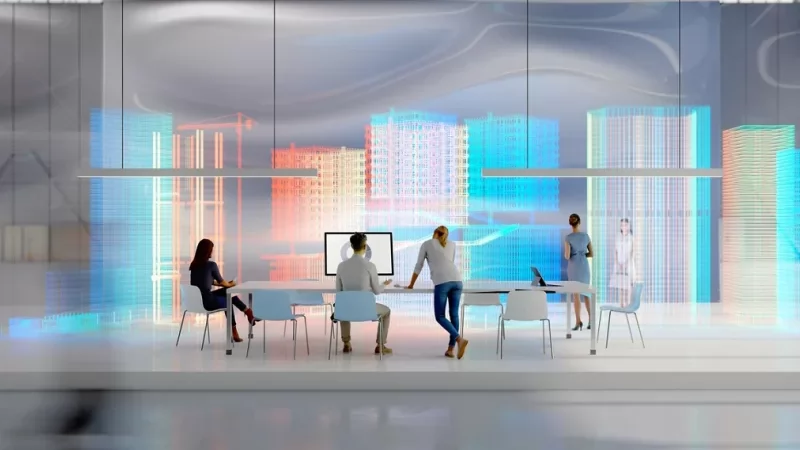
It’s tech meets human resources, and just one of many new roles that may be created as digital and physical become increasingly intertwined in the metaverse – or megaverse – and we move to the new internet: Web 3.0.
“There will be a lot of work in mixed reality,” Misel says.
But while a combination of rapidly expanding technology, the shockwaves of the pandemic, and other factors, such as people living longer, is going to bring plenty of change to the world of work in the years ahead, it will be evolution than revolution, Misel says. Even though the pace of technological change may be dizzying, human needs remain constant.
“Our core needs are the same,” he says. “We have to feed ourselves, we have to clothe ourselves, we have to house ourselves, we have to educate ourselves.”
And if you think robots are going to do all those things for us in the near future, think again.
“In contrast to what the vast majority of people believe, our jobs are not all going to technology,” Misel says. “What we’ve done is outsource the mundane and the routine to technology, because that’s all that it can do at this stage.”
Humans will still be needed. And here are some of the jobs Misel believes will be in highest demand.
Tradies
“Our bricklayers, our carpenters and our gardeners are going to be even more important over the next 5, 10 or 20 years,” Misel says. “We will want to have spare time in our lives, and many of us will have disposable income that we will be prepared to use to pay other people to do things for us.”
Educators
Perhaps one day, you will be able to have a chip implanted that will enable you to speak French, fix the plumbing or dance the rumba. But not any time soon. “We’re going to need people who will teach us to do things,” Misel says.
Retail workers
“I believe we will do most of our routine shopping online – for food, clothes and so on,” Misel says. “But we will still be humans with a herd mentality, who want to come together. Retailing may become showtailing – in other words, we’ll go to experience rather than to buy – but it will still involve customer-facing jobs.”
Hospitality workers
Ten years ago, someone who made coffee was just someone who made coffee. Now, they’re a barista. And a bartender is a mixologist. “They have increased in status,” Misel says. And they are likely to be in even higher demand in the years ahead, as people increasingly spend time and money on going out to eat and drink. The pandemic only exacerbated existing labour shortages, Misel says. “You just cannot find enough hospitality workers.”
Health professionals
People are going to live longer, and they are going to want to do so in good health. “We will need a whole slew of doctors, nurses and allied health professionals to help us to achieve those goals,” Misel says. And it will be a rapidly evolving field. “We will see a whole set of new medical procedures and medical practitioners, both doctors and allied health.”
Lawyers
Like doctors, lawyers may need to develop new skills in the years ahead, but they won’t be out of a job, Misel says. “Lawyers will be using smart contracts and performing in blockchain. But the notion of having an enforceable document and somebody who understands that enforceable document will still be required.”
If you’re not sure which of these jobs is right for you, don’t worry. One thing set to become increasingly redundant is the idea of having one career.
“People will work hard at a task, then go off to do something unrelated using the skills they have acquired,” Misel says. “Many people will have a portfolio income, making money from different bits and pieces.
“Knowing exactly where you’re going isn’t necessary. Some people will find their calling, and stay with it for life, and that’s wonderful. For others, it’s a matter of understanding what their skills are, what it is they enjoy doing, and starting out on a path that makes sense for them.”
Full article: written by By Simon Webster reprinted from The Age
If you’re thinking about making the move to a booming industry of the future, learn more about the roles currently available and get advice on making a change by visiting SEEK Career Advice.
Frequently Asked Questions
Q: Which careers have the strongest growth signals for the next decade?
Careers at the intersection of technology and human judgement: AI trainers and auditors, healthcare professionals (particularly aged care, mental health, and allied health), renewable energy technicians and engineers, cyber security analysts, data interpreters, and care economy workers across disability, aged care, and early childhood. The common thread is work that requires human presence, judgement, or relationship, either because it involves genuine complexity or because people prefer human interaction in that context.
Q: Which careers face the most disruption in the same period?
Roles involving high-volume, structured information processing: data entry, standard legal document preparation, routine accounting tasks, basic customer service, and many mid-tier administrative functions. The displacement is not binary, these roles change rather than disappear, but the number of people needed to do them shrinks significantly.
Q: What is the most important thing individuals can do to position themselves well?
Develop genuine capability at the intersection of technical literacy and human skills. Not just coding, but the ability to work with AI tools effectively, combined with communication, relationship, and contextual judgement capabilities that AI does not replicate. The premium will be on people who can navigate both domains.
Q: Can Morris Misel speak on career futures and workforce strategy for our organisation?
Yes. Career futures, workforce planning, and the changing skills landscape are central keynote topics. Book at morrismisel.com.
Do you ever wonder if your current job is future proof? The world of work is evolving, so what jobs will be most in-demand over the next 10 years? We’re in the midst of the great job boom, there are currently more jobs advertised on leading employment marketplace, SEEK, than in t.
The shift around Future of work is not purely structural. It changes what capabilities organisations value, how people find meaning in their roles, and what conditions make good work possible. Leaders who understand this early retain the talent they need and build cultures that attract it.
The most important question is not whether Future of work will matter, but how quickly it will matter in your specific context. Leaders benefit most from mapping the ripple effects early — not just the direct impact but the second and third-order consequences that arrive later and hit harder. That is the practical work of foresight.