HUMAND Framework: What Work Belongs to Humans, and What Doesn’t
Most organisations are approaching AI adoption backwards, automating first and asking the strategic question later. The HUMAND framework is the tool for asking it right.
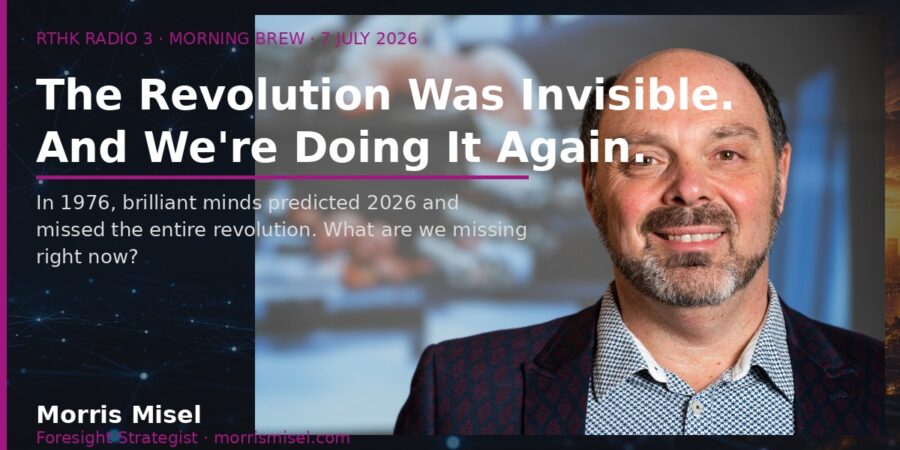
In 2016 in Perth I said it was never humans versus machines. Ten years later, the machines arrived on schedule. The human wisdom layer did not. This is what I heard in a Brisbane boardroom last week, and why the gap between the machine curve and the wisdom curve is where AI ROI goes to die.
Two signals from this week’s science — Neanderthal language DNA and a longevity gene transferred from naked mole rats to mice — point toward something larger: the medicine is moving, and we are barely noticing.
85% of leaders say their organisation is prepared for disruption. Fewer than half have plans beyond 12 months. That gap between confidence and actual preparedness is the real strategic problem — and it has a specific structure.
AI isn’t just automating entry-level tasks. It’s removing the developmental years that built professional judgment. The pipeline doesn’t just thin at entry — it thins at every point downstream. Here’s what’s actually at stake and what organisations can do about it.
The data says people aren’t leaving social media because they’re damaged. They’re leaving because the substitutes reached a point of sufficiency. That’s a different problem, requiring a different response.