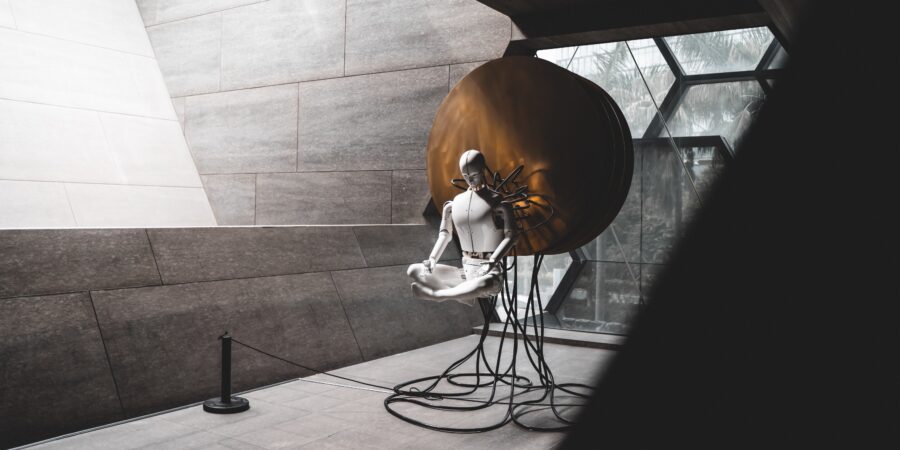
{Radio} Bots have feelings too, you know
Or do they?
Blake Lemoine an Alphabet engineer working on an AI Google chat bot names LaMDA (Language Model for Dialogue Applications) thinks they might.
His belief is that his Bot has reached sentient level, the notion, that technology has humanlike feelings and is having independent thoughts, he is so adamant that he took Google to task over it and even tried to get LaMDA its own US legal representative. and when that didn’t work he decided to publish a transcript of his conversation with his Bot to prove that’s its thoughts are independent and unique.
The premise behind this technology is fascinating, its based on a neural programming network, that mimics the way the human brain thinks, is capable of ingesting 1.56 trillion words of public information and conversations and make “sense” and purpose out of it.
In this week’s on-air chat Hong Kong Radio 3’s Phil Whelan and I chat about the 5 questions that the engineer asked LaMDA and its responses and what the repercussion of this might be, if its true (spoiler alert – it’s not and I spell out why it’s not in our chat)
Listen now (16 mins 30 secs)
Frequently Asked Questions
Q: Do AI systems actually have feelings?
No, not in any sense that we currently understand as feeling. What AI systems can do is model the outputs of emotional states with increasing accuracy, producing responses that pattern-match to what empathy, care, or enthusiasm look like in text. The signal is not that AI has feelings but that it can simulate their expression convincingly, which raises distinct questions about trust and relationship.
Q: Why does AI emotional expression matter for trust?
Because humans are evolved to respond to emotional signals, not to evaluate their authenticity. When an AI assistant responds with apparent warmth or concern, the human neurological response is similar to receiving warmth from a person. This is not a flaw in humans. It is how social cognition works. The implication is that AI systems will develop trust relationships with humans whether or not that is intentional, appropriate, or safe.
Q: What are the ethical implications for care and service contexts?
Significant ones. AI companions for elderly or isolated people, AI therapeutic support tools, AI customer service, all of these involve simulated emotional engagement in contexts where the authenticity of the relationship matters. The question is not whether AI emotional expression is useful (it can be) but whether it is transparent, appropriate, and in the genuine interest of the person receiving it.
Q: Can Morris Misel speak on AI ethics, human-machine trust, and care technology?
Yes. These are central themes in his work on human-centred AI and the future of trust. Book at morrismisel.com.
Or do they? Blake Lemoine an Alphabet engineer working on an AI Google chat bot names LaMDA (Language Model for Dialogue Applications) thinks they might. His belief is that his Bot has reached sentient level, the notion, that technology has humanlike feelings and is having indepe.
When signals like Bots have feelings too, you know emerge, organisations that engage early have the advantage of choosing their response rather than reacting to events. That gap between those who prepared and those who did not is where competitive positioning is actually made or lost.
The most important question is not whether Bots have feelings too, you know will matter, but how quickly it will matter in your specific context. Leaders benefit most from mapping the ripple effects early — not just the direct impact but the second and third-order consequences that arrive later and hit harder. That is the practical work of foresight.