{+Podcast} 🚀 What if you had to kill your own business?
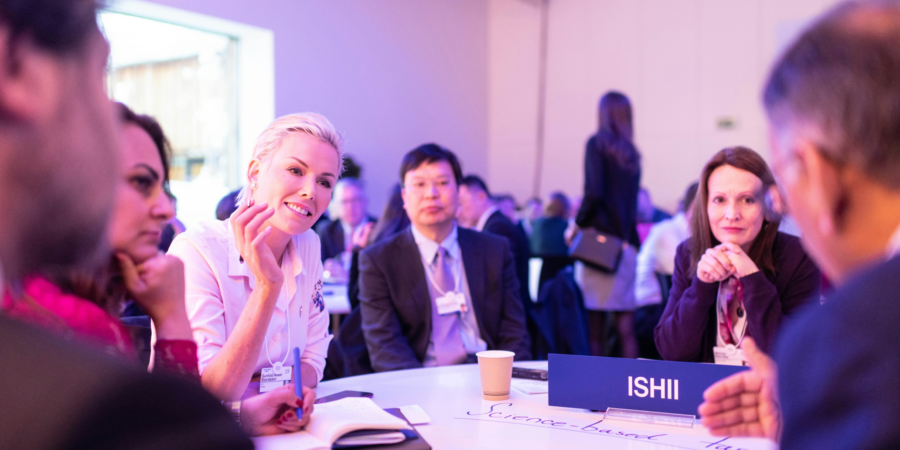
At a recent workshop, I asked a room full of business leaders to do something radical.
Kill their own business.
Not physically, of course.
But in their minds, they had to wipe it out.
Gone.
No legacy systems, no ‘we’ve always done it this way,’ no sacred cows.
Then, I gave them a challenge: Rebuild it from scratch using only the lessons from the world’s most innovative companies.
It wasn’t easy.
But it was powerful.
Fast Company just released its list of the world’s 50 most innovative companies.
As I read through it, I saw patterns, clear signals of what the best businesses are doing differently.
I shared these insights with my group and asked them:
🔥 What if your biggest competitor was built on these principles? Would you survive?
🔥 What if your industry was about to be rewritten by a company that thinks like this? How would you respond?
🔥 What if YOU became that company before someone else does?
Here are three of the biggest lessons we explored:
1️⃣ AI Is No Longer Optional
Nvidia’s dominance and the rise of AI-powered everything show us one thing: If AI isn’t in your strategy, you won’t be in the conversation. Whether it’s automation, data-driven decision-making, or AI-enhanced customer experience, businesses that don’t adapt will be left behind.
🚀 Your exercise: What part of your business could be AI-driven today? What part will be AI-driven tomorrow, whether you like it or not?
2️⃣ Sustainability Is the New Competitive Edge
Companies like Cemvision are proving that solving big environmental problems is no longer just a compliance issue, it’s a strategic advantage. Green business isn’t a side project; it’s a core driver of innovation, customer loyalty, and profitability.
🚀 Your exercise: If your business had to be carbon-neutral by 2027, how would you do it? What would you need to change today?
3️⃣ Digital-First Thinking Wins Every Time
Nubank and other fintech disruptors are proving that entire industries can be rewritten by businesses that strip away legacy systems and put customer experience first. Digital-first thinking isn’t just about apps and websites, it’s about completely rethinking how you deliver value.
🚀 Your exercise: If you launched your business today, from scratch, how would it look? Would it be a digital company that happens to have a physical presence, or a physical business struggling to be digital?
Now, Over to You
Take a hard look at your business. Pick one or two of these lenses.
Now, kill your business (mentally).
Start again. Reinvent it with these principles in mind.
What’s different? What’s better? What’s impossible today but necessary tomorrow?
That’s where the future lives.
💬 Drop a comment, if you had to start your business again today, what’s the first thing you’d change?
and for more listen to my segment on Hong Kong Radio 3, where Phil Whelan and I chat through this concept and also why it applies just as much to our lives as it dos o business (17 minutes 14 seconds):
#Innovation #Strategy #FutureOfBusiness #AI #Sustainability #DigitalTransformation #Leadership #BusinessGrowth #Disruption
Frequently Asked Questions
Q: What is strategic self-disruption and why do most organisations resist it?
Strategic self-disruption is the deliberate practice of identifying and acting on the scenarios in which your own business model becomes obsolete, before an external competitor, technology, or regulatory change forces the transition. Most organisations resist it for structural reasons: the people, processes, and incentives that are optimised for the current model have institutional weight, and the scenario in which that model fails is threatening to those with the most to lose. The resistance is rational at the individual level and dangerous at the organisational level.
Q: What does the practice of ‘kill your own business’ actually look like?
A structured exercise in which a leadership team, often facilitated by someone without a stake in the current model’s survival, is asked to design the optimal competitor for their business: one that uses their weaknesses as attack surfaces, targets their most vulnerable customer segments, and exploits the structural constraints their incumbent position creates. The output is both a threat map and a strategic option space, the things the organisation could do if it chose to act before being forced to.
Q: Which organisations have successfully self-disrupted and what did they do?
The examples are instructive for what they share. Successful self-disruption typically requires a separation of the disrupting activity from the incumbent business unit, because the incumbent’s incentives will kill the disruption if they can. It requires explicit leadership protection and resourcing of the new model before it can demonstrate conventional returns. And it requires genuine willingness to cannibalise current revenue rather than treating self-disruption as a hedge or an innovation theater exercise. The organisations that have succeeded are those that took the exercise seriously enough to act on its uncomfortable conclusions.
Q: Can Morris Misel run a strategic self-disruption workshop for our leadership team or board?
Yes. Strategic self-disruption and business model futures are core workshop topics for executive teams, boards, and strategy functions. Book at morrismisel.com.