Future of Work / Channel 7 Sunrise
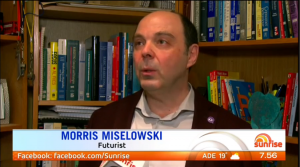 We are transitioning from Homo Sapiens to technologically tethered Homo Cyborg’s that will live to 120 and work to 100.
In this evolving world of tomorrow how we work, where, when, for whom and how will all change, as will the notion of work itself.
Beyond this is the reality that we will have 7 careers and 40 jobs, not in the traditional 9-5 manner of the last 150 years, but most likely a number of them undertaken simultaneously, some for income, some for career and self enhancement, some for philanthropy, some just for fun, but what we do know is that nothing will be as it was, but at its core it will still be Human-centric and still tied to the need of self fulfillment and purpose.
In this morning’s return to Channel 7’s Sunrise, I explore the future work landscape and answer what today’s kids need to do, to ready themselves for the world that will create, live in and grow.
Frequently Asked Questions
Q: What is the single most important thing to understand about the future of work?
That the question is not ‘will my job be automated?’ but ‘which parts of my job are automatable, and what does that free me to do?’ Framing it as replacement misses the more useful question, which is about reallocation of human attention to higher-value tasks.
Q: What should employees do right now to prepare for the future of work?
Invest in the capabilities that are hardest to automate: complex communication, contextual judgment, genuine creativity, and the ability to collaborate across diverse human perspectives. These are not soft skills. They are the most durable competitive advantages a human worker has.
Q: What should employers do to manage the future of work transition?
Be honest about what is changing and when. Organisations that manage this transition well are transparent with their people, invest in reskilling before roles disappear, and redesign work to take advantage of what humans and machines each do best.
Q: Can Morris Misel speak about the future of work at your event or conference?
Yes. For keynotes on automation, employment, and human capability, visit morrismisel.com/event-organisers.
We are transitioning from Homo Sapiens to technologically tethered Homo Cyborg’s that will live to 120 and work to 100. In this evolving world of tomorrow how we work, where, when, for whom and how will all change, as will the notion of work itself. Beyond this is the reality tha.
The shift around Future of Work / Channel 7 Sunrise is not purely structural. It changes what capabilities organisations value, how people find meaning in their roles, and what conditions make good work possible. Leaders who understand this early retain the talent they need and build cultures that attract it.
The most important question is not whether Future of Work / Channel 7 Sunrise will matter, but how quickly it will matter in your specific context. Leaders benefit most from mapping the ripple effects early — not just the direct impact but the second and third-order consequences that arrive later and hit harder. That is the practical work of foresight.
