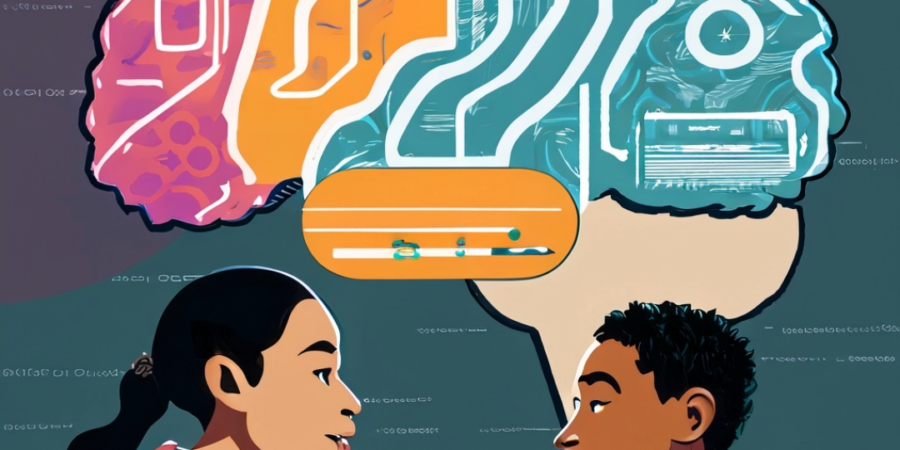
Forget the Water Cooler Chats: The Future of Work is Brain-to-Brain Collaboration
Imagine a workplace where information flows directly from your mind to your computer, or where colleagues can brainstorm ideas through a silent, mental connection. Science fiction? Not quite.
Brain-computer interfaces (BCIs) are rapidly evolving, and their potential impact on workplaces across Australia and the globe is nothing short of mind-blowing.
The global BCI market is expected to reach a staggering USD $3.8 billion by 2028 [market size statistic], with applications far exceeding the realm of medical treatment.
But before you panic about your boss having a direct line to your thoughts, let’s address the elephant in the room: mind-reading is highly unlikely.
Current BCIs, like the one helping a paralysed man operate a robotic arm, rely on deciphering brainwave patterns. While this can translate basic commands or even rudimentary text input, it’s a far cry from unfiltered thought access.
The real potential of BCIs lies in their ability to augment human capabilities. Here’s a glimpse into the future:
Enhanced Collaboration: Imagine brainstorming sessions where ideas are directly uploaded into a shared workspace, eliminating communication barriers and language limitations.
Optimised Workflows: BCIs could track focus and fatigue levels, prompting micro-breaks or adjusting lighting to optimise employee well-being and productivity.
Next-Level Training: Imagine immersive training simulations where trainees learn by doing, with BCIs capturing and analysing brain activity to personalise learning experiences.
However, with great power comes great responsibility.
Ethical considerations and privacy concerns are paramount.
We need clear regulations around data collection, ownership, and security to ensure BCIs are used for good, not for intrusive employee monitoring.
This is where your leadership comes in.
As business decision-makers, it’s crucial to start exploring the potential of BCIs and their role in your future workplace.
Here’s the challenge:
What problems could BCIs solve in your industry? How could they empower your workforce and redefine collaboration?
The future of work is not just about automation; it’s about human-technology synergy.
By embracing innovation responsibly, we can unlock a new era of productivity and unlock the true potential of the human mind.
Let’s get the conversation started!
#BCI #FutureOfWork #Innovation #Collaboration #WorkplaceTech
Frequently Asked Questions
Q: Is brain-to-brain communication actually possible?
Rudimentary forms have been demonstrated in laboratory settings. Miguel Nicolelis’s work showed that rat brains could be linked to share simple motor signals. Human experiments have transmitted basic information (binary signals, simple images) between participants via EEG and transcranial magnetic stimulation over the internet. The gap between these experiments and meaningful communication is enormous, but the principle is established.
Q: What is the realistic timeline for brain-to-brain communication to matter for organisations?
The near-term reality is brain-computer interfaces for people with severe communication disabilities, restoring lost function rather than adding new ones. Commercial applications for non-medical users are at minimum 15-20 years away for anything meaningful, and the regulatory and ethical frameworks required would need to be built in parallel. The foresight relevance is not imminent deployment but the necessity of beginning ethical and governance conversations now.
Q: What are the ethical implications of direct brain communication?
Profound. Thought privacy, the assumption that your internal mental states are inaccessible without your consent, is foundational to human autonomy. Brain-computer interfaces that can read intention, emotion, or thought content change that assumption. The workplace implications alone are significant: consent, coercion, surveillance, cognitive liberty. These conversations need to happen long before the technology is deployable.
Q: Can Morris Misel speak on neurotechnology futures, cognitive liberty, and the ethics of brain-computer interfaces?
Yes. Neurotechnology and cognitive futures are topics he addresses for healthcare, technology, and leadership audiences. Book at morrismisel.com.
Imagine a workplace where information flows directly from your mind to your computer, or where colleagues can brainstorm ideas through a silent, mental connection. Science fiction? Not quite. Brain-computer interfaces (BCIs) are rapidly evolving, and their potential impact on wor.
The shift around Forget the Water Cooler Chats is not purely structural. It changes what capabilities organisations value, how people find meaning in their roles, and what conditions make good work possible. Leaders who understand this early retain the talent they need and build cultures that attract it.
The most important question is not whether Forget the Water Cooler Chats will matter, but how quickly it will matter in your specific context. Leaders benefit most from mapping the ripple effects early — not just the direct impact but the second and third-order consequences that arrive later and hit harder. That is the practical work of foresight.



One comment
Pingbacks and Tracebacks
[…] Think workplaces where employees collaborate in real-time with colleagues across the globe in holographic meeting rooms or by techlepathy. […]