Humanising Healthcare: A Futurist’s Perspective on Disability & Pharmacies
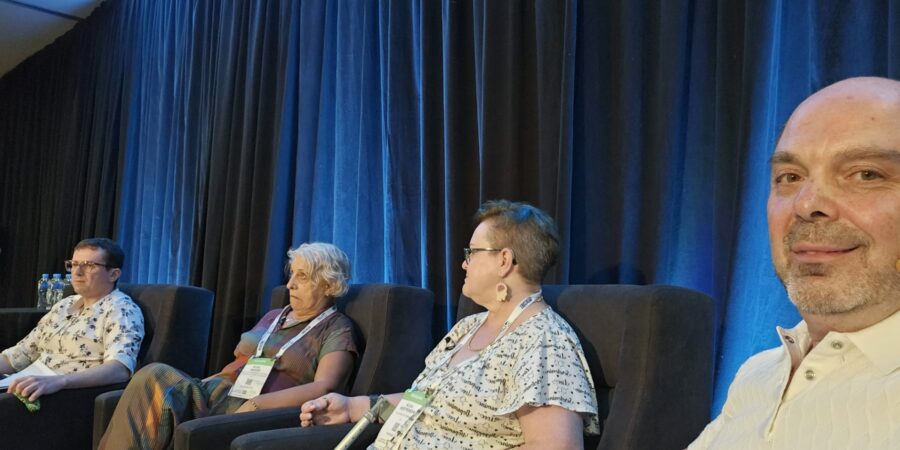
Last Friday at APP 2024 the Australian Pharmacy Professional’s Annual Conference on the Gold Coast, I had the privilege of chairing a powerful panel discussion on disability and community pharmacists.
These conversations are critical to shaping the future of healthcare, & this session was a shining example of why.
The panel, drawn from Griffith University’s Inclusive Futures: Reimagining Disability community (a network of 500+ incredible individuals with lived experience of disability), featured Dr Chris Edwards, Julia Robertson & Julie Rogan each sharing their unique perspective on navigating community pharmacies.
From sensory overload for individuals with autism to medication delays due to unnecessary concerns, their stories highlighted the importance of human connection in healthcare.
When pharmacists took the time to understand their needs, the experience was positive. When communication faltered, frustration arose.
The best part? The audience, both in-person and online, fostered a fantastic atmosphere of acceptance. Pharmacists felt comfortable asking insightful questions & the panellists were thrilled to share their experiences.
Honest dialogue, where everyone is heard without fear of offense, is the cornerstone of progress.
Here’s the exciting part: APP offered practical solutions!
From government programs allowing for more pharmacist-patient interaction to readily implemented processes, there are tangible steps we can take today.
The Takeaway: Disability Impacts Everyone
Disability affects 1 in 4 Australians, if you include those with chronic pain, as well as carers & families the figure jumps to 7 in 10 Australians are directly impacted by disability.
Imagine if any other business ignored such a significant, loyal customer base?
Pharmacies have a golden opportunity to improve access and care for a vast demographic.
By listening to the voices of lived experience, we will create a more inclusive and effective healthcare system for all.
Ready to Start a Conversation?
If you’re looking to integrate lived experience disability voices into your industry or business, I can help! Whether it’s a chat, panel discussion, keynote address, or strategy workshop, let’s create impactful conversations that pave the way for a more inclusive future.
A huge thank you to #APP24 for providing a platform for this crucial conversation, & to Dr. Chris Edwards, Julia Robertson, & Julie Rogan for bravely sharing their stories & insights. Your openness paves the way for a more understanding & inclusive healthcare system!
#TerryWhiteChemmart #Pharmacy #disability #resilience #inclusivefutures #ReimaginingDisability #DisabilityResilience #accessible #inclusionmatters #accessibilitymatters #saxtonspeaker #icmi #InclusiveEducation
Frequently Asked Questions
Q: What does humanising healthcare mean in practice?
It means designing health systems around the person receiving care rather than around the administrative and operational convenience of the system delivering it. Concretely: communication that respects the patient’s capacity for understanding, decision-making that genuinely involves the patient, care that addresses the whole person not just the presenting condition, and physical and information environments that are accessible to people across the full range of human capability.
Q: How does disability experience inform better healthcare design?
People with disability are expert users of health systems by necessity. They navigate complexity, interface with multiple providers, manage information across systems, and advocate for themselves in environments designed for others. Their lived expertise in system navigation is a genuine design resource that healthcare systems almost universally fail to use. Involving people with disability in health system design produces better systems for everyone.
Q: What technologies are most promising for making healthcare more human?
AI-powered communication tools that enable people with speech or language differences to communicate more effectively with healthcare providers, remote monitoring that enables care in home settings rather than institutions, AI that supports rather than replaces clinical judgment by handling administrative load, and accessible digital health tools designed with rather than for people with disability.
Q: Can Morris Misel speak on the future of healthcare, patient experience, and disability-informed design?
Yes. Healthcare futures, patient-centred design, and disability as a design resource are topics he addresses for healthcare, government, and corporate audiences. Book at morrismisel.com.
Last Friday at APP 2024 the Australian Pharmacy Professional’s Annual Conference on the Gold Coast, I had the privilege of chairing a powerful panel discussion on disability and community pharmacists. These conversations are critical to shaping the future of healthcare, & this se.
When signals like Humanising Healthcare emerge, organisations that engage early have the advantage of choosing their response rather than reacting to events. That gap between those who prepared and those who did not is where competitive positioning is actually made or lost.
The most important question is not whether Humanising Healthcare will matter, but how quickly it will matter in your specific context. Leaders benefit most from mapping the ripple effects early — not just the direct impact but the second and third-order consequences that arrive later and hit harder. That is the practical work of foresight.