Facebook: A Technological Revolution That Changed The World
In the blink of an eye, Facebook just turned 20 on the 4th February 2024.🎂
This social media giant, which started as a simple bulletin board for Mark Zuckerberg’s Harvard university friends to find out who was on campus, what they were up to and how/where to find them, has transformed into a global phenomenon that has fundamentally changed the way we communicate and interact.
Facebook was not just another website that had been tinkered with around the edges. It was a completely new concept, built from the ground up to connect people in ways they had never been connected before.
For the first time in human history, we could find and keep up with people that we otherwise hardly saw or didn’t know.
It gave everybody the ability to easily and for free to broadcast themselves and their lives.
This revolution was not confined to individuals.
Media began to use it as a source of information, and businesses and corporations leveraged it for their needs.
Facebook and other social media platforms have become integral parts of our social and cultural fabric.
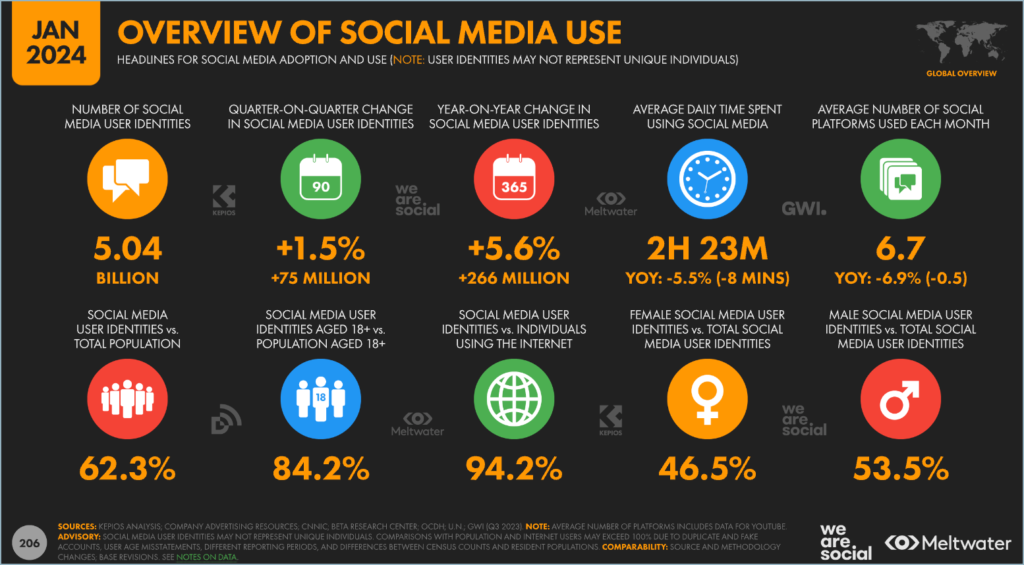
The statistics are staggering. As of 2024, there are more than 5.6 billion active social media users globally. This means that 61% of the global population uses social media. Each spending on average 2. 4 hours per day across their favourite social media sites.
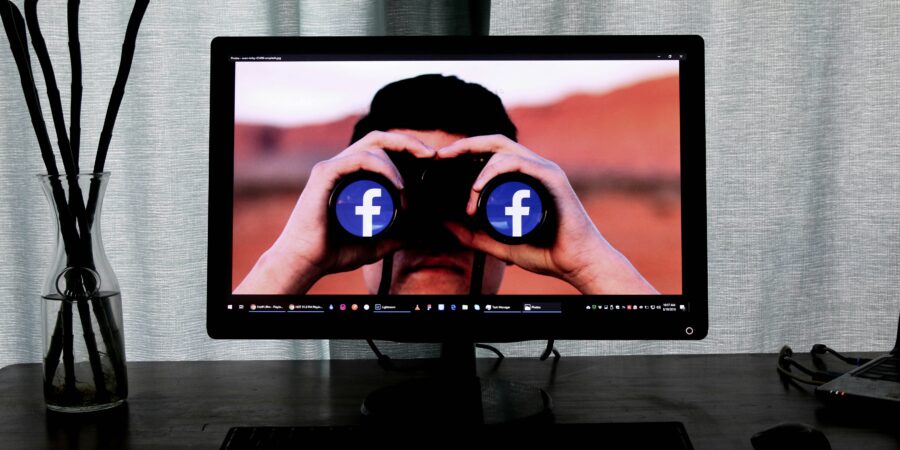
Facebook continues to lead the pack with 2.9 million monthly active users worldwide.
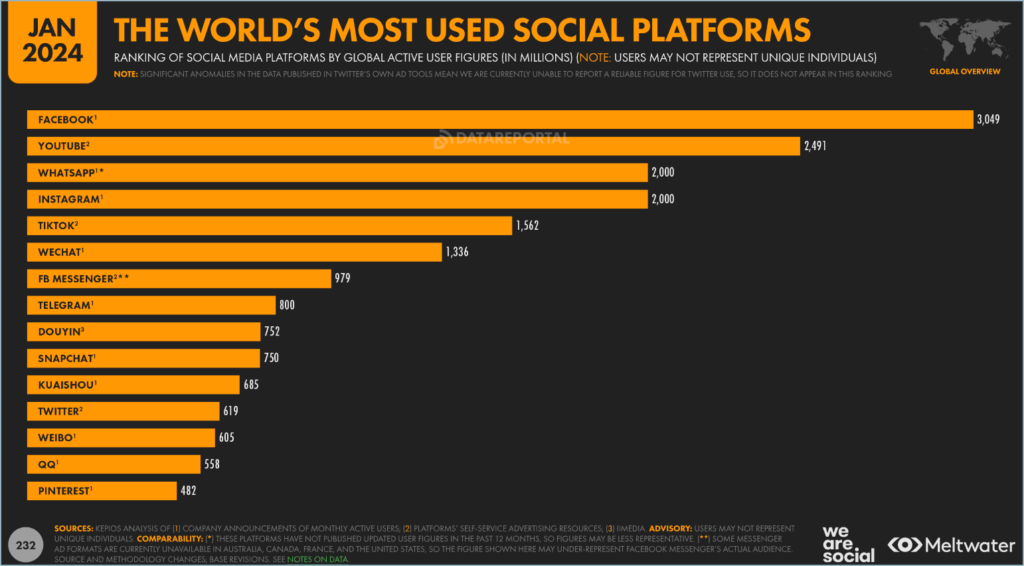
Social media’s influence extends beyond just connecting people. It has the power to shape our thinking on a global scale and potentially influence the outcome of many important elections this year. The various forms of social media, like Facebook, are continually evolving and changing their offerings and platforms to suit future needs.
For a deeper dive into this topic, I recommend listening to recent interviews I’ve had with Phil Whelan on Hong Kong Radio 3 and Anthony Tilli on MMMFM. These discussions provide valuable insights into the impact and future of social media.
As we look to the future, one can’t help but wonder what the next technological revolution will be. Will it be as transformative and impactful as Facebook? Only time will tell. The strategic lesson here is that we always need to be thinking about what’s next and how best to see the possibilities for it and to leverage it.
What do you think will be the next big thing in technology? Share your thoughts in the comments below!
Listen live to my chats on Facebook’s birthday and it’s future on:
Hong Kong Radio 3 with Phil Whelan (17 minutes 50 seconds)
Triple M FM with Anthony Tilli (4 mins 37 secs)
#Facebook #SocialMedia #Technology #Innovation #DigitalRevolution #Communication
Frequently Asked Questions
Q: What is Facebook’s genuine legacy in terms of social change?
Facebook demonstrated at scale that connection infrastructure creates network effects powerful enough to reshape political, social, and commercial behaviour globally. It proved that a platform could become infrastructure without being regulated as infrastructure. Its legacy includes: democratising publishing, enabling global community formation, and demonstrating that attention at scale is a resource that can be monetised and weaponised simultaneously.
Q: What did Facebook get catastrophically wrong that the next generation of platforms should learn from?
The assumption that connecting people is inherently beneficial regardless of what they connect around or how the connection is mediated. Optimising for engagement without distinguishing between healthy and harmful engagement produced demonstrable social harm. The lesson is that scale platforms are not neutral, the design choices embedded in their systems produce real-world consequences.
Q: What does Facebook’s trajectory tell us about the lifecycle of dominant platforms?
That dominance is not permanent and that the biggest threat to a dominant platform is usually not a direct competitor but a shift in the underlying social behaviour it serves. Facebook lost younger generations not to a better Facebook but to formats (short video, ephemeral content, private messaging) that served different social needs. Incumbents optimise for their current users; new entrants design for the users the incumbents are ignoring.
Q: Can Morris Misel speak on platform technology, social media futures, and digital society for our event?
Yes. Platform dynamics, digital society, and the governance of social infrastructure are regular keynote topics. Book at morrismisel.com.
In the blink of an eye, Facebook just turned 20 on the 4th February 2024. This social media giant, which started as a simple bulletin board for Mark Zuckerberg’s Harvard university friends to find out who was on campus, what they were up to and how/where to find them, has transfo.
The window between a signal arriving and it demanding a response is shortening. Facebook is already shaping strategy conversations in forward-looking organisations. Treating it as a future concern rather than a present one builds a preparedness gap that will have to be closed under pressure.
The most important question is not whether Facebook will matter, but how quickly it will matter in your specific context. Leaders benefit most from mapping the ripple effects early — not just the direct impact but the second and third-order consequences that arrive later and hit harder. That is the practical work of foresight.