The Productive Mask: What Quiet Burnout Is Doing to Your Organisation’s Decision Quality
Something happened in a room I was working in recently. A leadership team. Senior people. Experienced executives who’d navigated real complexity, not theoretical complexity.
We were mid-session. Strategic discussion. The kind of conversation where the quality of the thinking genuinely changes the outcome.
And I noticed something.
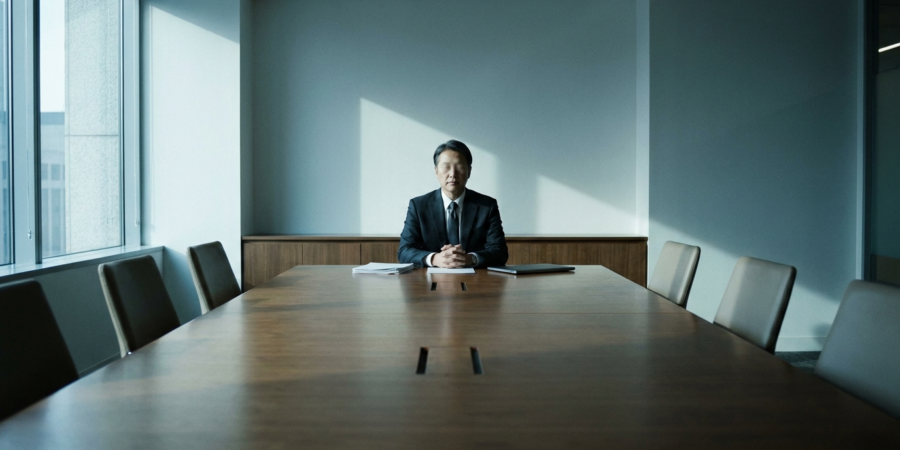
One of the most respected people at the table (someone whose instincts I’d watched in action before) was present in every formal sense. On time. Contributing appropriately. Nodding in the right places. But something had shifted. The questions weren’t landing with the same edge. The counterintuitive pushback that had always been her signature wasn’t there. When a familiar option and a more uncertain but arguably better option both sat on the table, she went with familiar.
I didn’t say anything in the moment. Afterwards, I learned she’d been quietly absorbing an impossible workload for three months. Not complaining. Not flagging it with anyone. Just managing.
She was burned out. And no one in her organisation knew. Including her HR team. Including her own manager. The system that was supposed to see her said she was fine.
This is what I want to sit with today.
Not burnout as a wellness issue. Not burnout as an absenteeism problem. But quiet burnout as an organisational decision quality problem, and why the measurement systems most organisations have built almost guarantee they won’t detect it until it’s already costing them.
The Signal Problem
For years, organisations trained themselves to watch for particular signals.
The original burnout picture was visible. The employee who stopped showing up. Who requested leave. Who lodged a complaint or made their exhaustion legible in some formal, documentable way. HR systems, engagement surveys, EAP referral protocols, manager check-in templates: all of these were built to catch those signals. They made sense for the kind of burnout they were designed to find.
But the environment has changed. And the signals have changed with it.
In a period of sustained restructuring, which is the lived reality for most large organisations right now, the rational response for a depleted employee is not to signal distress. It’s to mask it.
Being seen as not coping, in an organisation actively deciding who is essential, is not an experience most people choose to invite. The calculation is not irrational. It’s survival.
This is the heart of what I call the PTFA™ trap: Past Trauma and Future Anxiety operating simultaneously in the same system, creating behavioural patterns that are almost impossible to see from inside either the organisation or the individual.
Past Trauma for the organisation: we learned to watch for the old signals. We built infrastructure around those signals. We measure what those signals can tell us.
Future Anxiety for the employee: in a restructuring environment, being seen as not coping carries genuine professional risk. So the rational move is to keep performing. To keep delivering. To wear the productive mask.
The result is a structural measurement blindspot. The organisation’s detection systems are looking for signals that depleted employees have strong incentives not to send.
Both sides are behaving logically within their own frame. But the combined effect is that the problem becomes systematically invisible.
What May 2026 Is Telling Us
The research from this period is worth pausing on.
Spring Health and EI Magazine published findings in May 2026 that sketch a specific picture of where we are. Around 23 per cent of workers are in active burnout. That number is significant on its own. But the more striking finding sits underneath it.
Nineteen per cent of HR leaders estimate that 50 or more employees per 100 are in silent burnout: depleted but not visible, performing but not functioning at capacity. Mental health leave has increased 25 per cent year on year.
And here’s what distinguishes 2026 from earlier burnout periods: the neurological presentation has shifted. The dominant pattern is no longer anxiety. It’s apathy.
Anxiety is at least partially legible. People in genuine anxiety eventually signal it, escalate it, or have it surface behaviourally in ways that become visible. Apathy is quieter. From the outside, apathy looks like calm. Like steadiness. Like professionalism.
The employee in quiet apathetic burnout is often described by those around them as “always so dependable.” They don’t cancel meetings. They don’t miss deadlines. They respond to messages. They are, by every formal metric, performing.
They just aren’t bringing their full thinking any more.
And most organisations have no measure for that.
What’s Actually Being Eroded
Let me be specific about what’s at stake. Because the risk here is not primarily a wellbeing risk, though it absolutely is that too. The risk that tends to get underweighted is the strategic risk.
When we talk about what makes senior leadership genuinely valuable in this period, it’s not the technical layer. The technical layer (analysis, pattern recognition, synthesis, projection) is increasingly well served by AI. What remains distinctly human, and distinctly valuable, is the depth of judgment that comes from lived experience, considered interpretation, and the willingness to take an uncertain but better path rather than the familiar path that offers comfort and precedent.
I explored this in some depth in a post on why knowledge alone is no longer the differentiator it was. The argument there is that technical expertise, while necessary, has stopped being sufficient. What distinguishes the leaders who navigate genuinely uncertain territory is something else: the capacity for considered, creative, courageous judgment.
Quiet burnout specifically degrades that capacity.
Not the technical capacities. Those tend to hold up longer, because they’re more automated, more procedural, less energetically expensive. But the deeper judgment layer: creative range, the quality of questions, the willingness to sit in genuine uncertainty rather than defaulting to precedent. Those erode earlier, and the person often doesn’t notice the erosion because they’re still technically functional.
This is what makes quiet burnout a strategic risk rather than just a people risk.
You can lose someone’s best thinking while their productivity metrics remain completely green.
The Ripple Effects
When I talk about Ripple Effects, I mean the second and third-order consequences of a change: the consequences that happen downstream of the first visible effect, in places and at timescales the original decision-makers weren’t watching.
The first-order effect of quiet burnout is individual: one person is depleted and their judgment quality has narrowed.
The second-order effect is relational: the people around that person begin, unconsciously, to calibrate to their current state rather than their full capacity. The meeting tempo changes. The depth of questions asked decreases. The norm for what a “good” contribution looks like compresses. Teams calibrate down to match their leader’s current functional ceiling, not their potential.
The third-order effect is organisational: the decision quality of the entire leadership tier compresses. Not because everyone is burned out, many won’t be. But because the team norms, the conversational quality, and the appetite for genuine uncertainty have all shifted in response to the depleted leaders in the room.
And the organisation’s measurement system is still reading green.
Deliverables on time. Headcount stable. No leave requests. No EAP flags. The dashboard says the organisation is performing.
The mask is working. At scale.
Across the Sectors I’m Working In
I want to make this concrete, because I see versions of this pattern across every sector I’m currently engaged with.
In corporate environments (particularly those in construction and finance going through sustained leadership transition), the visible symptom is what I’d describe as decision compression. Leaders who are historically comfortable with complexity are defaulting to familiar options. The creative range of the room has narrowed, but because output is still being delivered, the organisation hasn’t identified it as a risk.
In education, particularly in leadership cohorts preparing for what is genuinely a period of structural disruption, I’m seeing something similar: leaders who are exhausted by the uncertainty of the transition period and are showing up to professional development with their technical problem-solving intact but their strategic curiosity diminished. They want frameworks. They want clear answers. The appetite for genuine ambiguity, which is exactly what this period requires, has dropped.
In local government, where the pressure to demonstrate value to multiple stakeholders simultaneously has never been greater, the quiet burnout pattern shows up as consensus-seeking behaviour where there used to be genuine debate. Not because the people have changed, but because genuine debate requires energy that is in short supply.
In associations and member-based organisations, I’m watching boards and executives whose creative and strategic contributions have compressed significantly, but who remain technically present and procedurally competent.
The pattern is consistent. The productive mask is an organisational phenomenon, not an individual quirk.
Why the Current Systems Cannot See It
I want to name this clearly, because the solution doesn’t lie in individual manager skill or HR programme design. The solution starts with understanding that this is a structural problem.
The measurement systems most organisations have built were designed for a different environment. Engagement surveys were designed when self-report was reliable, when employees had less reason to manage their perception of their own state. Check-in protocols were designed when the primary burnout signal was visible disengagement, not productive-looking apathy.
In the current environment, those tools are measuring the wrong layer.
Asking someone “how are you managing?” when the structural incentive is to answer “fine, thank you” doesn’t surface the signal. It surfaces the managed presentation of the signal.
What I see working in the organisations genuinely grappling with this is a shift in what gets measured. Not what people report about their state, but what shows up in the quality of their work and their conversations. The focus moves from output proxy metrics to decision quality indicators: not “did the report get delivered” but “what is the quality of thinking inside it.” Is the range of options genuinely wide? Are the questions in decision meetings getting deeper or shallower over time? Is there real challenge to established preferences, or is the room agreeing faster than the problem deserves?
Alongside that, conversation quality becomes a signal worth tracking. Are discussions getting shorter and safer? Is dissent decreasing? Are the same issues cycling without resolution? These are not HR metrics. They are leadership metrics, and they are visible to anyone in the room paying attention.
None of this is straightforward to implement. But the organisations redesigning their measurement layer, moving from output tracking to thinking quality tracking, are the ones that have shifted the conversation from a wellness programme problem to a strategic risk problem.
That reframe matters enormously. When it’s a wellness programme problem, it gets delegated to HR and ticked. When it’s a strategic risk, it sits in the room with the executive team.
The Structural Incentive That Has to Change
Here’s the layer that most organisations aren’t yet addressing.
The people most affected by quiet burnout include senior leaders, middle leaders, and high-performers with significant accountability. They are also the people with the strongest structural incentive to mask it.
They have the most to lose from being seen as not coping. They have the most visibility. They have the clearest sense of what a restructuring environment does to the people who raise their hands.
This means that redesigning the survey or adding a wellbeing question to the quarterly check-in will not solve the problem. Because the people carrying the problem have already decided, rationally, not to answer honestly.
The question isn’t “how do we get people to be more open.” The question is: what have we built that makes masking the rational choice, and what would it take to change that?
That’s a governance question. It’s a systems question. It requires executive ownership, not programme delegation.
What does it actually cost someone when they flag that they need to recalibrate their workload? Not the stated answer: the real answer. Does it affect how they’re perceived in the next talent review? Does it affect their standing in a restructuring conversation? If yes, the structural incentive to mask hasn’t changed, regardless of what the culture campaign says.
This is where organisations can genuinely move. Not by asking people to be vulnerable, but by redesigning the actual consequences of honesty so that masking becomes the less rational option.
That’s a harder conversation than running a wellbeing programme. But it’s the only one that reaches the actual problem.
What I’m Watching
The gap I’m watching in 2026 is between the organisations treating quiet burnout as a communications challenge and the ones treating it as a strategic risk.
The first group will update the language. Refresh the intranet resources. Train managers on check-in conversations. Run a wellbeing survey. And in twelve months they’ll have a fuller picture of their people’s stated experience, which will still be shaped by the structural incentive to present as fine.
The second group will have a harder conversation. They’ll look at what they’re actually measuring and what they’re not. They’ll interrogate the real consequences of disclosure. They’ll redesign some structural incentives. They won’t get it perfect. But they’ll start to see the mask, and they’ll start to create conditions where taking it off doesn’t carry the career risk it currently does.
The data from May 2026 is clear enough: quiet burnout is widespread, it presents as productivity not distress, it’s concentrated in the people your measurement systems are most likely to read as fine, and its primary risk is not absenteeism but the gradual degradation of strategic thinking quality in the people whose thinking you most need.
What Choose Forward Looks Like Here
I want to be precise about what a forward choice looks like in this context. Because “prioritise wellbeing” is not it. That framing, however well-intentioned, leads to a programme, a poster, and a ticked item. It doesn’t close the structural gap.
A Choose Forward response to quiet burnout starts with a naming problem. The problem needs to be named accurately, in the room where it can be acted on.
Not: “we need to prioritise mental health.”
But: “we have a decision quality risk in our leadership tier that our current measurement systems cannot see, and we need to understand what we are actually measuring and what we are not.”
That reframe changes the conversation. It changes who is responsible. It changes the urgency.
From there, the practical path is concrete. Redesign what gets measured. Move from output-proxy metrics toward thinking-quality indicators that don’t depend on honest self-report in an environment where self-report has been compromised. And redesign the structural consequences of disclosure, which requires honest interrogation of the real outcomes, not the stated ones, for someone who flags that they are not coping. Then actually change those outcomes, not just the language around them.
Neither of these is a programme. Both of them are leadership choices.
The Choose Forward framework is about exactly this: making real choices under genuine pressure rather than managing the appearance of choice. The organisations that will navigate this period well are the ones willing to name the structural problem accurately and make a real decision about it.
That decision is available right now.
Morris Misel is a foresight strategist and keynote speaker working with organisations, leaders, and associations to prepare for uncertainty, interpret signals, and make better strategic choices. He is based in Melbourne, Australia.
Frequently Asked Questions
Q: What is the productive mask, and why is it dangerous?
The productive mask is the appearance of functional high performance maintained by experienced professionals who are in a state of chronic cognitive and emotional depletion, quiet burnout. They are completing tasks, attending meetings, producing outputs. What is not visible is the degradation of the higher-order cognitive functions that their roles most require: the quality of their judgment on complex questions, the creativity of their problem-solving, the depth of their engagement with novel situations, and the relational attunement that their leadership functions depend on. The mask is maintained by experience and professional discipline, which means it is most convincing in exactly the people whose depletion is most consequential for the organisation.
Q: How does quiet burnout degrade decision quality specifically?
Chronic depletion narrows cognitive bandwidth. Under depletion, the brain defaults to heuristics (familiar patterns, established procedures, comfortable precedents) rather than genuine evaluation of novel situations. The decisions that look most affected are the ones that require genuine engagement with complexity, ambiguity, and trade-offs: exactly the decisions that experienced leaders and professionals are most relied upon to make well. The organisation continues to receive decisions from these people; what it is not receiving is their best judgment. The degradation is real but invisible because the process looks intact.
Q: What should organisations do about this beyond the usual wellbeing interventions?
Treat it as a judgment quality issue, not just a welfare issue, which changes both the urgency and the interventions. The wellbeing framing tends to produce support programmes that depleted individuals often cannot access precisely because they are depleted. The judgment quality framing produces structural changes: reducing the decision load on the people whose judgment matters most, creating genuine recovery conditions in the flow of work rather than supplementary to it, and making the productivity mask visible rather than rewarding the performance of capability while the actual capability degrades.
Q: Can Morris Misel speak on quiet burnout, decision quality, and what organisations need to do structurally to protect the judgment of their most experienced people?
Yes. Decision quality and organisational wellbeing are core keynote topics. Book at morrismisel.com.