{Radio} The world continues….
The last few months have brought a steady stream of end of the world related press releases and innovations, fed mostly from the pessimism of the past two years of COVID, but perhaps strangely from an optimism and determination that no matter what we will survive, even if who or what survives is not exactly what it it used to be.
In this week regular radio segment Hong Kong Radio 3’s Phil Whelan and I chat about the world’s black box that is being developed to outlive humanity and record and store end of the world data, should the worst happen.
This impenetrable indestructible black box, which looks like an upside down pyramid, is the brain child of Tasmania University, Clemenger BBDO and the Glue Society.
It comes complete with internet and solar panels to ensure continuous storage (assuming the sun’s still around) and instructions on how to open the box and what it is.
This kinda sounds Mayan temple, Stonehenge, pyramids to me, but its a noble cause, so I’ll go with it.
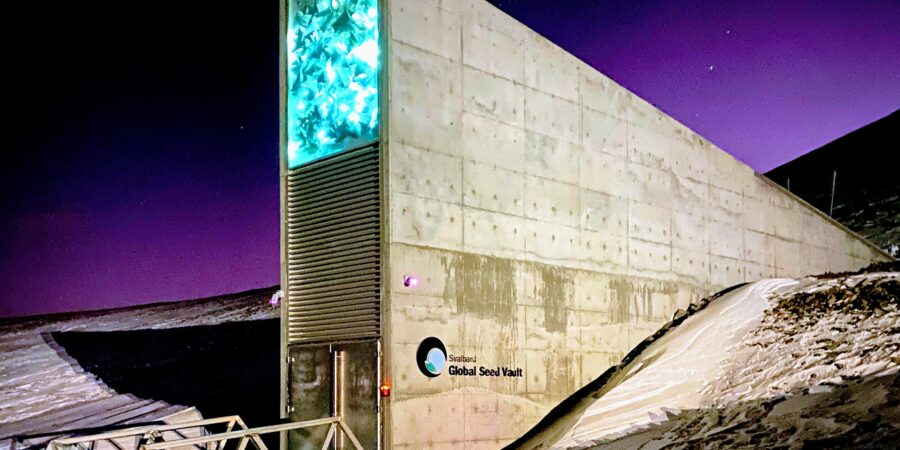
More interestingly though is the Svalbard Global seed vault, that’s been in operation for a number of years with the purpose of collecting and storing the world’s largest collection of crop seeds, for future use, should crops, for whatever reason become extinct.
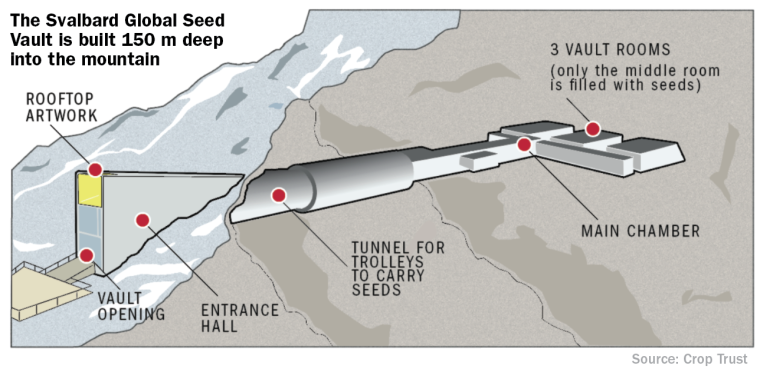
The vault currently has 1,000,000 samples from almost every country, and has capacity for another 3.5 million.
Listen to our chat to find out more.
Frequently Asked Questions
Q: What do you mean by ‘the world continues’?
It is a corrective to the disruption narrative. Every year produces headlines suggesting that something fundamental is ending, retail, work, democracy, attention spans. And every year, the underlying human needs being served by these things persist, even as the forms change. Foresight that only tracks disruption misses the continuity that actually governs most of life.
Q: What are the things that are most likely to persist despite technological change?
The fundamental human needs: belonging, purpose, safety, meaning, recognition, and connection. The technologies and institutions that serve these needs will change; the needs themselves will not. The most durable businesses, institutions, and careers are those that stay anchored to the underlying need rather than to a specific mechanism for serving it.
Q: How do you balance attention to disruption with attention to continuity?
By asking two questions simultaneously: what is genuinely changing, and what is the underlying human or organisational need being served? When you can answer both, you can design for the transition rather than just react to the disruption. This is the core discipline of practical foresight.
Q: How can Morris Misel help our organisation develop this kind of balanced foresight capacity?
Through keynotes and workshops that build foresight literacy across leadership teams. Book at morrismisel.com.
The last few months have brought a steady stream of end of the world related press releases and innovations, fed mostly from the pessimism of the past two years of COVID, but perhaps strangely from an optimism and determination that no matter what we will survive, even if who or.
When signals like The world continues. emerge, organisations that engage early have the advantage of choosing their response rather than reacting to events. That gap between those who prepared and those who did not is where competitive positioning is actually made or lost.
The most important question is not whether The world continues. will matter, but how quickly it will matter in your specific context. Leaders benefit most from mapping the ripple effects early — not just the direct impact but the second and third-order consequences that arrive later and hit harder. That is the practical work of foresight.