
{Radio} The not so great resignation – 70% will continue on from where they left off!
Post COVID there will be a lot of soul searching and many will question their work, life and future and some will do something about it, but most will not.
I’m guessing, despite all the post COVID resolutions’ we’ve made, that just like our annual new year’s eve resolutions, they’ll be chock full of good intentions but empty of long term change.
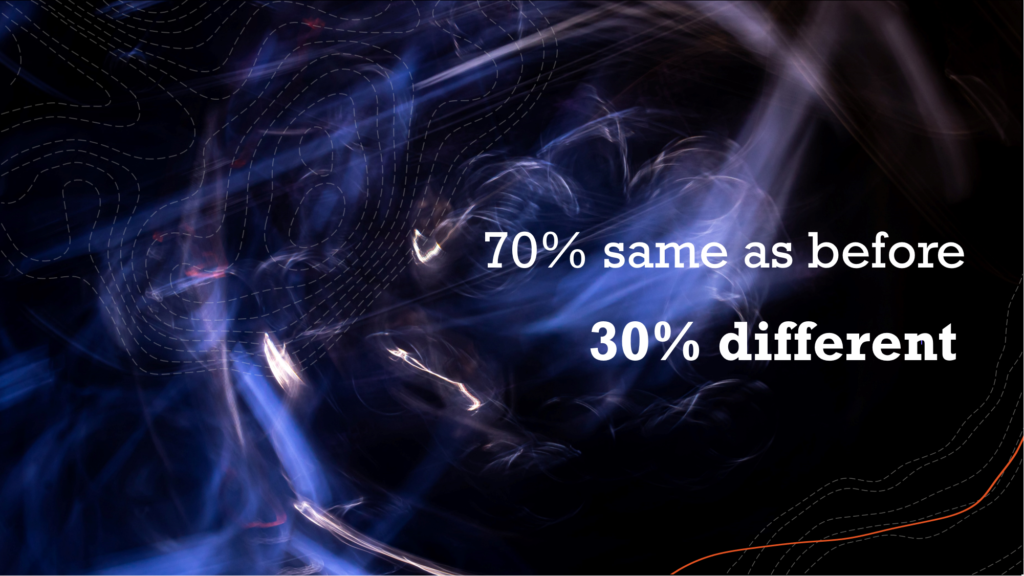
My reality is that 70% of Australian’s will move forward to very similar lives, jobs and businesses to those they left behind pre COVID, which leaves 30% to make the big changes that we’re hearing lots about.
The other major difference is that we are not America, which is where the term and statistics are coming from.
Our employment structure and work landscape are fundamentally different.
In Australia the great resignation, will turn into the job churn.
There are currently lots of jobs on offer, far more than we have people for.
It’s a great time to trade up in title, responsibility. To take a career risk, try new skills in different industries. To be adventurous in where, when and how you work.
It will be a long time before employers are this game again to take on staff that don’t 100% meet the brief, but still have something to offer.
But despite all of this, I’m sure it will be business and work as usual, for most.
For more on this listen in to Triple M’s Anthony Tilli and I chat all things future employment.
Frequently Asked Questions
Q: What was the Great Resignation and did it live up to its name?
The 2021-2022 surge in voluntary job departures was real (particularly in the US, UK, and Australia) but the ‘resignation’ framing was partly misleading. Most of the movement was reallocation: people moving to better conditions, different sectors, or different working arrangements rather than leaving the workforce. The signal was not mass withdrawal but mass renegotiation.
Q: What did the Great Resignation reveal about the employer-employee relationship?
That the power balance had shifted more than employers had acknowledged. The combination of tight labour markets, accumulated savings from lockdowns, and a genuine reassessment of priorities during the pandemic gave workers leverage that had been building for years. Some employers responded adaptively; many responded defensively.
Q: What does the data show happened to those who resigned?
Most did better. Research in multiple countries found that voluntary job changers during the period achieved meaningful wage gains and in many cases moved to roles better aligned with their values and circumstances. The Great Resignation is an example of collective behaviour producing rational individual outcomes even without coordination.
Q: Can Morris Misel speak on the future of work, employee experience, and talent strategy?
Yes. Work, leadership, and the evolving employer-employee relationship are central keynote and advisory topics. Book at morrismisel.com.
Post COVID there will be a lot of soul searching and many will question their work, life and future and some will do something about it, but most will not. I’m guessing, despite all the post COVID resolutions’ we’ve made, that just like our annual new year’s eve resolutions, they.
When signals like The not so great resignation 70% will continue on emerge, organisations that engage early have the advantage of choosing their response rather than reacting to events. That gap between those who prepared and those who did not is where competitive positioning is actually made or lost.
The most important question is not whether The not so great resignation 70% will continue on will matter, but how quickly it will matter in your specific context. Leaders benefit most from mapping the ripple effects early — not just the direct impact but the second and third-order consequences that arrive later and hit harder. That is the practical work of foresight.