EdChat and the Future of Education: If Schools Can Tame AI, What’s Your Excuse?
TL;DR
South Australia just launched EdChat, the nation’s first safe, curriculum-aligned AI chatbot for schools.
It’s not just an education story, it’s a signal for every industry.
If one of the most conservative, regulated systems on earth can open the door to AI, why are you still holding back?
The lesson is clear: stop banning, stop fearing, and start preparing.
From Bans to Breakthroughs
Education is usually the slowest to adopt new technology. Regulation-bound. Tradition-heavy. Risk-averse.
And yet, this week South Australia became the first state in the country to roll out EdChat, a safe, government-backed, Microsoft-powered generative AI chatbot designed for classroom use.
While other states banned ChatGPT, South Australia built a safe alternative. It comes with guardrails. It comes with oversight. And it comes with a message:
If schools can tame AI, what’s your excuse?
History reminds us: every time a new technology appeared – PCs, the internet, mobile phones, social media, even television and radio, the first instinct was to ban it.
These bans were never about the students. They were about us.
Adults projecting our PTFA (Past Trauma, Future Anxiety) onto the next generation.
But bans never last.
Technology wins.
And young people adapt faster than the systems around them.
This time, South Australia is showing what happens when we lead with preparation instead of prohibition.
Read more: Fear-Based Tech Parenting
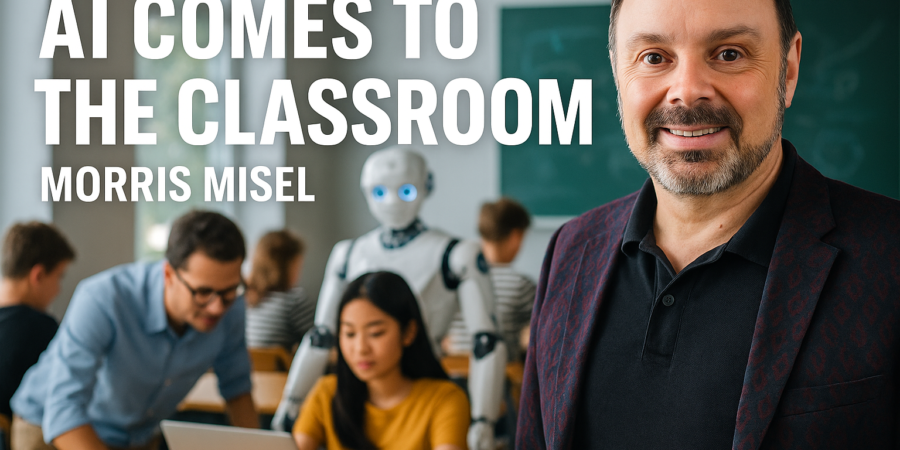
HUMAND in the Classroom
For more than three decades, I’ve argued that education isn’t about replacing teachers, but reshaping the role of humans, machines, and AI in learning.
That’s the essence of my HUMAND™ framework, Human + Machine + AI collaboration.
-
Humans (teachers) focus on wisdom, mentoring, creativity, empathy.
-
Machines handle the routine, the repeatable, the structured.
-
AI scaffolds learning, providing feedback, generating ideas, tailoring resources.
EdChat is HUMAND in action. It doesn’t replace teachers. It helps them. It doesn’t idolise AI as a god, nor fear it as a threat. It positions AI where it belongs: as a tool for human growth.
Explore: The Future of Work
Explore: Future of Education – Balancing AI and Human Ingenuity
Decision Trust Zones
What makes EdChat unique isn’t the chatbot itself, it’s the boundaries around it.
-
Data is stored securely in Australia.
-
No information leaks back to global servers.
-
Filters block inappropriate requests.
-
Teachers remain in the loop.
This is a Decision Trust Zone. It shows you don’t have to choose between banning AI or letting it run wild.
You can shape the conditions, the rules, and the responsibilities.
That’s as true in business as it is in schools.
Read more: AI Summaries and Decision-Making
Imagine the Possibilities
For decades, I’ve provoked audiences to think differently about education’s future.
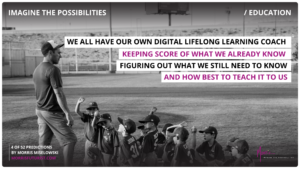
What if every child had a personalised AI tutor?
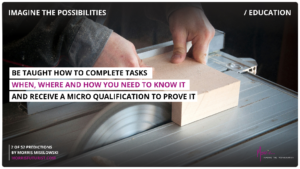
What if learning was broken into micro-qualifications earned just-in-time?
What if we taught for the possibilities of the next century, not the jobs of the last?
EdChat is an early glimpse of this shift. Imperfect, yes. Experimental, absolutely. But a signal that the future classroom is already arriving.
Explore: Majors Are Obsolete – The Future of Education
Explore: Knowledge is Powerless
Ripple Effects Beyond Classrooms
When today’s students grow up with AI in the classroom, the ripple effects will be everywhere:
-
Workplaces will inherit employees who treat AI as normal, but not magical.
-
Parents will be “taught up” by their children, changing family dynamics.
-
Leaders will lose the excuse of waiting, because their youngest staff will have been using AI since high school.
This is why CEOs, boards, and executives should care. Education is usually the last to change. If it’s shifting now, why aren’t you?
Explore: Future of Apprenticeships in a Post-Automation World

Stop Wailing, Start Preparing
We can’t keep teaching children for last century’s world. AI is already in their world, whether we like it or not.
The real choice is whether we educate them to use it as a tool, or force them to figure it out alone.
Our job, as parents, leaders, and decision-makers, is simple:
Choose Forward for our children until they can Choose Forward for themselves.
Explore: Future of Intelligence and Knowledge Retention
This year, I’ve been asked to brief countless schools, universities, and education leaders on exactly these questions.
But these aren’t just education questions.
They’re leadership questions.
They’re strategy questions.
They’re future-of-your-industry questions.
As the year closes and the next begins, I’m booking end-of-year retreats and new-year kick-off briefings, for schools, boards, executive teams, and industry associations.
Because if education can tame AI, why can’t you?
Book me now to brief your board, your teachers, your team.
Let’s prepare not for yesterday, but for the century already unfolding.
Morris Misel is a futurist and foresight strategist heard by millions each year onstage and in the media.
For more than 30 years he has helped organisations across 160 industries prepare for what’s next.
His Immediate Futures™ frameworks, including HUMAND, Ripple Effects, Decision Trust Zones, and PTFA, guide leaders to move from fear to preparation.
You can’t predict tomorrow, but you can prepare for it.
Choose Forward
#MorrisMisel #Futurist #Foresight #EdChat #FutureOfEducation #FutureOfWork #AIinSchools #EducationTechnology #SafeAI #Leadership #StrategicForesight #DecisionMakers #CEOLeadership #EventOrganisers #FutureSignals #ImagineThePossibilities #HUMAND #RippleEffects #DecisionTrustZones #PTFA
Frequently Asked Questions
Q: What are the most significant tensions educators are navigating right now?
The tension between preparing students for a world that is changing faster than curriculum can adapt and the institutional constraints that make rapid curriculum change structurally difficult. The tension between the genuine value of human relationship and mentorship in education and the efficiency pressures that push toward larger classes and more automated assessment. And the tension between the ideal of education as the development of capable, curious, adaptable humans and the reality that most education systems are measured and funded on the basis of credential production and test performance.
Q: What does AI mean for assessment and academic integrity in education?
It is the most immediately disruptive challenge because assessment, in most education systems, is the mechanism by which student capability is certified and the credential is awarded. When AI can produce work that meets the assessment criteria for many existing tasks, the assessment becomes a test of AI capability rather than student capability. The response from educators is bifurcated: some are moving toward AI-resistant assessment (oral examination, demonstrated performance, portfolio assessment, project work with real audiences) while others are integrating AI use into the assessment itself, treating the capacity to use AI effectively as itself a graduate capability. Both are legitimate responses; they reflect different views of what education is for.
Q: What would education look like if it were genuinely designed for the world students are entering?
Significantly more emphasis on the capabilities that AI does not replicate well: complex judgment in ambiguous situations, ethical reasoning with genuine stakes, collaborative problem-solving across difference, and the ability to learn continuously in domains that did not exist when the student was studying. Significantly less emphasis on information recall and procedural task completion that AI can now perform reliably. And institutional structures that treat the development of these capabilities as the core work of education, not as enrichment activities around the ‘real’ curriculum of content delivery and testing.
Q: Can Morris Misel speak on education futures, AI in learning, and preparing students for genuine uncertainty for our education leadership, teaching association, or government audience?
Yes. Education futures are core keynote topics for education leadership, teaching associations, and government audiences. Book at morrismisel.com.