{Podcast} Inside the Life of a Futurist on the Move
Most people see me on stage, the confident futurist, walking audiences through the signals of what’s next.
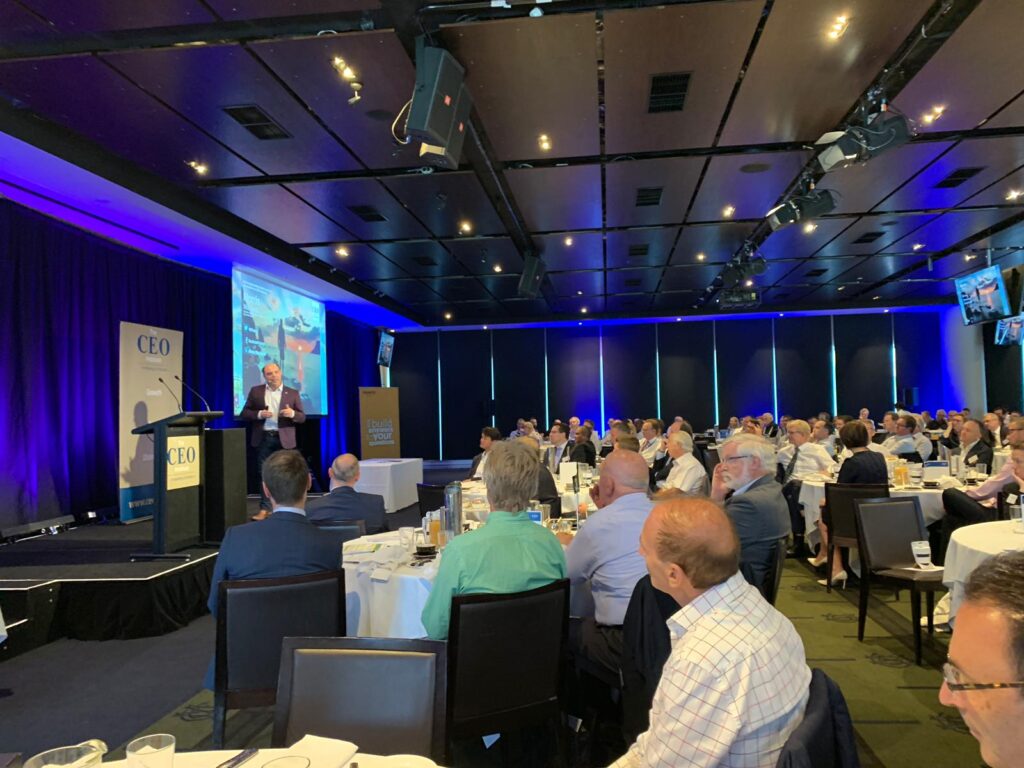
What they don’t see are the hours in airports, the hotel rooms turned temporary offices, or the quiet moments before a keynote when I’m rebuilding slides because something new has clicked.
Last month, I was invited by The Solo Traveller magazine to reflect on that side of my life, the constant movement behind the work.
It’s something I rarely talk about publicly, yet it’s shaped so much of how I see the world, how I work, and how I build foresight.
The interview became a window into a life that exists between flight paths and futures, a rhythm of observation, routine, and calm amid motion.
For most people, travel is escape. For me, it’s research. It’s my foresight lab.
The rhythm of constant motion
I spend a large part of my life in transit. Airplanes and conference halls are my second home. I’ve learned that the only way to survive that rhythm is through ritual.
My carry-on bag has become both wardrobe and office: stage clothes, travel clothes, toiletries, laptop, passports, clickers, microphones, everything in its exact place. It’s muscle memory now. Wherever I am in the world, I can reach in and know precisely where something is. That tiny detail is the difference between chaos and calm.
When I arrive somewhere new, I always unpack straight away. Clothes hung, shirts ironed, gear ready. It’s not about neatness, it’s about focus. It makes the room feel temporary but intentional.
I walk as soon as I land, no matter how long the flight. It clears the fog and re-centres me. I avoid eating in my hotel room if I can; even grabbing something small outside reminds me that the world exists beyond the keynote.
I’ll usually ask for a higher floor, away from lifts, ideally a corner room with a view. Having something to look out at matters. It keeps me connected to place, not just schedule. And yes, if the setup isn’t right, I’ll ask to change rooms. It’s not fussiness; it’s self-management. A calm environment is non-negotiable when you’re preparing to walk out in front of a thousand people and tell them something meaningful about the future.
The foresight lab in motion
Travel, for me, isn’t downtime. It’s where observation turns into insight.
When you live in airports and hotel lobbies long enough, you start to see human systems in motion, how people move, adapt, connect, and use technology in real time. Every city becomes a micro-experiment in how the future unfolds.
I often describe foresight as the ability to notice before others do. Solo travel sharpens that muscle. A walk through a neighbourhood no guidebook mentions can tell you more about societal change than a dozen reports. Watching how people eat, queue, or use their devices becomes a study in adaptation.
It’s here that ideas for models like HUMAND™ begin to take shape, understanding how humans, machines, and AI coexist and complement each other in everyday life.
Sometimes, the quiet between gigs is where new frameworks emerge. The Immediate Futures™ model was refined somewhere between Singapore and San Francisco, built from fragments of notes scrawled mid-flight. Solitude allows ideas to breathe. The hum of an aircraft or the stillness of a hotel room can be the best environment for strategic clarity.
If you want a glimpse of how travel itself is evolving, my reflections in Travel Trends 2025: Hospitality, AI, and Wellness explore exactly that, how movement, comfort and technology are reshaping how we rest, recover and think.
Balancing the human and the horizon
When my children were younger, I had a rule about travel: two nights, three days maximum for local gigs, if possible. I’d Skype with them each night, help with homework, and stay tethered to home life. I never missed a school concert or parent-teacher meeting; if something clashed, I simply didn’t take the booking.
That discipline wasn’t just about family. It was foresight in action, understanding what mattered most and making deliberate choices around it. Future readiness isn’t only corporate; it’s personal. It’s the ability to design your own boundaries before life designs them for you.
Now, when I speak with leaders about adaptive systems or resilient cultures, I often think back to those years. The foresight we apply to business can, and should, begin at home.
The silence after the noise
After a keynote, the silence is sometimes the hardest part.
You can spend a day surrounded by energy and applause, then find yourself in a quiet hotel room with only the hum of air conditioning for company.
Over time, I’ve come to value that silence. It’s where reflection happens.
In foresight terms, it’s what I call a Decision Trust Zone™, that necessary space between reaction and response. On the road, that might look like replaying a presentation in my head, noting what resonated and what didn’t, or rebuilding slides at 4 a.m. because a new signal or story fits better.
In stillness, pattern recognition surfaces. In quiet, clarity forms.
When the world surprises you
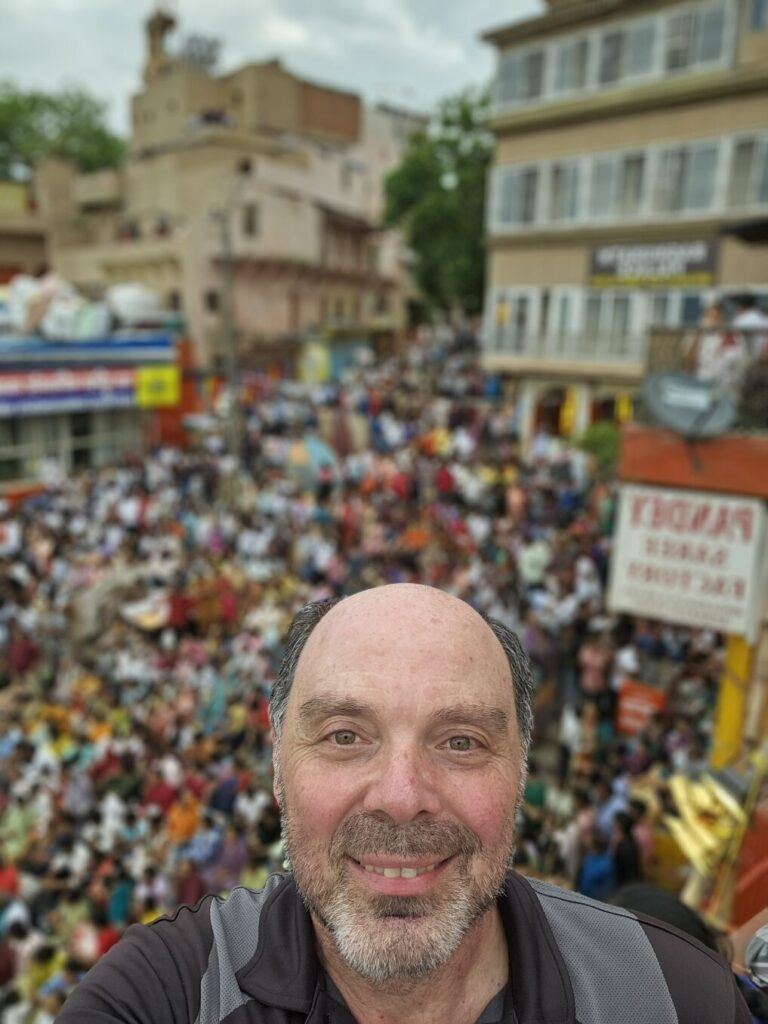
Some places shift you permanently. For me, one of those was Varanasi, India. I thought I was prepared. I wasn’t. Standing by the river, surrounded by rituals of life and death happening side by side, I felt both completely out of place and entirely present.
It’s overwhelming, confronting, beautiful, and humbling. It reminded me that foresight isn’t sterile or detached. It’s emotional. It’s human. It’s about understanding that change is constant and that comfort is optional.
That trip reconnected me to what I now call the Ripple Effects™,the way one moment, one conversation, one experience can alter how we see everything else.
Creating future equity
My fascination with the future has roots far deeper than technology or business. My family were refugees. From an early age I learned that the only true legacy we leave is what’s between people’s ears, not what’s between their hands.
That history taught me something about future equity, the idea that everyone deserves the chance to see a tomorrow and move toward it. When people can’t picture a future, they get stuck in what I call the tunnel of uncertainty: a narrowing of choices, imagination, and self-belief.
That’s why, alongside my corporate work, I’ve always committed time to community and pro bono projects, whether mentoring people living with disability, volunteering in crisis counselling, or supporting education initiatives. Each is about helping people reclaim agency over their future.
Travel constantly reinforces this perspective. Every flight reminds me how uneven access to the future still is. But it also reminds me how powerful foresight can be when shared, when it’s not locked up in boardrooms but lived through empathy and action.
Calm in motion
Over the years, I’ve learned that calm, for me, isn’t found in stillness; it’s built through rhythm.
The structure of movement, when intentional, becomes meditative. Packing the same way, walking on arrival, asking for a room with a view, they’re small acts that restore control amid flux.
That’s the paradox of a life lived on the move: the more you travel, the more you understand the importance of stillness within motion.
It’s the same principle I teach in leadership foresight, that resilience doesn’t come from resisting change, but from finding balance inside it.
Sometimes, between flights, I’ll look around an airport lounge and think: this is what the future feels like, people in motion, technologies enabling flow, systems adjusting in real time.
If you can read those patterns, you can sense what’s next.
What solo travel really teaches
Solo travel has taught me how to listen more deeply, to others, to environments, to signals. It’s made me more intentional. It’s made me grateful.
The quiet between events, the conversations in transit, the thousands of small interactions across cultures, they form a continuous education in human possibility.
Every city, every stage, every audience is a different mirror reflecting the same question: how do we prepare, together, for what’s coming next?
That’s what I love about foresight. It’s not about predicting. It’s about preparing. And that preparation is constant, in motion, in rest, in observation, in conversation.
The work within the journey
If your organisation is navigating constant movement and change, I help leaders and teams build foresight and calm inside that motion.
Through keynotes, workshops, and advisory partnerships, I translate the patterns of what’s next into practical clarity, helping people travel through uncertainty with purpose.
Every flight, every stage, every conversation reminds me how vital it is to build foresight into motion. That’s the work I continue to do, one journey, one client, one horizon at a time.
Book Morris for a keynote or foresight session.
Choose Forward.
Podcast
For more behind the scenes On the Road and Future of Hospitality listen to my segment on Hong Kong Radio 3 with Phil Whelan where we chat about what the future of great hotels, hospitality and adventures are, listen now (9 minutes 12 seconds)
Morris Misel is an award-winning global futurist, keynote speaker, and strategic advisor helping organisations prepare for what’s next, not just predict it. Heard by millions each year across media and stages worldwide, he’s been recognised with 11 recent international thought-leadership and foresight awards for his original frameworks and impact.
He’s the creator of Immediate Futures™, a foresight model used by leaders across more than 160 industries. His HUMAND™ approach explores how humans, machines, and AI collaborate, while his Ripple Effects™ and Decision Trust Zones™ tools help organisations navigate disruption with clarity and calm.
Through keynotes, workshops, and advisory partnerships, Misel helps CEOs, strategists, and decision-makers read the signals of change and act decisively. You can’t predict tomorrow, but you can prepare for it and that’s the work he helps people do every day.
#MorrisMisel #Futurist #Foresight #Leadership #Strategy #FutureThinking #ExecutiveLeadership #DecisionMaking #BusinessTransformation #KeynoteSpeaker #FutureOfWork #Innovation #Resilience #HumanAdaptability #ImmediateFutures #RippleEffects #HUMAND #ChooseForward
Frequently Asked Questions
Q: What does extensive global travel teach a foresight strategist that desk research cannot?
The texture of how change is actually experienced by people in different contexts, not the aggregate statistics or the trend reports, but the granular, lived experience of navigating a world that is changing at different speeds in different places simultaneously. The signals that matter most in foresight work are often the anomalies, the things that do not fit the expected pattern, the practices in one context that are not yet present in another, the emotional register that people bring to a conversation about the future. Those signals are available in person in ways that are genuinely difficult to replicate from a distance.
Q: What patterns become visible when you move between many different countries and sectors?
The universality of certain human concerns across very different cultural contexts, the desire for agency, for dignity, for genuine connection, for work that matters. And the extraordinary diversity of the institutional and cultural forms through which those universal concerns are being navigated. Seeing both, the commonality of what people are trying to achieve and the variety of how they are going about it, is the most useful orientation for foresight work, because it resists both the trap of technological determinism (one future arriving everywhere the same way) and the trap of radical particularism (every context is so different that generalisation is impossible).
Q: What does a futurist notice in a new place that others might miss?
The things that are normal there but would be remarkable somewhere else. The infrastructure choices that reveal underlying assumptions about how society should be organised. The things that people are proud of and the things they are embarrassed about. The pace of conversation and the things that are not said. The gap between the official story of a place and the lived experience of it. These are the signals that foresight work depends on, not the dramatic technological changes that everyone notices, but the quiet shifts in expectation, capability, and social organisation that precede them.
Q: Can Morris Misel speak on global foresight, cross-cultural leadership, and what the world’s signals mean for your organisation?
Yes. Global foresight and cross-cultural perspectives are core keynote offerings available for any audience. Book at morrismisel.com.