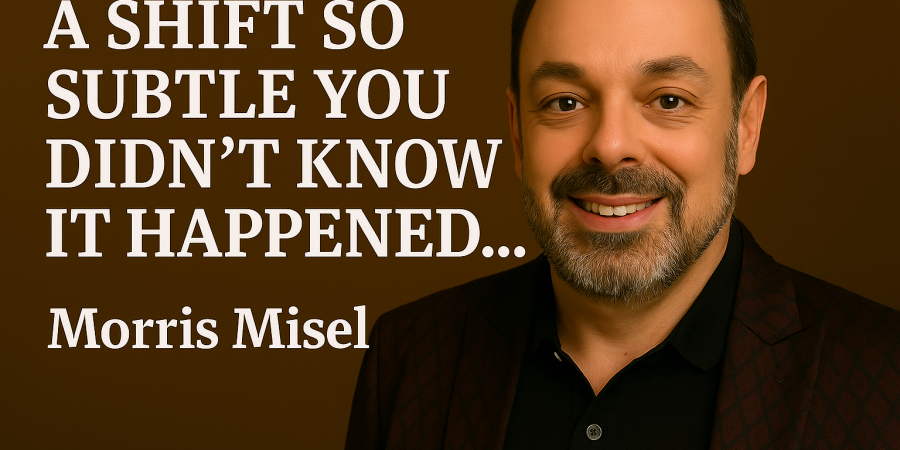
{Podcast} A Shift So Subtle You Didn’t Know It Happened. But Today’s Apple WWDC Announcements Have Already Changed You Forever.
You didn’t miss a headline.
You missed a handover.
In the space of an hour, something small and seamless got under your skin quietly changing what you expect from the tech in your hand, the voice in your ear, and the rhythm of your day.
This wasn’t about new gadgets. It wasn’t about specs or screens.
It was about signals, about emotional fluency, ambient decision-making, and AI that now knows you better than you realise.
And yes, it happened at Apple’s WWDC 2025.
But the real story isn’t what they launched.
It’s what they made normal.
Let’s catch up, not on what you missed, but on what you’re already living inside.
In just one hour, Apple did what it always does best, not invent the future, but reframe it so it feels inevitable.
Before we go deeper: What is WWDC?
It’s Apple’s annual event for developers.
But really, it’s a blueprint for where the company and by extension, a large chunk of the digital world is heading next.
What starts here, ends up everywhere.
Because Apple isn’t just a device company.
It’s a default-setter.
When it shifts, the rest of us eventually follow.
So what actually happened at WWDC 2025?
And what are the ripple effects that most people missed?
Let’s start with the surface:
What Did Apple Announce at WWDC 2025?
Forget the jargon. Here are the key announcements, what they do, and why they matter beneath the surface:
- iOS 26 with Liquid Glass Design A complete visual refresh for iPhones and iPads more fluid, adaptive, and ambient. Apple calls it “liquid glass” because the interface responds to your context, surroundings, and gestures in real time. Think UX as mood lighting: shifting subtly around you.
- Hold Assist A new AI-powered feature that takes over when you’re on hold during phone calls. It listens, responds, and alerts you when a human is back. Less life-wasting hold music, more time reclaimed.
- Genmoji 2.0 Apple’s custom emoji generator now supports nuanced emotions and facial expressions using AI. You can describe a mood or moment and instantly create a visual. A quiet shift toward emotional AI in everyday communication.
- Workout Buddy A generative AI-powered personal trainer. It builds personalised workouts using data from your past activity, body stats, and even sleep. But more than that it adapts to your tone and energy. Coaching becomes emotional, not just physical.
- Private Cloud Compute A new privacy-forward architecture that allows AI tasks to be processed on-device or in secure Apple-run data centres without your data being logged. Designed to protect your prompts, thoughts, and history while enabling smart services.
- New Developer Tools Including Apple Intelligence SDKs that bring generative AI features into every app. Developers can now build tools that guess what you’ll need next, auto-complete your workflow, or sense your intent without you saying a word.
That’s the visible layer. Now let’s explore what’s underneath.
The Immediate Futures Lens: What Ripples from Here?
Ripple 1: Experience is No Longer Visual. It’s Emotional.
Apple isn’t talking about screens. It’s talking about feelings and designing for them.
Liquid Glass isn’t just aesthetics. It’s UX that responds to mood, motion, and ambient signals.
Workout Buddy doesn’t just measure your steps. It listens to your tone and adapts.
This is the beginning of emotionally responsive design tech that anticipates your state of mind, not just your taps.
We introduced this idea in foresight briefings with hospitality and retail clients: what happens when the interface feels you before you think?
It’s subtle.
But it’s seismic.
Ripple 2: Time is Now a Battleground
Hold Assist seems small.
But it’s a Trojan horse.
Apple is reframing time as a premium user experience layer.
No more waiting.
No more attention drain.
No more low-value moments.
The ripple?
Businesses that waste time on calls, in processes, in clunky software are suddenly outdated.
This matters in finance, insurance, logistics, education anywhere delay once felt inevitable.
Now? It feels unacceptable.
Ripple 3: Privacy is Rebranding as Trust Infrastructure
Private Cloud Compute isn’t just a feature, it’s a move.
Apple is quietly repositioning itself as the trusted steward of AI.
Where others rush to impress, Apple holds the line on data ethics, safety, and design.
In client sessions with boards and C-suites, we’ve discussed this shift: your brand’s trust posture is no longer just legal or technical.
It’s strategic.
It’s emotional.
And it’s visible in every AI decision.
Trust, once assumed, is now actively earned.
Ripple 4: Expectation is the New Interface
Apple isn’t reacting to Google’s Project Astra.
It’s answering it on its own terms.
The giants may take different routes, but they’re converging on the same path:
- Emotionally intelligent AI.
- Default-assistive design.
- Invisible UX that feels magical because it works.
And that convergence shifts culture.
As we said in our Google I/O 2025 analysis: when tech starts thinking for you, what you expect from the world changes.
What Does This Mean For Your Industry?
Whether you’re in professional services, healthcare, education, retail, or logistics here’s what WWDC 2025 means for you:
- For Finance: Expect clients to demand more proactive, emotionally aware interfaces. If Apple’s AI can listen and respond to energy levels, why can’t your digital banking?
- For Healthcare: The move from metrics to mood in the Workout Buddy foreshadows patient support tools that do more than track vitals. They’ll feel tone, detect distress, and intervene earlier.
- For Education: Learning platforms will shift from content delivery to learner sensing, knowing when to prompt, pause, or encourage.
- For Retail: Liquid Glass UI signals an end to static experiences. Customers will want digital shelves that shimmer and shift based on emotional cues.
- For Legal & Consulting: Time-saving tools like Hold Assist will pressure your workflows. Where are you burning clients’ time without realising it?
What Should You Do Now?
The goal isn’t to replicate Apple.
It’s to understand what shifts they’ve made visible and how those ripple outward.
1. Run a HUMAND Diagnostic
Re-examine how your workflows balance Human, Machine, and AI inputs.
What’s better sensed by humans?
What can be predicted by AI?
Where is trust most fragile?
2. Map the Emotional UX Moments
Where in your journey does a customer feel unseen, unheard, or unheld?
Map the emotional temperature of your current interfaces.
3. Update Your Immediate Futures Map
What future are you building toward by design or by default?
Use Inhabitable Futures to map what must be avoided and what must be created.
4. Build an Expectation Ledger
What do users now expect to never have to do again wait on hold, retype data, feel lost in an interface?
Keep track. These expectations are the new ground floor.
5. Reassess Your Trust Infrastructure
Your users are deciding who to trust based on who protects their moments and their memories.
Do your AI systems reflect that?
Final Thought: Apple Didn’t Show You The Future. It Normalised It.
You may not use every Apple tool. But you will swim in the same ocean.
Because between Apple and Google, over 80% of humanity’s digital touchpoints now flow through their design, their defaults, their decisions.
They’ve taken different paths.
But together, they’ve built the current.
And that current is emotional, invisible, ambient, and increasingly automatic.
You don’t have to agree with where it’s going.
But you do need to understand how it changes what comes next.
Because futures aren’t forecast.
They’re built through decisions and the defaults that define them.
For the companion article on Google’s announcements and how they reshaped memory, narrative, and thought itself, read: 👉 Google I/O 2025: The Future of Decision-Making
Let’s talk.
Which of Apple’s announcements reframed how you think about your own work?
What are your users quietly expecting without saying it aloud?
Say “Choose Futures” in the comments blow and I’ll DM you HUMAND a practical tool featured here, designed to help you map which tasks are best done by Humans, Machines or AI
Book a foresight keynote, a leadership strategy session, or start your own Immediate Futures map at morrisfuturist.com/contact.
Choose Forward.
I’m Morris Misel, and I help leaders decode disruption and prepare for what’s next, turning foresight into real-world strategy through keynotes, workshops, and advisory.
Heard by millions each year in the media and onstage,
I’m here to help you see what’s coming and decide what to do about it.
Let’s talk.
For more Apple announcements and comments listen now to my weekly segment on Hong Kong Radio 3 (18 minutes 05 seconds) )
Frequently Asked Questions
Q: What makes subtle, gradual shifts harder to respond to than dramatic ones?
Several things. They do not trigger the alarm responses that sudden change does, so they accumulate unnoticed until the cumulative effect is large. Each incremental step is small enough to be rationalised as normal variation rather than trend. And the people best positioned to notice the early signal, those closest to the operational reality, often lack the organisational platform to escalate what they are observing. By the time the shift becomes undeniable, the strategic options available are often significantly fewer than they were when the shift was first detectable.
Q: What are historical examples of shifts that were subtle until they weren’t?
The decline of physical retail, visible in the data for over a decade before it registered as a crisis in most retail boardrooms. The erosion of newspaper classified advertising, the structural shift that preceded the collapse of print news economics, visible from the moment Craigslist became a consumer habit. The shift of professional social interaction to mobile messaging, which quietly made email and phone calls feel like friction, changing business communication norms before most organisations had updated their collaboration tools. In each case, the signal was present well before the impact was acknowledged.
Q: What foresight practices help organisations detect and respond to subtle shifts?
Systematic weak signal monitoring, tracking indicators at the edge of current operational concern rather than only metrics within existing frameworks. Regular assumption audits, explicitly examining which current strategic assumptions depend on conditions that are subtly changing. And internal feedback mechanisms that surface what frontline people are observing about customer behaviour, workforce attitudes, and competitive dynamics before those observations become crises. The organisations that catch subtle shifts early have typically built these practices into their normal operations rather than treating them as periodic exercises.
Q: Can Morris Misel speak on weak signal detection, subtle change management, and strategic early warning for our leadership team?
Yes. Weak signal detection and strategic early warning are core foresight topics. Book at morrismisel.com.