12 things that’ll seem ludicrous in our lifetime / news.com.au, daily telegraph, courier mail, sunshine coast daily, Hong Kong Radio 3, ABC Far North
We so often look forward to 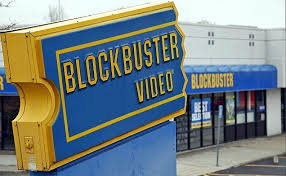 what we might have in the future, that its fun to stop for a minute and think about what we won’t have in the future, and this week News.com.au’s Gary Nunn reached out to ask exactly that…
WITHIN our own lifetime, people will scoff at the thought of sitting on a flight for 22+ hours across the world.
It’s one of many things that’ll rapidly seem unfeasible to the upcoming generation.
Elon Musk recently revealed plans for a next-generation spacecraft that could fly to “most places on earth in under 30 minutes and anywhere in under 60, with the cost per seat the same as a current full economy fare.”
What else will become ludicrously outdated? I spoke to some futurists whose predictions show that some disruptive innovations may be coming sooner than you think. Here’s a list of what could become a quaint thing of the past before you’ve even begun withdrawing your pension:
IN THE COMMUNITY
1) Schools being used just once a day
“As population density increases in urban areas, infrastructure like schools will double down on their resources” says James Fogelberg, former ‘Head of What’s Next’ at Adshel. “Schools will be used twice in one day. They’ll offer parents the option of sending kids to either morning or afternoon and even evening school.”
2) Leaving your house to vote
The blockchain will create the security and opportunity to vote digitally in elections. It’s already happening, overseas Australians were able to vote online in the postal survey on same-sex marriage.
Futurist Dave Yeates says: “The blockchain works with currencies like Bitcoin right now, but it’ll change how we digitally certify both ourselves and our ballot papers. That’s right: no more awkward queues at school voting booths.” Shame about the traditional democracy sausage then (more on meat later).
3) Stopping at traffic lights
Business futurist Morris Miselowski says: “Forget traffic lights, speed limits and roundabouts. In a world where vehicles, roads, and infrastructure are constantly chatting to each other, we’ll soon be able to figure out how to dynamically adjust the traffic lights, road conditions and available parking to best suit the traffic it’s trying to cope with at that moment.”
IN THE HOME
4) Paying for your own Wi-Fi
“In the sharing economy, wificoin and other blockchain technologies will mean sharing Wi-Fi with your neighbours will become common, leading to you paying four times less than you currently do” says Matt Hoggett, co-founder of Prezzee. “It’ll also enable you to earn money via micro-payments. It’s a win-win for everyone.”
5) Using a mobile phone
Futurist Bachir El Khoury says you can say goodbye to your iPhone or Samsung Galaxy: “In five to ten years, people will look back at smartphones as we look back at the Nokia brick phone. It only took ten years to have the iPhone, and now only ten years after having the revolutionary touch screen, we speak to them! Phones will be replaced by smarter sensors and devices, such as glasses (Microsoft Hololens) and in particular virtual retinal display technology.”
6) Typing and reading
Brain machine interfaces will mean you can plug your brain straight into external technology devices, says Morris Miselowski. “Within a couple of decades, we’ll not only be able to get information out of our brain and into technology, but we’ll also reverse it and input information into our brain. Turn on lights, open doors, command a wheelchair, learn a new language, see a new sight, or if there’s too much going on in your head, maybe download some of your thinking into offsite storage.”
You can forget about being attached to your smart phone. In a couple of decades we might be able to plug our brains directly into technology, or at least wear it in a much more convenient way.
7) Doing your own tax return
“Don’t worry about telling the tax department what you spent last year, they already know. All your transactions have been collected, audited and analysed by artificial intelligence. All your deductions, refunds and obligations have been worked out by your robo financial adviser” says Morris Miselowski.
MEDICAL
8) Human surgeons
Within the next thirty years, it’s likely that a robot will perform your triple heart bypass, according to futurist Sankar Gopinath. “The development of minimally invasive, smarter, automated, precise, and effective medical technologies means that nano-robots could be used for complex operations where a surgery is deemed critical but dangerous. This tiny equipment can help doctors diagnose the problems with much less blood spillage.”
9) Human doctors
Instead of visiting doctors, we’ll swallow them, according to Morris Miselowski: “These tiny hair-width nanobot doctors, ingested or inserted, are your own on-board specialist team of medical researchers, diagnosticians and physicians. Programmed to deliver tailor-made medicine to just the right cell, or perhaps take a good look at your colon or bowel and send real time information back to your doctor; they’ll even perform minor internal procedures.”
10) Single use toilets
“We’ll look back at our toilets and be amazed they were only used to transport waste.” Danielle Storey from the Eastern Innovation Centre is developing a system whereby toilets “become diagnostic tools for early disease. We’ll self-manage our health rather than awaiting a doctor’s opinion.”
FOOD
11) Eating meat
Author Richard Dawkins predicts that we’ll “look back on the way we treated animals today as something like we today look back on the way our forefathers treated slaves.”
12) Awkward bill splitting in restaurants
“We’ll read the menu on our phone while we’re there (often seeing video or chef comments, or a cooking demonstration), order in an app and pay for it all digitally often without speaking to a waiter. In China this is already the norm and mostly done through WeChat” says Morris Miselowski.
Podcasts:
Hong Kong Radio 3, Phil Whelan, Tuesday 31st October 2017, (15 mins 35 secs)
Kier Shorey ABC Far North, Monday 6th November 2017 (13 mins 20 secs)
Frequently Asked Questions
Q: Why do foresight strategists pay attention to ideas that seem ridiculous?
Because ridiculous is often the early phase of normal. The idea of a global network of connected computers was ridiculous in 1970. Carrying a device in your pocket that contains all human knowledge seemed absurd in 1990. Tracking what seems impossible or implausible today is one of the most reliable methods of identifying what will be unremarkable in twenty years.
Q: What is the mechanism by which ridiculous things become normal?
Usually a combination of technology making them possible, economics making them affordable, and a catalyst event or population normalising the behaviour. Each of these has a different timeline, technology readiness, then commercial viability, then cultural acceptance. The strategist’s job is to track all three.
Q: How can leaders use this pattern practically?
By maintaining a list of things in their industry that currently seem impossible or implausible, and checking it annually. The list that seemed absurd three years ago contains the disruptions that are now arriving. This is Immediate Futures™ practice in action.
Q: Can Morris Misel speak about change, normalisation, and how organisations track emerging possibilities?
Yes. For keynotes on foresight, change, and strategic uncertainty, visit morrismisel.com/event-organisers.
We so often look forward to what we might have in the future, that its fun to stop for a minute and think about what we won’t have in the future, and this week News.com.au’s Gary Nunn reached out to ask exactly that… WITHIN our own lifetime, people will scoff at the thought of.
When signals like 12 things that’ll seem ludicrous in our lifetime / emerge, organisations that engage early have the advantage of choosing their response rather than reacting to events. That gap between those who prepared and those who did not is where competitive positioning is actually made or lost.
The most important question is not whether 12 things that’ll seem ludicrous in our lifetime / will matter, but how quickly it will matter in your specific context. Leaders benefit most from mapping the ripple effects early — not just the direct impact but the second and third-order consequences that arrive later and hit harder. That is the practical work of foresight.
