1,000 Posts Later
On 18 February 2005, I published the first piece on this blog.
Today, almost exactly 21 years later, this is the 1,000th.
Back then I wasn’t thinking about milestones. I just needed a place to put ideas I didn’t want to lose.
Since then:
1,000 posts.
549,805 words.
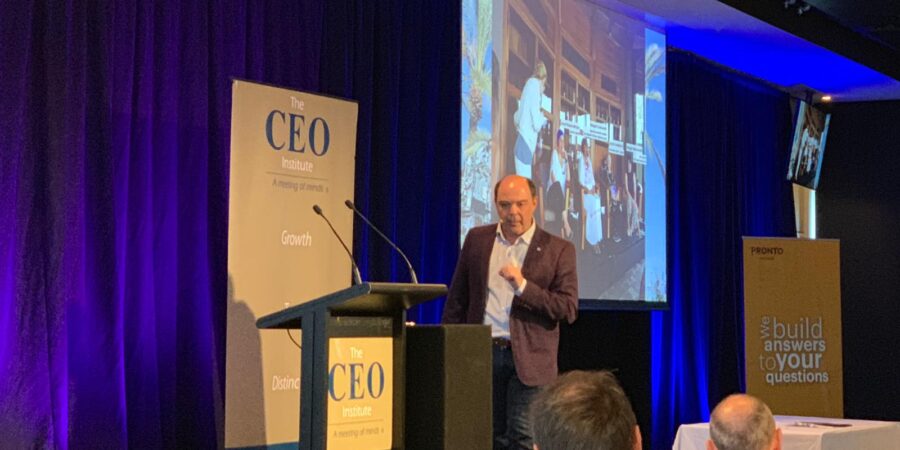
More than 2,800 keynotes and workshops.
Boardrooms across five continents.
Television, newspapers and magazines here and around the world.
Radio long before podcasts existed. Podcasts before they were fashionable.
And somewhere in the middle of all of that, my two children grew up.
Industries rose and fell.
Technologies leapt forward.
Markets panicked and recovered.
And I kept writing.
Not to be prolific.
To keep track of what was shifting.
And what wasn’t.
The First Post
The first article I wrote was not about gadgets or disruption.
It was about forming strategic alliances.
Even then, the question wasn’t “what is new?”
It was “how do people and organisations position themselves wisely inside change?”
That question has never really left me.
The World I Started In
In 2005:
Facebook was still on campuses.
The iPhone did not exist.
Cloud was a metaphor.
Artificial intelligence was academic.
Zoom meant speed, not meetings.
We worried about outsourcing.
About whether email was destroying productivity.
About globalisation hollowing out local industries.
Retail believed foot traffic was destiny.
Executives believed hierarchy meant control.
Most organisations treated change as something that happened occasionally.
Then acceleration became normal.
Smartphones.
Platform business models.
Financial crises.
Political fractures.
Pandemics.
AI embedded quietly into daily workflow.
Every wave felt like the big one.
Every time, someone said, “This changes everything.”
Sometimes it did.
More often, it didn’t, it just exposed patterns that were already there.
The Eras I Can See Now
Looking back across 1,000 posts, the arc is clearer than it ever was in the moment.
There was a period where I hunted signals everywhere. Short posts. Fast reactions. Testing ideas in public.
Then came a stretch where industries wanted application. Not “what is happening?” but “what does this mean for us?” The writing became more commercial, more grounded in consequence.
Later, another shift.
I became less interested in describing technology and more interested in how leaders were deciding under pressure.
That is when judgement became central.
Not prediction.
Not hype.
Judgement.
The ability to choose forward when information is incomplete, the environment is volatile, and the decision will travel further than expected.
Over 21 years and 1,000 posts, that has become the core of my work.
What Changed
The speed of decision-making changed.
A strategy conversation at 10am can be outdated by mid-afternoon.
The visibility of decisions changed.
A choice made in a room now moves instantly through staff sentiment, culture, markets and reputation.
The role of technology changed.
Artificial intelligence now drafts reports, models scenarios, and flags risks faster than most teams can process them.
The scale of ripple effects changed.
Small decisions can trigger disproportionate consequences across systems that are tightly connected.
The future of work changed.
Jobs dissolved into tasks.
Work untethered from place.
Human, machine and AI collaboration became normal rather than experimental.
What Didn’t Change
Humans still overreact to headlines.
Humans still underestimate how slowly behaviour shifts.
Leaders still confuse speed with clarity.
Organisations still believe new tools will fix cultural problems.
Fear still travels faster than wisdom.
Emotional load still sits quietly under most leadership decisions.
While the world outside accelerated, life inside our homes moved at a different tempo. My children still learned to ride bikes. Families still sat around dinner tables. Conversations still unfolded at human speed.
Technology moved fast.
Human nature did not.
Across financial crises, cultural shifts, political cycles and AI breakthroughs, that constancy has been the real signal.
What 549,805 Words Really Mean
Those words were written in airport lounges.
Between strategy sessions.
After television interviews.
Before keynotes.
On long flights home.
Some were written after standing in front of 10,000 people asking hard questions about their future. Some were written quietly in hotel rooms after those questions followed me upstairs.
They were written while boards wrestled with risk.
While executives tried to steady teams.
While organisations navigated digital transformation, automation, workforce redesign and cultural tension.
The writing was never separate from the work.
It was part of the work.
What the Archive Tells Me
Objectively, the progression is clear.
I began as a signal interpreter.
I became an industry translator.
I am now focused on strengthening judgement in leadership.
Immediate Futures.
Ripple Effects.
PTFA, Past Trauma and Future Anxiety.
Decision Trust Zones.
HUMAND, the balance between Human, Machine and AI.
Inhabitable Futures.
Those ideas did not appear fully formed.
They emerged from watching the same patterns repeat under different technologies.
From retail to banking.
From education to agriculture.
From manufacturing to finance.
Different sectors.
Similar human responses.
The Real Lesson From 1,000 Posts
Technology amplifies.
It does not decide.
AI accelerates.
It does not judge.
Markets react.
They do not lead.
Leaders still have to choose.
And what I have seen again and again is this:
Most organisations do not struggle because they lack information.
They struggle because they lack disciplined judgement under uncertainty.
That has been the quiet thread running through 21 years of foresight work, leadership conversations, and future of work analysis.
If You Take One Thing From This
Do not confuse acceleration with direction.
Do not confuse information with judgement.
Do not mistake noise for signal.
Why This Matters Now
We are deep in another wave of acceleration.
AI embedded in everyday systems.
Decision cycles collapsing.
Trust fragile.
Reputations exposed.
It feels intense.
But the patterns are recognisable if you have watched long enough.
That is what 21 years gives you.
Not certainty.
Perspective.
A thousand posts later, the temptation is to say the world is unrecognisable.
It isn’t.
It is more connected.
More visible.
Less forgiving.
And that makes judgement more important than ever.
Over 2,800 keynotes and workshops, in boardrooms and on stages around the world, I have tested these ideas in real conditions. The patterns hold.
And The Next 1,000?
I don’t know which technologies will dominate the next decade.
I don’t know which headlines will spark the next wave of urgency.
But I do know this:
Speed will keep increasing.
Systems will stay tightly connected.
Artificial intelligence will become more embedded.
The future of work will keep evolving.
And leaders will still need to decide how they deal with it.
So I will keep writing.
Not to predict.
But to prepare.
Not to chase trends.
But to examine signals and ripple effects.
Not to impress.
But to help leaders strengthen judgement in a world that rarely slows down.
If you’ve been reading along the way, thank you.
If you’ve been in the rooms, on the calls, in the workshops, on the stages, thank you.
And if you are navigating complex decisions right now and wondering whether the weight you feel is personal or systemic, know this:
It is systemic.
And it can be prepared for.
The next 1,000 posts will not be about louder futures.
They will be about steadier judgement.