When Extraordinary Technology Becomes Ordinary

World Hearing Day, Hearing Technology, and Staying in the Conversation

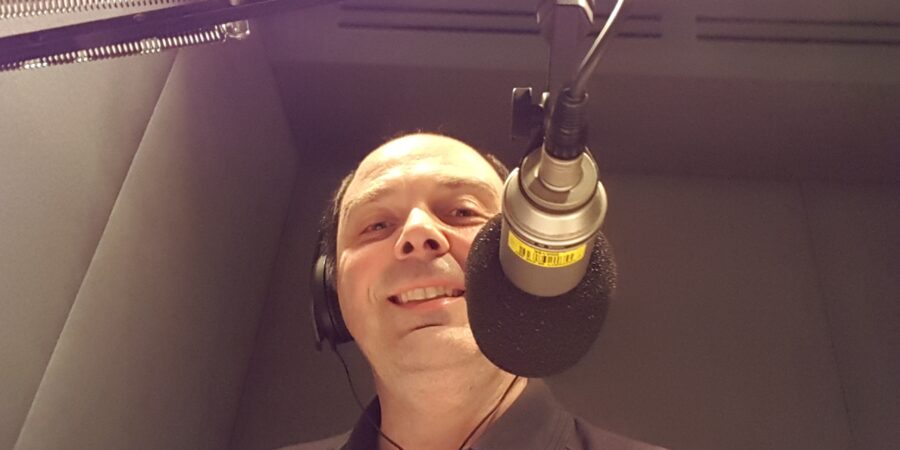
Phil Whelan mentioned World Hearing Day on Radio 3 Hong Kong this week, and one word immediately came to mind.

Ordinary.

Because some of the most extraordinary changes in health and technology only become powerful when they stop feeling extraordinary.

Cochlear implants.
Noise cancelling.
Digital hearing devices that learn from their user.
Even the accessibility features quietly sitting inside the smartphone most of us carry every day.

The real signal isn’t the invention itself.

It’s the moment society stops seeing it as unusual.

That’s when change truly spreads.

During our conversation we weren’t really talking about hearing aids at all. What we were really talking about was something much more human.

Participation.

Because hearing is not just about sound. It’s about staying in the conversation. Staying connected to family, colleagues, classrooms, cafés and meetings.

And when people lose that connection, even slightly, life quietly narrows.

The good news is that the world has been changing rapidly in this space.

Not just technologically.

Culturally.


Listen to the conversation


RTHK3 Radio – Phil Whelan with Morris Misel (17 minutes 19 seconds)
World Hearing Day discussion on hearing technology, stigma, cochlear implants, AI-assisted hearing devices, and the future of assistive technology.


The biggest shift wasn’t technology

One of the first things Phil and I talked about was something many people overlook.

For a long time, hearing loss carried a social stigma.

People avoided hearing aids not because they didn’t need them, but because they didn’t want the attention that came with them. Early devices were bulky, visible and often associated with ageing or disability.

That cultural weight has shifted dramatically.

Today people talk about hearing loss more openly. Audiologists sit on high streets alongside optometrists. Hearing support is advertised on television and online. Devices are sold through retail outlets as well as medical channels.

Once stigma fades, innovation accelerates.

More people seek help earlier.
More companies enter the field.
Better technology reaches the market faster.

The result is a powerful feedback loop.


Australia’s quiet global contribution: the cochlear implant

One of the most important breakthroughs in hearing technology has strong Australian roots.

The cochlear implant.

For most of history, hearing support relied on amplification. If someone struggled to hear, the only option was to make sound louder.

Cochlear implants introduced a completely different idea.

Instead of amplifying sound through a damaged ear canal, the implant bypasses it and sends signals directly to the auditory nerve. The brain then interprets those signals as sound.

In simple terms, it changed the question from:

“How do we make this louder?”

to

“How do we send sound to the brain another way?”

Today cochlear implants are almost spoken about casually. In many places they are a routine medical procedure.

That sense of normality is the real milestone.

What once felt extraordinary has quietly become ordinary.


How everyday technology accelerated hearing innovation

Phil made an observation during our conversation that illustrates a broader pattern in technological change.

He mentioned noise-cancelling headphones.

Millions of people now use them for travel, focus or entertainment. Yet many technologies like this originate in specialised environments before becoming consumer products.

Assistive technologies often begin by solving a very specific human challenge.

Over time they improve, become cheaper, and migrate into mainstream devices.

When that happens something interesting occurs.

The line between medical technology and lifestyle technology disappears.

And that is exactly what is happening in hearing support.

Today’s digital hearing devices can analyse the sound environment and make real-time decisions.

Is that voice important?
Is that background noise irrelevant?
Is this a quiet room or a busy café?

Instead of simply amplifying sound, devices are increasingly interpreting context.

Artificial intelligence is beginning to assist this process by learning from the listener. Over time the device becomes better at understanding which sounds matter most to the wearer.

The goal is simple.

Not louder hearing.

Better participation.


The smartphone quietly changed accessibility

Another turning point came from something most people already own.

The smartphone.

Modern phones include accessibility tools that allow users to adjust sound, connect hearing devices through Bluetooth, stream audio directly, and customise their listening environment.

For some people these tools even reduce the need for dedicated devices.

There is something culturally powerful about that shift.

If your phone helps you hear better, you are not wearing a medical device.

You are simply using your phone.

Normalisation removes barriers faster than any marketing campaign ever could.


Access still matters

Technology alone does not solve every problem.

In Australia, audiologists and hearing centres are easy to access in major cities. But many Australians live in regional and remote communities where access to specialists can be difficult.

Programs such as Hearing Australia’s outreach initiatives aim to close that gap, particularly for Aboriginal and Torres Strait Islander communities.

Innovation only matters if people can reach it.

This is one of the broader signals I watch in my work as a foresight strategist.

A future is only useful if it is inhabitable.

That means technology must work not just technically, but socially and geographically as well.


The bigger signal

If we step back, a familiar pattern appears.

Assistive technologies tend to move through three phases.

First they are specialised.

Then they become practical.

Eventually they become ordinary.

Once that happens, participation expands dramatically.

This pattern appears across many technologies I track through my Immediate Futures™ foresight work, whether we are discussing workforce technology, health innovation, or human-machine collaboration.

You can see similar signals in other areas of health technology, such as the early experiments with digital medical ecosystems I wrote about years ago in my article on Google Health.
https://www.morrisfuturist.com/google-health/

Different technology.

Same pattern.

Innovation appears, society hesitates, and eventually the capability becomes part of everyday life.


The real purpose of hearing technology

The goal of all of this technology is not simply to improve hearing.

It is to preserve connection.

Connection to family.
Connection to work.
Connection to conversation.

When people remain part of the conversation, they remain part of life.

And the technologies emerging today are quietly making that easier than ever before.


A simple thought for World Hearing Day

If someone in your life is beginning to struggle with hearing, the most helpful step is often the simplest one.

Encourage them early.

Not because they need fixing.

Because they deserve ease.

Because they deserve to stay connected to the conversations that make life meaningful.

And because today, more than ever before, the tools exist to make that possible.

Choose Forward


About Morris Misel

Morris Misel is a foresight strategist who helps leaders and organisations prepare for the future of work, technology, and human decision making.

His ideas are tested weekly in the media, shaped in boardrooms, and designed to land on stages.

You can’t predict the future.
But you can prepare for it.

More insights at https://morrismisel.com


Frequently Asked Questions

Q: What happens when extraordinary technology becomes ordinary?

The relationship between the technology and the people using it fundamentally changes. The sense of possibility that accompanies a genuinely new capability — the attention, the experimentation, the deliberate evaluation — gives way to habitual use. The technology becomes infrastructure: taken for granted, relied upon without examination, and difficult to think clearly about precisely because it is so embedded in daily practice. This normalisation is not a problem in itself — it is how useful things become integrated. What matters is whether the normalisation happens before or after the critical questions about the technology’s use have been adequately worked through.

Q: What are the risks of AI normalising before the critical questions are resolved?

That the governance, accountability, and ethical questions get settled by default rather than by deliberate choice. When AI is still novel, there is social and institutional appetite for those questions. When it is ordinary, the appetite diminishes — the technology is just there, like electricity or search engines, and questioning its design or deployment seems eccentric rather than prudent. The window for shaping the conditions of normalisation is open now and will close. The organisations, regulators, and communities that use it well are doing the critical work while the technology still feels remarkable enough to examine.

Q: What does this mean practically for how organisations should be deploying AI now?

That the time to establish the norms, oversight mechanisms, and accountability structures for AI use is before the technology becomes so embedded that those questions feel irrelevant. The governance decisions made in the next two to three years will shape how AI is used in organisations for a decade. This is not an argument for slowness — the competitive pressures to deploy are real. It is an argument for building governance alongside deployment rather than treating governance as a later-stage problem to be addressed after the technology is already embedded.

Q: Can Morris Misel speak on AI normalisation, the governance window, and what organisations need to do now before habits form for our executive or board audience?

Yes. AI governance and the normalisation window are core keynote topics. Book at morrismisel.com.

Morris Misel is a global foresight strategist and keynote speaker with 30+ years of experience across 160 industries and 25 countries. Creator of the Immediate Futures™, HUMAND™, and PTFA™ frameworks. Industry Fellow at Griffith University. Regular voice on RTHK Radio 3 (Hong Kong) and Australian media including ABC and Sky News. For keynotes, workshops, and advisory: morrismisel.com | Book Morris

Leave a comment