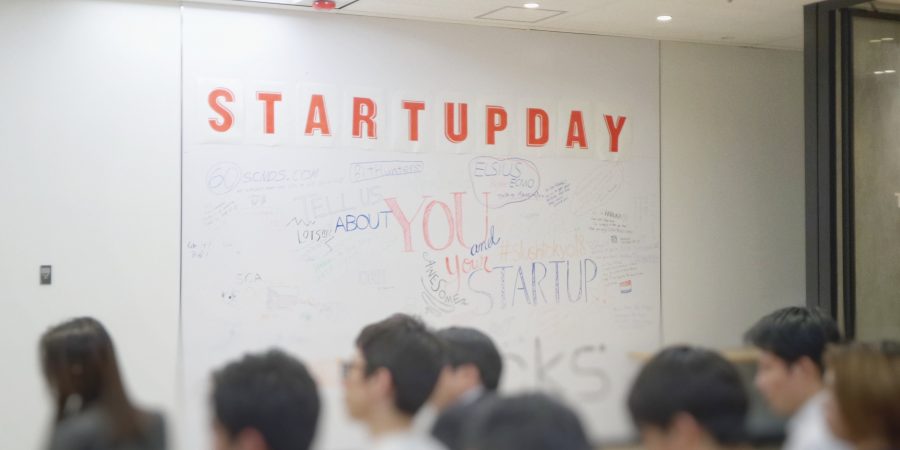
{Webinar What Now, What Next Ep 4} Can Start Ups Rebuild our Economy?
After every significant economic downturn, people come up with innovative new ideas to restart businesses and create new jobs.
It happened in the decade after the GFC, and many economists are suggesting it will happen again. Co-host David Southwick MP and Morris Miselowski, Global Business Futurist, host a panel discussion talking all things Start-Up’s.
We’ll be looking for the transferable lessons from the minds, learnings and experiences of some of Australia’s most successful start up’s and start-up advisers; lessons, short-cuts, tips and tricks that we can immediately use to kick-start our post COVID business’s.
Our fantastic panel of entrepreneurs include:
Adir Shiffman – serial entrepreneur and executive chairman of ASX listed, Catapult Sports.
Rita Arrigo – chief digital advisor to Microsoft and an AI Ambassador
Kim Teo – CEO and co-founder of Mr Yum
Marie Johnson – managing director at the centre for digital business
Simon Szwarc – ceo and founder of co-working space innovator, Dorpee
also take a listen to a previous podcast about getting a job in a post covid world: http://www.morrisfuturist.com/podcast-getting-a-job-covid-style/
Frequently Asked Questions
Q: Can start-ups rebuild the economy after a major disruption?
Start-ups can create significant economic value, but they are not a sufficient mechanism for broad economic recovery on their own. The businesses that drive employment at scale are medium-sized established enterprises, not start-ups. The foresight question is whether disruption opens enough new opportunities for entrepreneurs to address to generate meaningful aggregate employment.
Q: What conditions favour entrepreneurial activity during and after a crisis?
The combination of identified problems (which crises create in abundance), available talent (as disrupted employment releases skilled people), and capital willing to back recovery opportunities. All three were present during COVID in Australia, which is why start-up activity (particularly in healthtech, edtech, and logistics) accelerated during the crisis.
Q: What is the foresight risk in over-relying on start-ups for economic recovery?
That the timelines are mismatched. Start-ups that succeed take years to scale into significant employers. Economic recovery needs jobs within months. The short-term recovery mechanisms are policy-driven and incumbent-sector focused; the start-up ecosystem is the medium-term renewal layer, not the immediate recovery.
Q: Can Morris Misel speak about economic futures, entrepreneurship, and post-crisis recovery?
Yes. For keynotes on economic transformation and innovation ecosystems, visit morrismisel.com/event-organisers.
After every significant economic downturn, people come up with innovative new ideas to restart businesses and create new jobs. It happened in the decade after the GFC, and many economists are suggesting it will happen again. Co-host David Southwick MP and Morris Miselowski, Globa.
When signals like Can Start Ups Rebuild our Economy emerge, organisations that engage early have the advantage of choosing their response rather than reacting to events. That gap between those who prepared and those who did not is where competitive positioning is actually made or lost.
The most important question is not whether Can Start Ups Rebuild our Economy will matter, but how quickly it will matter in your specific context. Leaders benefit most from mapping the ripple effects early — not just the direct impact but the second and third-order consequences that arrive later and hit harder. That is the practical work of foresight.