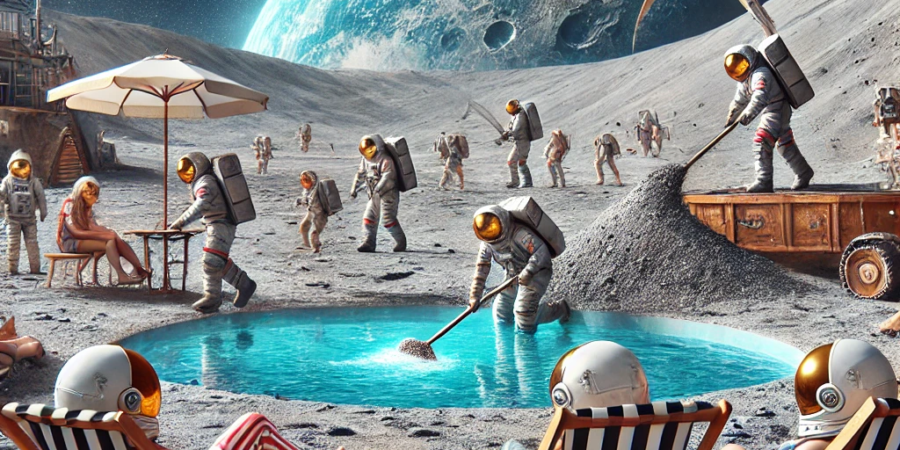
If You’re Looking for the Next Big Business Opportunity, Maybe It’s Time to Look Up
Most of us spend our time glued to the ground, focused on what’s right in front of us, especially in business. But sometimes, the next big opportunity isn’t found by looking around; it’s found by looking up.
That’s exactly where our conversation went during my regular chat with Phil Whelan on Hong Kong Radio 3, right on the eve of the Moon Festival.
Phil asked me what was happening on the moon these days, and before long, we were talking about a future that’s no longer just science fiction. Mining on the moon? Definitely a real possibility.
Moon tourism? It’s coming, and probably sooner than you think. Harnessing solar power from the moon to light up Earth? You bet.
What started as a chat about mooncakes and high tides turned into a deep dive into how the moon could be our next great business frontier. And let’s be honest, even the most whimsical conversations can lead to serious opportunities if you’re paying attention.
The moon may be more than 384,000 kilometres away, but it’s quickly becoming a lot closer in the minds of investors and innovators. So while everyone else is scrambling for the next trendy app or AI startup, why not consider the moon?
And no, this isn’t just me speculating. I’ve spent decades talking with people in mining, agriculture, space tech, and industries you wouldn’t even think have a connection to the moon. But the truth is, they do. What’s brewing up there could very well reshape how we do business down here.
Mining on the Moon: Not Just Science Fiction
Phil and I got into the nitty-gritty of moon mining, and it’s not just some far-fetched idea anymore. The moon is rich in resources like helium-3 and rare metals, both of which are critical to powering the technologies of tomorrow. But here’s the kicker: the plan isn’t to bring it back to Earth. Why would we, when the real opportunity lies in using those materials in space to build habitats, space stations, and who knows what else?
Think about it: robots mining on the moon, AI-driven machinery building lunar colonies, and infrastructure for the space age, all made from the moon’s own resources. And if that’s not a trillion-dollar industry in the making, I don’t know what is.
And yes, this may sound outlandish, but remember, space is already a $469 billion industry. And projections suggest we could be talking trillions by 2040. Who would have thought that when Neil Armstrong took those first steps, he was also stepping into what would become a massive business frontier?
The Next Big Tourist Destination? The Moon
As Phil and I joked about the moon being the ultimate tourist destination, the conversation naturally shifted to space tourism. Companies like SpaceX and Blue Origin are already gearing up to take the ultra-wealthy on lunar vacations. But here’s the thing: what starts as an exclusive experience for billionaires often becomes mainstream for the rest of us. Remember when flying was only for the rich? Now, millions of people travel by air every single day.
Lunar tourism may sound absurd right now, but within the next 20 to 30 years, we could see moon hotels, and not just as conceptual sketches. Big hotel chains are already putting together plans, and once enough interest builds, the prices will come down, and the moon could become the next holiday hotspot.
Solar Power from the Moon: The Ultimate Clean Energy?
One of the most fascinating ideas we discussed was harnessing solar energy from the moon. Up there, there’s no such thing as night, the sun shines almost constantly. Imagine a massive solar farm on the moon, capturing all that energy and beaming it back to Earth.
Yes, it sounds a bit futuristic, but these are the types of conversations happening now. And why not? Space offers endless possibilities, and as technology advances, solutions that seem impossible today may well become tomorrow’s normal. This could be the answer to Earth’s growing energy needs, clean, limitless power harvested from the moon.
Opportunities Abound, Even If You’re Not In Space
What I told Phil is worth repeating: You don’t have to be a space company to get in on this. There are so many adjacent opportunities for industries not directly involved in space exploration. Whether it’s providing materials, tech solutions, or even everyday products that could support lunar missions, the potential is enormous.
Look at the past. We’ve been using memory foam (NASA), LED lighting (space stations), and camera phones (initially for space missions) for decades now, all inventions that started with space exploration and became integral parts of our lives.
So, even if your business doesn’t scream “space,” you could be planting the seed for something that revolutionizes an industry back here on Earth. It’s not a question of if, but when, and the real question is whether you want to be a part of it.
Next Steps: Get Involved, Even If You’re Grounded
- Follow the money: The space industry is already worth billions and is expected to hit trillions. Don’t miss out on opportunities just because they seem too far-fetched today.
- Look for adjacent markets: Think about how your business can support space missions indirectly. Whether you’re in tech, logistics, or materials, space innovation is going to need suppliers.
- Embrace the possibilities: What was once fantasy (think solar power from the moon) could soon be reality. Keep your imagination open, sometimes the most ridiculous ideas turn into the most lucrative opportunities.
As I shared with Phil during the segment, it’s easy to dismiss these conversations as science fiction. But remember, every innovation started with a crazy idea. The only difference between then and now is that we’re a lot closer to turning those ideas into trillion-dollar realities.
The moon isn’t just for werewolves and tidal charts anymore. It’s a business opportunity, and a big one at that.
For all the fun and facts listen to the podcast now (18 minutes 03 seconds):
About Morris Misel:
Morris Misel is a globally recognized business futurist with decades of experience across 160 industries worldwide. He specializes in human-centered innovation and foresight, helping businesses navigate the future landscape with actionable insights and strategic foresight.
#MoonBusiness #LunarEconomy #SpaceInnovation #MoonMining #FutureOfTourism #BusinessOpportunities #SpaceTravel #Innovation #SpaceExploration #MoonTourism #Futurism #CEOInsights #FutureEconomy #BusinessStrategy #TechInnovation #EventOrganizers #SpaceIndustry #MoonResources #LunarExploration #FutureBusinessTrends #TechNews
Frequently Asked Questions
Q: How do you distinguish a genuine business opportunity from a trend worth ignoring?
By asking whether the underlying human need is real and unmet, whether the enabling conditions are now in place that weren’t before, and whether the opportunity has structural durability or is dependent on a temporary moment. Genuine opportunities at the intersection of real need, newly available capability, and structural change are rare, most ‘trends’ are neither real needs nor durable conditions. The discipline is in applying all three tests before committing.
Q: What foresight signals indicate where business opportunity is concentrating?
Regulatory change that opens previously closed markets. Demographic shifts that create newly large cohorts with unserved needs. Technological capability crossing a threshold that makes previously impractical solutions viable. And cultural shifts that change what people value enough to pay for. The organisations that find opportunities early are typically those tracking multiple signals simultaneously rather than watching their existing market category.
Q: What is the most common mistake organisations make in identifying opportunity?
Extending current success into the future rather than questioning whether the conditions that produced current success are durable. The organisations that miss major opportunities are rarely ignorant of the relevant signals. They are typically aware of them but interpret them through the lens of their existing business model, which makes the signals look like noise rather than signal. The discipline of genuine foresight requires deliberately questioning your own interpretive frame.
Q: Can Morris Misel run a strategic foresight session on opportunity identification for our leadership team?
Yes. Strategic opportunity identification and foresight workshops are a core advisory offering. Book at morrismisel.com.
The next significant business opportunity rarely arrives in the places organisations are already looking. This piece argues that foresight-led thinking, the kind that scans for signals at the edges rather than trends at the centre, is how leaders find what others miss. For organisations preparing for the next decade, it offers a practical reframe on where to look and why.
Foresight gives leaders permission to look sideways and upward rather than just forward. When it comes to finding the next big business opportunity, the most useful signals are often in places that seem adjacent or unrelated. The practice of scanning widely, pausing to think, and mapping second-order consequences changes what leaders notice and what they choose to act on.
Missing the next big business opportunity is one thing. The longer-term cost is often the mindset that goes with it. Organisations that only scan where they already expect things to appear become increasingly risk-averse without realising it. The ripple effects show up in culture first, then in capability gaps, and eventually in competitive position.