Apple Glowtime: A Futurist’s Take on What’s Useful, Exciting, and Maybe Not So Much
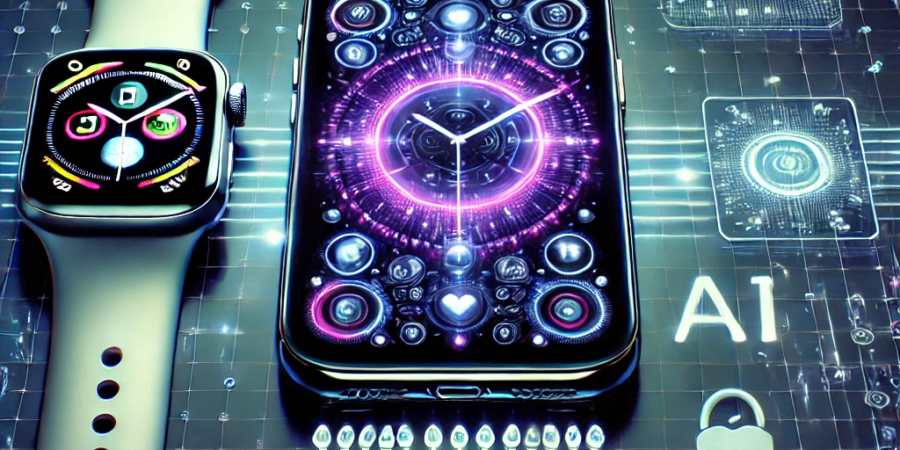
This week, Apple unveiled its latest suite of devices, including the **iPhone 16**, **Watch Series 10**, **AirPods**, and more.
While there are some exciting updates, it’s clear that Apple is mostly playing catch-up to competitors like Android.
What I’m really looking for is a leapfrog innovation that inspires and amazes, something we didn’t quite get this time.
iPhone 16 & iPhone 16 Pro: Apple Intelligence and Catch-Up Tech
Apple’s latest iPhones feature the **A18 Pro chipset**, bringing **Apple Intelligence**, an AI-driven system enhancing everything from cameras to power efficiency.
As I mentioned during my Triple M chat with Atlas, “Apple Intelligence makes the iPhone 16 faster, smarter, and more intuitive.”
The Good: Apple Intelligence learns from user behavior to offer personalised app suggestions and performance enhancements. The **48MP camera** with **computational photography** is also a standout, enhancing low-light shots and real-time settings adjustments.
The Catch-Up: The move to **USB-C** and the use of **titanium** in the Pro models are good, but these features have been on Android devices for a while. While Apple still delivers a high-quality experience, it’s more refinement than revolution.
**Pricing:** The **iPhone 16 Pro** starts at **$1,799**, and the **iPhone 16 Pro Max 1TB** tops out at **$2,849**.
Watch Series 10: Health Monitoring and Battery Life
The **Watch Series 10** brings more AI to health tracking, particularly with **sleep apnoea detection** and FDA-pending features. The watch learns from your habits, providing personalised health insights, and the battery life has seen a welcome boost.
The Good: The potential to detect health issues like sleep apnoea and provide personalised health recommendations is huge. As I told Atlas, “The watch is learning from your habits and even analysing your sleep patterns.”
The Caveat: As with any health tech, the question is whether people will actually take action based on the data. And FDA approval is still pending for some of the more advanced features.
**AirPods & Adaptive Audio**
Apple introduced **Adaptive Audio** for **AirPods**, which dynamically adjusts between transparency and noise-cancellation modes. It’s a solid quality-of-life improvement, especially in dynamic environments like commuting or open offices.
– **The Good**: Adaptive Audio is a useful enhancement, making the listening experience smoother for those constantly on the go.
– **The Catch-Up**: While it’s a nice feature, other headphone makers have been offering similar options for a while. Again, it’s more about Apple refining its ecosystem rather than pushing boundaries.
Visual Intelligence: Another Google Lens?
Apple’s **Visual Intelligence** allows iPhone and iPad cameras to identify objects, text, and landmarks in real-time. It’s helpful for everything from scanning documents to translating languages on the fly.
The Good: This feature makes your device more interactive with the world around you, similar to Google Lens.
The Catch-Up: While polished, this is an area where Apple is catching up rather than leading. Google Lens has offered similar functionality for years.
Battery Life: Always a Good Story
Both the **iPhone 16** and **Watch Series 10** boast improved battery life. The iPhone 16 Pro claims **33 hours of video playback**, while the Watch Series 10 offers all-day battery life with added features.
The Good: Battery life improvements are always welcome, particularly for those who rely heavily on their devices.
The Caveat* Though better, it’s not revolutionary. We expect battery life improvements with each iteration, so this is more about keeping up with expectations.
The Bigger Picture: Where’s the Leapfrog?
While Apple’s announcements are solid, I can’t help but feel like they’re still playing catch-up. Sure, the improvements are useful, but they aren’t breaking new ground.
What I, and I suspect many others, are really hoping for is an Apple event where we’re not just seeing incremental updates, but something truly **inspirational, aspirational, and wonderful**.
Apple, it’s time to leapfrog ahead. We need that next big, world-changing innovation.
Annual Event, Annual Expectations
Just as Apple announces new hardware every year, their software updates are also an annual event. In my WWDC 2024 article, I covered Apple’s software side, which is just as crucial for shaping the future of their ecosystem.
It’s worth revisiting how these updates align with this year’s hardware announcements.
Want to hear more?
Check out my latest conversation with Atlas on Triple M:(6 minutes 15 seconds)
and with Radio Hong Kong 3’s Phil Whelan:(18 minutes 47 seconds)
#FutureOfTech #AppleGlowtime #AppleIntelligence #AI #WearableTech #iPhone16 #AppleWatch10 #Innovation #BusinessStrategy #CEOInsights #EventOrganisers #KeyDecisionMakers #DigitalTransformation #LeadershipDevelopment #AIInBusiness
Frequently Asked Questions
Q: What were the most significant foresight signals from Apple’s Glowtime event?
The deep integration of Apple Intelligence into the iPhone 16 line is the signal that matters most. This is not incremental feature addition. It is Apple embedding generative AI into the operating system layer and distributing it to hundreds of millions of devices simultaneously. The scale of that distribution changes the AI adoption curve in ways that enterprise-focused AI deployments have not achieved. When AI capability arrives pre-installed on the device in everyone’s pocket, the adoption question shifts from ‘will people use it?’ to ‘how will people use it?’
Q: What should leaders actually do with the Apple Intelligence signal?
Treat it as a leading indicator of user expectation shifts. When Apple ships a capability to hundreds of millions of users, it rapidly becomes the baseline expectation for what technology should be able to do. Organisations whose customer-facing tools and internal productivity tools don’t match that baseline will face growing friction. The practical implication: audit your digital experience against what Apple Intelligence enables and identify where the gaps will become visible to customers and employees.
Q: What is the foresight risk in treating product launches as more significant than they are?
The risk of confusing product event cycles with genuine discontinuities. Most product launches are incremental improvements that shift competitive position within an existing landscape. Genuine discontinuities (the iPhone itself in 2007, ChatGPT in 2022) are rare and restructure the landscape rather than update it. The discipline is in distinguishing which is which, and Apple Glowtime is more the former than the latter.
Q: Can Morris Misel speak on technology strategy, AI adoption, and product foresight for our leadership audience?
Yes. Technology strategy and AI adoption signals are core keynote topics. Book at morrismisel.com.
Apple just revealed the iPhone 16 and Watch Series 10, and while the tech is impressive, are they still playing catch-up? Here’s a deep dive from a futurist’s perspective into what these updates mean for the future of technology and business.
When signals like Apple Glowtime emerge, organisations that engage early have the advantage of choosing their response rather than reacting to events. That gap between those who prepared and those who did not is where competitive positioning is actually made or lost.
The most important question is not whether Apple Glowtime will matter, but how quickly it will matter in your specific context. Leaders benefit most from mapping the ripple effects early — not just the direct impact but the second and third-order consequences that arrive later and hit harder. That is the practical work of foresight.