CES Unveiled

Why I Still Love CES
Inside the sights, sounds, oddities and assumptions of CES 2026 Day One

Every January, while most people are still easing into the year, I get excited about CES.

I always have.

CES has been part of my professional rhythm for decades now. I’ve covered it across radio, television, writing and live commentary, and no matter how noisy the tech conversation becomes, this show still does something very few events manage.

It reveals intent.

Not just what companies can build.
Not just what they want to sell.
But what they believe people are now ready to accept, adopt and live with.

That’s why CES matters.

CES has been around for close to 60 years. It first emerged in 1967, long before consumer technology became disposable, upgradeable, or expected to work flawlessly. Over time, it became the place where many things we now take for granted first appeared in public. Video recorders. Gaming consoles. Personal computers. Microwaves. Technologies that once raised eyebrows before quietly becoming ordinary.

Some ideas shown at CES went on to reshape everyday life.
Some disappeared.
Some were technically better but culturally wrong, like Betamax.

CES has never been a crystal ball.

What it does exceptionally well is expose the assumptions shaping the future.


Media Day versus Day One

Media Day usually tells you what companies want you to notice.

Slides. Statements. Carefully rehearsed stories and keynotes about where things are heading.

Day One tells you something different.

Once the doors open, ideas stop being concepts and start becoming objects. Promises turn into experiences. Patterns begin to emerge, not because someone announces them, but because the same kinds of things keep appearing.

This year, Media Day pointed clearly towards three broad areas. Intelligent transformation. Longevity and everyday health management. Engineering tomorrow, how we power, move, feed and care for ourselves.

Day One shows how those ideas are being made physical.


Screens that no longer behave like screens

It wouldn’t be CES without televisions, and this year they’re unapologetically bold.

Samsung has a 130-inch Micro RGB television on display. It’s enormous, intensely bright, and designed less like a TV and more like a shared wall of attention. Something that reshapes a room rather than politely occupying it.

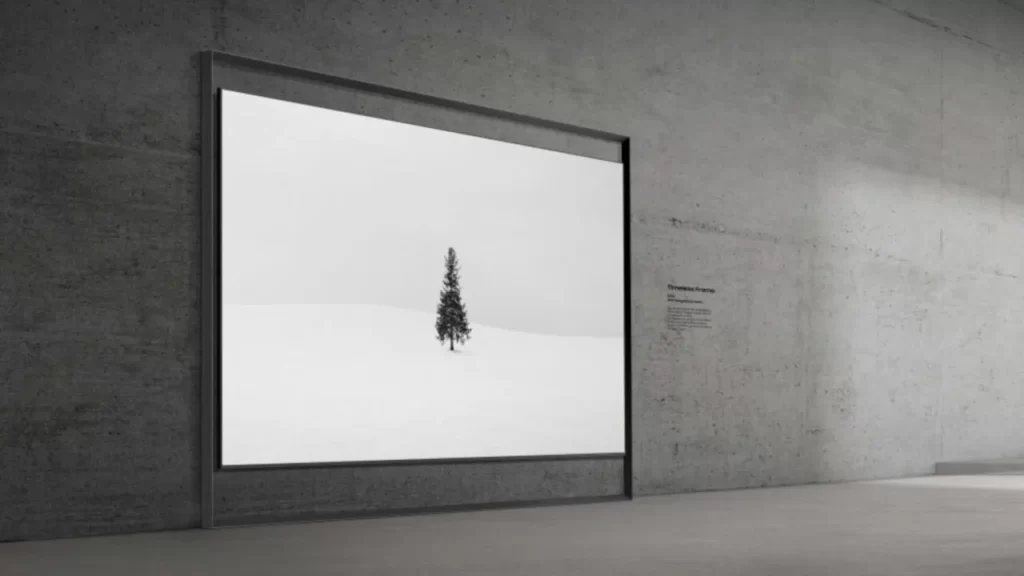
LG, meanwhile, is continuing to push its Wallpaper OLED. Around 9mm thin, paired with a separate wireless connect box, the screen sits flush against the wall, closer to art than hardware.

Samsung 130-inch Micro RGB TV

What’s interesting isn’t just the size or thinness. It’s how these displays behave.

They respond to ambient light, sound and presence. They fade into environments rather than dominate them. Screens are no longer destinations. They’re becoming interfaces into something larger.


The smart home grows quieter

A few years ago, smart homes were loud about what they could do.

This year, they feel calmer. More confident.

Samsung is framing AI as a companion across devices. Less fiddling. Less instruction. More anticipation. Temperature adjusts quietly. Lighting responds subtly. The fridge knows what’s inside it and suggests rather than demands.

LG and others are showing appliances that simply get on with things. Ovens that recognise what you’ve put inside and adjust cooking automatically. Robot vacuums that map, learn and adapt to real homes rather than showroom floors. Autonomous lawnmowers trimming away with centimetre-level precision.

None of this feels dramatic on its own. Taken together, it suggests systems learning when to step in and when to stay out of the way.

That balance matters.


Health technology feels more grounded

Health tech at CES feels calmer this year too. Less theatre. More seriousness.

The emphasis is shifting from one-off diagnostics to everyday health management. Sleep. Recovery. Glucose. Movement. Tools designed to sit alongside daily life rather than interrupt it.

One of the more talked-about examples is an AI-enabled toothbrush capable of detecting health indicators from breath. It sounds strange until you remember how many conditions first show up there.

Wearables are becoming less about staring at dashboards and more about stitching insights together quietly in the background. Samsung’s language around devices acting like a coach rather than a monitor is telling.

Longevity isn’t being sold as a miracle. It’s being framed as a series of small, cumulative improvements. That’s a much more believable story.


Mobility that refuses neat categories

Cars have been part of CES for years now, but mobility continues to blur.

Alongside familiar vehicle showcases, there are concepts that sit somewhere between transport, software platform and personal assistant.

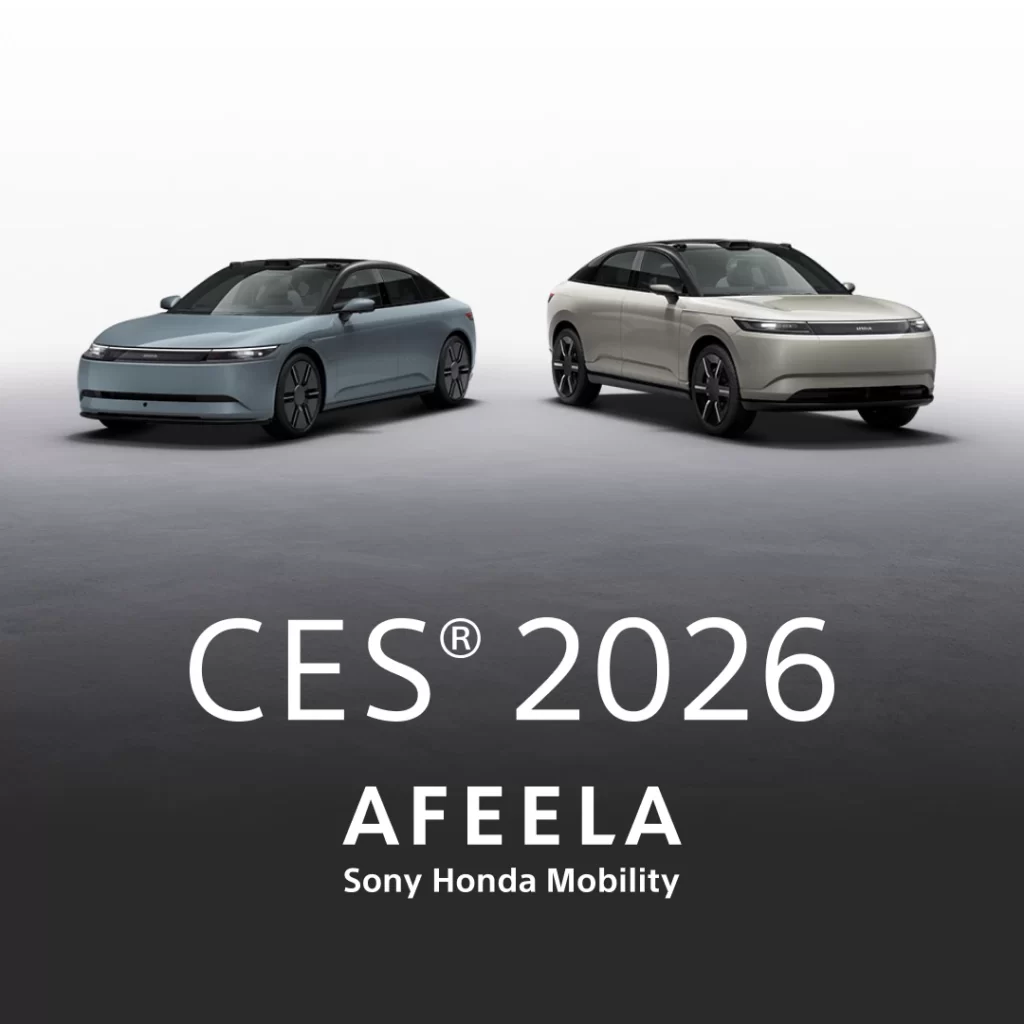
Sony Honda Mobility’s Afeela reinforces the idea of cars as digital experiences on wheels. Personalisation, interfaces, entertainment and ecosystem integration matter as much as performance.

afeela sony honda

Then there are stranger experiments.

Single-seat, three-wheel electric vehicles. Self-balancing designs. Concepts like TRINITY, where the human remains in control while an AI agent manages the surrounding complexity. Calendars talking to maps. Music responding to mood. Parking and charging handled ahead of arrival.

Some of these will never scale. That’s beside the point.

They force a more interesting question. What does mobility become once intelligence is the organising layer?


Robots, or what CES now calls “Physical AI”

Robots appear at CES every year. This year, they feel different.

Less dancing.
Less spectacle.
More purpose.

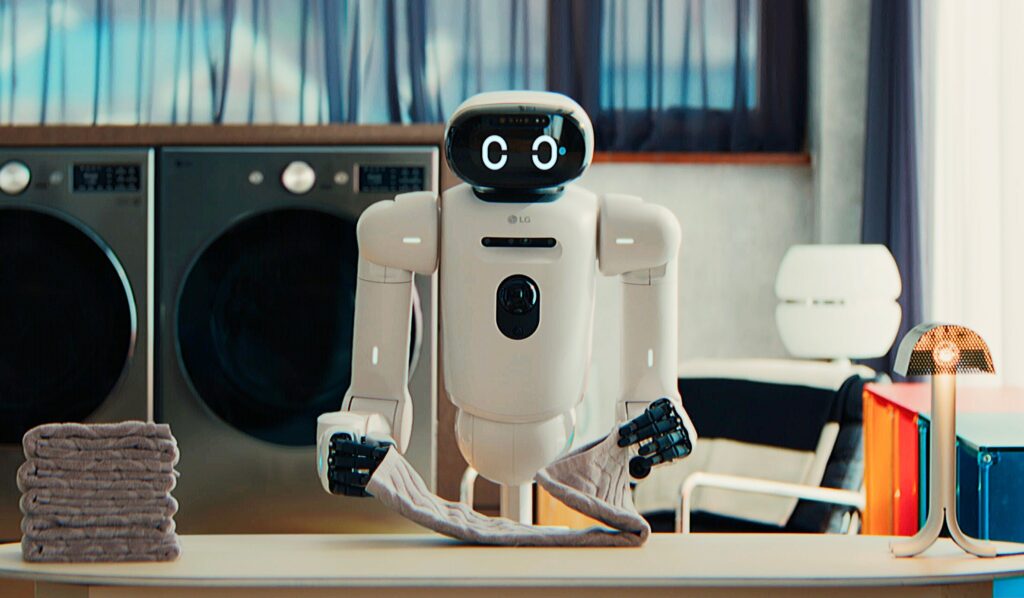
Home helper robots like LG’s CLOiD are being positioned around real tasks. Fetching items. Assisting with food preparation. Handling laundry. They’re not elegant yet. They’re not fast. But they’re no longer pretending to be toys.

Across the show, robots designed for agriculture, warehousing, healthcare and manufacturing are appearing. Awkward in places. Impressive in others. Very clearly being treated as future infrastructure rather than novelty.

LG ClOiD

“Physical AI” may be the new label. In practice, it’s robots with context awareness and task focus. And there are a lot of them this year.


Eureka Park and the joy of not knowing

Eureka Park has always been the part of CES where you don’t quite know what you’re looking for until it finds you.

It’s where startups show ideas that are five to ten years out. Sometimes longer. Sometimes never.

This year that includes early personal health platforms, stitched-together home systems designed to reduce app chaos, early robotics concepts, and ideas that feel too early but still intriguing.

Many will disappear. A few will evolve. A very small number will become ordinary.

That’s always been the deal.


A note from radio

I unpacked some of the history and human side of CES on HK3 this week, including why this show still excites me after all these years (18 minutes 44 seconds).

CES has always been less about the devices and more about what they reveal about us.

What we’re comfortable handing over.
Where we still want control.
Where we’re willing to experiment, even when we’re not sure it will work.

That’s why I keep watching it.


What Day One leaves behind

CES Day One rarely provides answers.

What it offers instead is texture.

A sense of what industries are confident enough to show in public.
And what they’re still testing quietly.

Some of what’s on display will be genuinely useful.
Some of it will be strange.
Some of it will quietly disappear by Easter.

And a handful of ideas will shape how we live without ever being announced as “the future”.

The future isn’t unveiled on stage.

It shows up in the patterns we’re willing to notice.

Choose Forward


#CES2026 #MorrisMisel #FutureOfTechnology #StrategicForesight #LeadershipInsights #FutureOfWork #AI #Robotics #SmartHome #HealthTech #Mobility #Innovation #DecisionMaking #EventKeynote #TechnologyAndSociety #ChooseForward

Leave a comment