Recognised Across 10 Future-Critical Domains: What Leaders Are Really Asking Me in 2025
When the world hands you ten independent recognitions at once, it’s worth pausing to reflect on what they really mean.
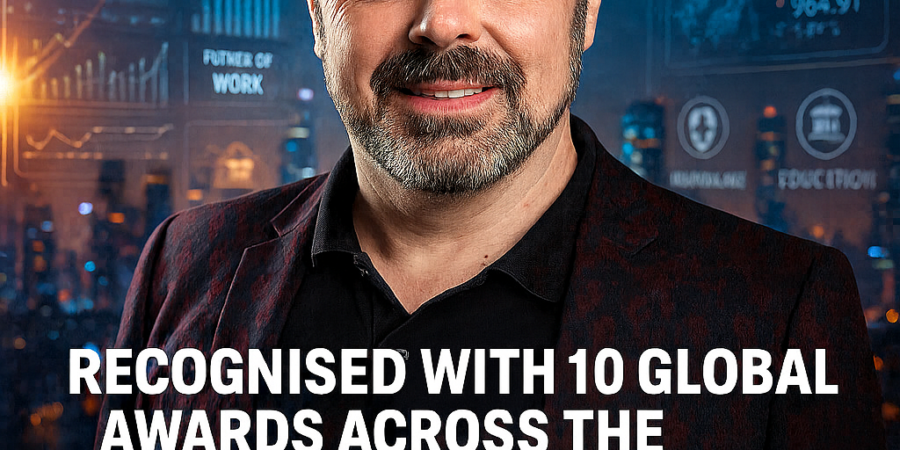
This year, I was honoured with multiple awards from Thinkers360, the world’s largest open platform that independently ranks global thought leaders across industries.
These recognitions spanned ten future critical domains, from AI Ethics and AGI to the Future of Work, Finance, Healthcare, and Mobility, and included recognition as one of the Top 100 Thought Leaders in APAC.
Thinkers360 doesn’t hand out trophies. It tracks reach, influence, and substance across the world’s largest community of thought leaders.
That makes these awards less about me, and more about what they reveal: the stress points where leaders are most anxious, and where foresight is most urgently needed.
So instead of talking about me, let’s talk about what these ten domains say about you, your boardroom, your industry, your leadership decisions.
AI Ethics – Who Gets to Decide?

AI is everywhere, from board strategies to dinner table conversations. Yet the core question every leader keeps circling back to is painfully human: who gets to decide when machines, algorithms, and people disagree?
This is why recognition in AI Ethics matters. It’s not because I write or speak about AI as a buzzword. It’s because I work with leaders to navigate the Decision Trust Zones figuring out which decisions must remain human, which can be shared with AI, and which can be safely automated.
Boards don’t want another hype presentation.
They want foresight frameworks that keep trust intact while harnessing AI’s advantages.
They want to understand the ripple effects, the downstream consequences of letting speed override wisdom.
This recognition isn’t an award to display. It’s a signal that organisations need to move from prediction to preparation, making deliberate choices about how humans and AI coexist.
AGI – The Edge of Intelligence
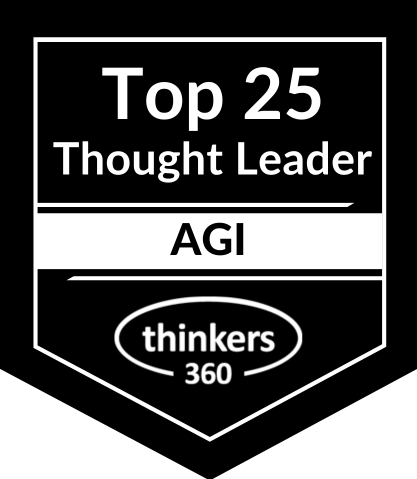
Recognition in AGI tells us leaders aren’t just wrestling with today’s AI, but with what comes next. Artificial General Intelligence isn’t science fiction anymore. It’s an emerging possibility that challenges how we define creativity, agency, and even wisdom.
When I work with executives, the question isn’t “will AGI arrive?” It’s: what happens to decision making, risk, and trust when machines begin operating beyond narrow tasks?
This award isn’t about hype. It signals that boards are already anxious about how to prepare for intelligence that doesn’t just assist but begins to reason. The foresight challenge is to make AGI comprehensible, actionable, and safe, long before it takes organisations by surprise.
The Future of Work – From Jobs to HUMAND
The second recognition is Future of Work. I’ve been exploring this space for decades, and one truth has never been clearer: jobs are dissolving into tasks, and those tasks are moving between Humans, Machines, and AI.
This is the core of my HUMAND framework. The future isn’t about losing work; it’s about redistributing it. The leaders I work with aren’t just asking, how many people do we need? They’re asking, what should humans do best, what can machines take on, and where does AI redefine possibility?
For organisations, this shift is exhilarating and terrifying. Exhilarating because it unleashes creativity and productivity. Terrifying because the old certainties about job titles, training pathways, and careers no longer hold.
Recognition here tells me organisations know the stakes. The future of work keynote speakers they want aren’t ones predicting job losses; they want voices equipping them to redesign workforce ecosystems that balance efficiency with humanity.
Because work doesn’t vanish. It evolves. And leaders who see this clearly can Choose Forward, instead of clinging to a disappearing past.
Finance – Trust as Currency
Recognition in Finance is another signal. Here’s the truth: finance has always been about numbers, but its future rests on something softer and harder to measure: trust.
I’ve worked with banks, insurers, and wealth managers, and the theme is consistent: money moves faster than ever, but customer belief moves slower.
Every ripple in technology, from digital wallets to blockchain, raises the same strategic foresight question: how do we sustain trust when value is invisible, instant, and borderless?
When Visa invited me in, when Westpac asked for foresight, when AMP wanted to scan the horizon, the conversations weren’t about technology first. They were about resilience and credibility. Because a financial system without trust is just numbers in a void.
This recognition matters because finance is no longer just about transactions. It’s about confidence, credibility, and how quickly both can be lost if foresight isn’t applied.
Healthcare and Wellness – Dignity in the Age of Data
Healthcare isn’t just a sector. It’s life, health, and dignity. Recognition in both Healthcare and Health and Wellness tells me that leaders in this space aren’t just asking about efficiency or cost. They’re asking about how to stay human when technology is everywhere.
From diagnostics powered by AI to wellness apps that track our every heartbeat, the future of healthcare is a collision of data, dignity, and decision making. Patients want speed and accuracy. Providers want systems that scale. But both want to know: who protects humanity in the process?
The foresight work I do with health leaders revolves around ripple effects. What happens when patients self diagnose more accurately than doctors? What happens when genomic data becomes tradable? What happens when mental health is mediated by apps instead of humans?
This recognition is a reminder: technology may extend life, but dignity defines it.
Mobility and Transportation – The New Ecosystem of Movement
Mobility and transportation recognitions show up together because movement itself is being rewritten. It’s not just about cars or planes anymore. It’s about connected ecosystems, autonomous vehicles, electric fleets, shared rides, and sustainable travel networks.
When I work with automotive leaders like BMW or tourism bodies from Tasmania to New Zealand, the same foresight questions surface: what happens when moving from A to B is no longer just a transaction, but a data rich, climate linked, tech enabled journey?
The recognition here isn’t about predicting which company will win the mobility race. It’s about preparing leaders to understand the ripple effects: how autonomous transport reshapes insurance, how EV adoption reconfigures power grids, how smart cities redefine freedom of movement.
Mobility isn’t an industry story. It’s a human story. And organisations that frame it that way are the ones who’ll thrive in the future of movement.
Education – Learning Beyond the System
Education recognition is bittersweet, because education is where change feels most urgent and most stuck. Students aren’t waiting for curriculum reform. They’re already leapfrogging systems, teaching themselves new skills, building new economies.
When I’ve worked with Griffith, Holmesglen, and others, leaders have asked: how do we prepare learners for futures we can’t even describe? The answer isn’t in a syllabus. It’s in foresight.
Education foresight is about embedding adaptability, creativity, and resilience. It’s about helping leaders see that future skills aren’t taught once; they’re cultivated constantly. It’s about recognising that AI in education isn’t a threat; it’s a tool, if humans remain in charge of values and wisdom.
This recognition isn’t a pat on the back. It’s a reminder that education is the foundation of every other future. If we fail here, we fail everywhere.
Leadership – Always the Undercurrent
Not every recognition says Leadership explicitly, but every category is about it. Whether it’s finance, health, education, or AI, the real question is always the same: how do we lead when certainty is gone?
This is where recognition matters. Leaders don’t want another prediction; they want a path forward. They want foresight systems like Immediate Futures, ripple effect clarity, and ways to move past paralysis, past trauma, and future anxiety (PTFA) into actionable preparation.
Leadership isn’t a category. It’s the condition that determines whether every other category succeeds or fails.
Business Strategy and Digital Transformation – Collision Zones
The final recognitions sit around Business Strategy and Digital Transformation. These sound like consulting buzzwords, but in reality they’re about something deeper: the collision of domains.
Digital transformation isn’t about upgrading systems; it’s about rethinking value. Business strategy isn’t about roadmaps anymore; it’s about navigation through collision zones, where ethics meets finance, where mobility meets climate, where education meets AI.
These awards aren’t about being a strategist in the old sense. They’re about being the person leaders call when their strategy collapses under the weight of too many unknowns. They’re about embedding foresight at the heart of transformation.
APAC Top 100 Thought Leaders – Why Regional Recognition Matters
APAC is the region where futures collide most visibly, where population growth, technological acceleration, and geopolitical shifts create both extraordinary opportunity and immense risk. Being recognised here means being heard where it matters most. It means foresight is being taken seriously in the region that will define much of the global future.
The Thread That Connects Them All
None of these ten categories exist in silos. Finance affects trust. AI shapes healthcare. Education informs work. Mobility links to climate. Health touches everything.
The future doesn’t arrive industry by industry. It arrives everywhere, all at once, colliding at the edges.
That’s why my work has always been about foresight across 160 plus industries. Not because breadth is glamorous, but because without breadth you miss the connections.
This is why I use frameworks like Immediate Futures, Ripple Effects, HUMAND, PTFA, and Decision Trust Zones. They help leaders see across boundaries, interpret signals, and prepare deliberately.
Recognition Is Not the Destination
So yes, I’m proud of these recognitions. Ten awards and Top 100 APAC Thought Leaders are markers on the road. But they’re not the destination.
The work isn’t validated by an award. The awards simply confirm that demand for foresight is now so intense, it has to be measured.
What matters is this: if your organisation is wrestling with any of these ten domains, or with the ripple effects between them, this is the moment to stop predicting and start preparing.
Because you can’t predict tomorrow. But you can prepare for it.
Choose Forward!
Morris Misel is a Global Futurist, Keynote Speaker, and Strategic Advisor across 160 plus industries. Creator of the Immediate Futures framework and HUMAND, he helps leaders, boards, and organisations navigate disruption with clarity and courage.
Now recognised with ten awards across domains including AI Ethics, AGI, Future of Work, Finance, Healthcare, Mobility, and Education, and named among the Top 100 Thought Leaders in APAC, Misel continues to bring foresight from the stage to the boardroom.
Explore workshops, keynotes and advisory: www.morrismisel.com/speaking
#MorrisMisel #Futurist #KeynoteSpeaker #FutureOfWork #AIEthics #AGI #Leadership #StrategicForesight #DigitalTransformation #BusinessStrategy #CEOLeadership #EventSpeaker #FutureTrends #HealthcareFutures #MobilityFutures #EducationFutures #FinanceForesight #APAC
Frequently Asked Questions
Q: What are the most common questions leaders are bringing to you in 2025?
They cluster around a small number of persistent themes. How do we make good decisions when the information environment is noisy and the future is genuinely uncertain? How do we maintain human judgment and accountability when AI is embedded in our decision-making processes? How do we keep our people engaged and purposeful when the nature of their work is changing? And how do we lead credibly through uncertainty without performing a confidence we do not actually have? These are not new questions. They are perennial leadership challenges that are being intensified by the current pace and nature of change.
Q: What does it mean to be recognised across future-critical domains?
It means that the questions I am being asked to address span multiple sectors and disciplines, not just technology, but healthcare, education, government, professional services, manufacturing, finance, and the social sector. The common thread is not sector expertise; it is the foresight perspective: the capacity to look at signals from multiple domains simultaneously, to identify the patterns that cross sector boundaries, and to help leaders understand what the changes arriving in their sector signal about the broader trajectory they are navigating.
Q: What differentiates leaders who handle uncertainty well from those who struggle?
A genuine comfort with not knowing, not as a performance of humility, but as an operating principle that shapes how they gather information, make decisions, and communicate with their teams. The leaders who handle uncertainty well are those who have moved from treating uncertainty as a problem to be solved to treating it as the permanent condition within which they are leading. That shift changes everything: how they plan, how they communicate, how they define success, and how they evaluate the quality of their decisions.
Q: Can Morris Misel speak on the leadership questions that matter most in 2025 and 2026 for our executive, board, or industry conference?
Yes. Leadership in uncertainty is a core keynote topic across all sectors. Book at morrismisel.com.