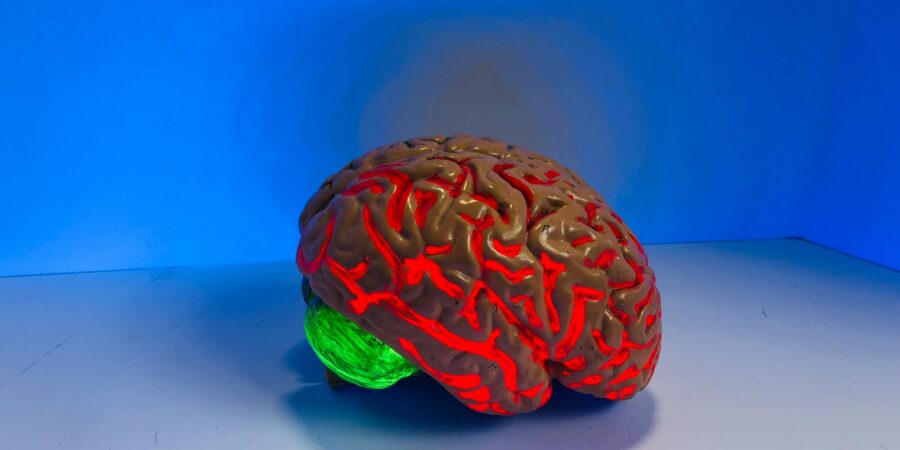
{Podcast} Big Brains & Bigger Questions: Social Media, Brain Rewiring, and the Future of Our Minds
Have you ever heard that our brains are getting bigger?
This isn’t science fiction!
A recent study suggests that across generations, human brains have shown a slight increase in size, for the first time in over 100,000 years.
But is this a good thing? And what’s causing it?
This week in our regular radio segment, Hong Kong Radio 3’s Phil Whelan and I explore the latest research on brain size and social media’s potential impact on our minds.
We’ll also bust some myths and answer questions like:
Is social media rewiring children’s brains?
Are teenagers facing an epidemic of mental illness?
Could bigger brains mean less dementia and Alzheimer’s?
Here’s a quick snapshot of the key ideas discussed:
Expanding Gray Matter: A study spanning nearly 100 years indicates a generational increase in brain size, particularly in the grey matter regions associated with learning, memory, and information processing.
Social Media: A Double-Edged Sword: While social media platforms can trigger dopamine release and encourage attention-seeking behaviours, they also offer valuable opportunities for social connection, learning, and self-expression.
Mental Health: Shifting Landscape: The rise in reported mental health issues may not reflect a surge in problems, but rather increased awareness and willingness to seek help.
The Adaptable Brain: Our brains, thanks to neuroplasticity, are constantly rewiring themselves based on experiences. This means we can harness this ability to optimize cognitive function and mental well-being.
Nurturing Potential: Extensive research debunks the myth of the “born genius.” Dedication, effort, and a growth mindset are more important than innate talent for achieving greatness.
Social Media: The New Dominant Culture?
Social media has become the current form of dominant culture and cultural transfer, just like religion, family, education, and politics in the past.
These forces have all played a significant role in shaping our thinking and establishing cultural norms.
Think of the Reformation, Galileo’s discoveries, or the impact of the Beatles – all of these events challenged and changed popular beliefs.
The key difference with social media is its accessibility and hyper-personalization.
It bombards us with information and messages, influencing our perceptions of what’s acceptable and what’s not.
Our brains, as the researchers suggest, might be physically adapting to handle this ever-growing influx.
Evolutionary Response or Social Media’s Fault?
Is this necessarily a bad thing?
Perhaps the increase in brain size is an evolutionary response, helping us make sense of the complex world we live in.
After all, the information we consume shapes our thoughts and actions. Social media may simply be the latest and most powerful tool in this ongoing process.
The question isn’t whether social media is to blame, but how we can leverage it effectively. Just like with any powerful tool, social media requires mindful use.
Taking Control of Your Brain Health:
While the research on brain size and social media is ongoing, there are things you can do to optimize your brain health:
Challenge Your Perceptions: Don’t just passively scroll through social media. Engage with content that makes you think critically and question your assumptions.
Seek Out Diverse Perspectives: Curate your social media feeds to include a variety of viewpoints, not just those that confirm your existing beliefs.
Practice Mindfulness: Mindfulness meditation can help you become more aware of your thoughts and feelings, and less reactive to the external stimuli bombarding you online.
Embrace Real-World Connections: Social media can’t replace face-to-face interaction. Make time for activities that allow you to connect with others in a meaningful way.
Spend Time in Nature: Studies have shown that spending time in nature can reduce stress, improve cognitive function, and boost mood.
Learn a New Skill: Learning a new language, musical instrument, or even a craft can help keep your brain sharp and engaged.
Get Enough Sleep: When you’re well-rested, you’re better able to focus, learn, and process information. Aim for 7-8 hours of sleep per night.
Eat a Brain-Healthy Diet: There is no single “brain food,” but a diet rich in fruits, vegetables, whole grains, and lean protein can support cognitive function.
Let’s Keep the Conversation Going!
What are your thoughts on the potential link between social media and brain development? Share your questions and insights in the comments below.
Click to listen to the segment live on Hong Kong Radio 3 (16 minutes 18 seconds):
Click to listen to a breakfast show chat on this topic with Triple M’s Corey Sutton (5 minutes 26 seconds)
Have you ever heard that our brains are getting bigger? This isn’t science fiction! A recent study suggests that across generations, human brains have shown a slight increase in size, for the first time in over 100,000 years. But is this a good thing? And what’s causing it? This .
The window between a signal arriving and it demanding a response is shortening. Big Brains & Bigger Questions is already shaping strategy conversations in forward-looking organisations. Treating it as a future concern rather than a present one builds a preparedness gap that will have to be closed under pressure.
The most important question is not whether Big Brains & Bigger Questions will matter, but how quickly it will matter in your specific context. Leaders benefit most from mapping the ripple effects early — not just the direct impact but the second and third-order consequences that arrive later and hit harder. That is the practical work of foresight.