Thought Leadership in 2026: Influence Is Easy. Responsibility Is Harder.
This week I was included in the Thinkers360 Top 100 B2B Thought Leaders in APAC for 2026.
It’s one of several recognitions I’ve received from them over the past year.
I’m genuinely grateful for that.
But it made me pause.
Because in 2026, the phrase “thought leader” doesn’t mean what it used to.
We’re living in a world where artificial intelligence can generate opinions in seconds. Where digital transformation commentary is constant. Where leadership advice is packaged, clipped, amplified and reposted at scale.
Visibility is easy.
Volume is easy.
Depth is not.
It’s getting harder to tell what’s real and what’s not.
And that distinction matters.
The Era of Manufactured Authority
Right now, anyone with a prompt and a publishing platform can sound intelligent.
AI can draft articles.
AI can generate insights.
AI can produce frameworks.
AI can simulate confidence.
That’s not a complaint. It’s an observation.
But when everything sounds polished, polish stops meaning anything.
The real question becomes:
Whose thinking holds up when it’s tested?
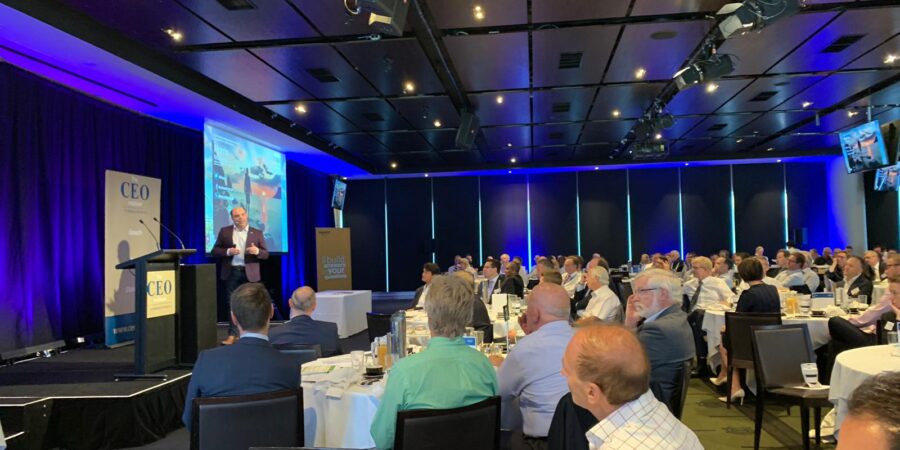
Because when I walk into a boardroom, step onto a stage, or sit in a studio, the audience isn’t looking for eloquence.
They want clarity.
They want to know:
What is actually shifting?
What matters?
What doesn’t?
Where should we focus?
What are we missing?
That’s not influence.
That’s responsibility.
Thinking Under Pressure
I’ve always believed ideas should be tested in public and under pressure.
In media conversations where you don’t get to edit your answer.
In rooms full of leaders who push back.
Inside organisations making decisions that carry financial, human and reputational consequences.
If thinking holds up there, it has weight.
If it only survives on a feed, it’s performance.
That’s why recognition in regions like APAC means something to me.
Asia-Pacific is not theoretical.
It’s economically dynamic.
Technologically aggressive.
Geopolitically complex.
Leadership here is not abstract.
It’s live.
Influence and Foresight Are Not the Same Thing
Influence amplifies.
Foresight slows things down long enough to interpret what’s actually happening.
Influence attracts attention.
Foresight reduces uncertainty.
There’s nothing wrong with influence. Attention matters.
Energy matters too. I bring energy into rooms deliberately. I will often carry the energy of the room until people can carry it themselves.
But energy is ignition.
Clarity is direction.
If you’re leading an organisation in 2026, you don’t just need to feel motivated.
You need to see more clearly.
You need someone willing to step back from the noise and say:
“This is the shift.”
“This is the risk.”
“This is the opportunity.”
“This is what you prepare for.”
That’s the work I care about.
The Standard Has Changed
The standard now isn’t eloquence.
It’s durability.
Can the thinking survive:
AI acceleration
Workforce fragmentation
Cyber risk
Trust erosion
Geopolitical volatility
Decision fatigue
Can it remain coherent when the context shifts again?
Performance and preparation are different disciplines.
And in this cycle of rapid change, preparation wins.
What This Means for Leaders Right Now
If you’re leading a business, a board, an association or a government body in 2026, three realities are already shaping your environment:
-
You are making decisions in compressed timeframes.
AI and digital transformation have shortened the window between signal and consequence. -
Your people are carrying Past Trauma and Future Anxiety at the same time.
I call this PTFA. It shapes behaviour more than strategy documents do. -
Your competitors are no longer just companies.
They are platforms, systems, ecosystems and algorithms.
If you’re not scanning beyond your own industry, you are preparing for yesterday.
That’s not dramatic.
It’s practical.
Recognition and Responsibility
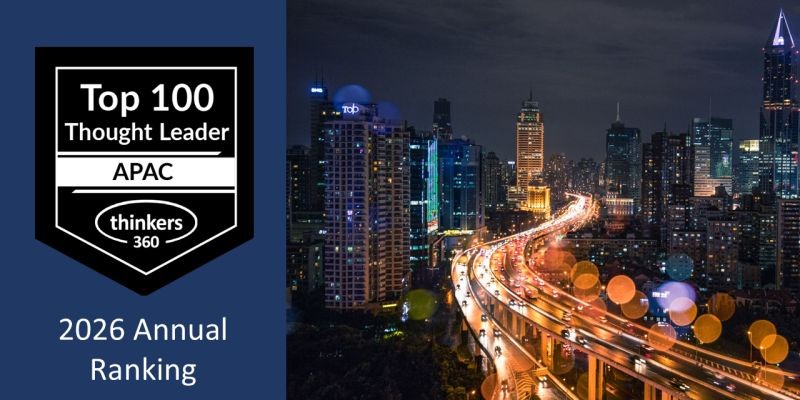
So yes, I’m appreciative of the Thinkers360 recognition.
It suggests the work is resonating across the Asia-Pacific region.
But recognition isn’t the destination.
It’s reinforcement.
In a world where information is abundant and AI-generated intellect is becoming commonplace, human judgement becomes the differentiator.
Judgement comes from pattern recognition.
Pattern recognition comes from watching signals emerge, collide and reshape industries over time.
That’s what I bring into rooms.
Not prediction.
Preparation.
If You’re Planning 2026 and Beyond
If you’re designing a strategy session, planning a leadership offsite, or programming a conference this year, the real question isn’t:
“Who can energise the room?”
Energy is important. I’ll bring it.
The better question is:
“Who can help us see what we’re not seeing?”
Because most organisations don’t struggle from lack of effort.
They struggle from preparing for the wrong thing.
If your leadership team needs a clearer lens on AI, workforce evolution, geopolitical shifts or systemic risk, let’s sit down and work through it properly.
The conversations we avoid are usually the ones that matter most.
Choose Forward.