Knowledge Is Powerless
ChatGPT’s latest Study Mode upgrade doesn’t just reshape learning. It exposes just how broken our definition of learning has always been.
We still tell kids that knowledge is power.
That the one who remembers the most wins.
That education is about getting the answer right.
But what happens when the machine gets there faster? When memorising becomes meaningless? When AI doesn’t just store the facts, it explains them better than you can?
Knowledge is no longer power. It’s just electricity.
Every student, every professional, every organisation now plugs in and gets an instant answer. What used to take hours of effort and understanding is now auto-completed before the question finishes forming.
And with ChatGPT’s new “Study Mode”, the veil is officially off.
You don’t need to sit in a lecture.
You don’t need to Google 14 tabs deep.
You just ask, and the machine teaches you, step by step, voice by voice, method by method.
Except it’s not teaching.
It’s replacing.
And it’s making a mockery of everything we used to call learning.
We Always Measured the Wrong Thing
In schools, we measured how well you remembered.
In business, how fast you recalled.
In universities, how closely you repeated what someone smarter already said.
But that’s not intelligence.
That’s recall. Storage. Obedience.
And ChatGPT’s new study mode, with its “explain like I’m five” clarity and perfect patience, is about to make the entire scaffolding of old-school learning look ridiculous.
When your AI tutor knows every theory, every past paper, every lecturer’s footnote, what exactly are we testing for anymore?
We’ve told ourselves for centuries that information + comprehension = knowledge.
And that if we pile up enough of it, we eventually reach understanding.
That wisdom just “emerges”.
That was always false. But now it’s provably false.
Data. Knowledge. Intellect. Wisdom.
(And the First Three Are No Longer Ours.)
For decades I’ve said this moment would come, when humans would no longer be the primary carriers of data, knowledge, or even intellect.
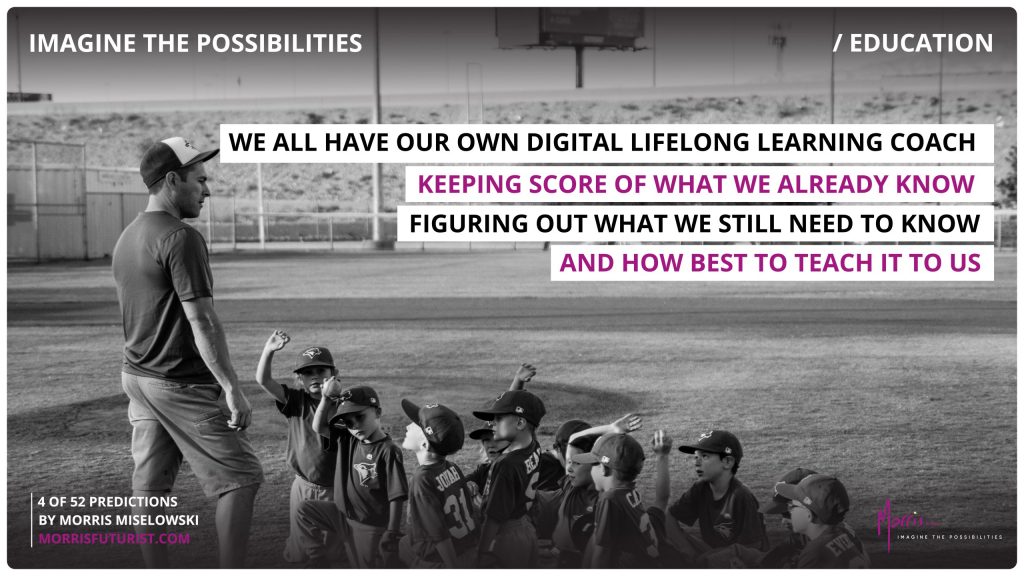
And it’s here.
- Data is the raw firehose. Sensors, scans, searches, uploads.
- Knowledge is structured, searchable, retrievable. This is the domain AI now rules.
- Intellect is the ability to connect, compute, derive meaning. Machines now simulate this better, faster, and more fluently than us.
- Which leaves us with Wisdom, the only thing still worth fighting for.
This is no longer a philosophical ladder. It’s a diagnostic.
And if you’re still investing in the bottom three, you’re preparing humans to be outpaced, outmatched, and outsourced.
So, What Is ChatGPT’s “Study” Now?
Study Mode isn’t just a better calculator.
It’s the personalised, persistent, perfect tutor we always dreamed of. It never sleeps. Never judges. Never gets distracted.
And in a strange twist, it’s probably more empathetic than many human teachers.
But this shift raises bigger questions:
- If a machine can teach you better than your professor, why enrol at all?
- If your organisation still ranks people based on memorised knowledge, are you building a future-ready workforce or an obsolete hierarchy?
- If we all access the same intellect at the same speed, where’s the human edge now?
The answer is simple: in what we choose to care about, apply, and elevate.
That’s wisdom.
That’s what still belongs to us.
This Isn’t Just a Classroom Story. It’s a Boardroom One.
If you’re leading a business, a university, or even a household, you need to hear this clearly:
The way we train people today will decide whether we stay relevant tomorrow.
ChatGPT’s Study Mode doesn’t just shift education. It rewires what we expect from:
- Managers: No more rewarding who “knows more” we must now reward who applies better.
- Recruiters: CVs full of past credentials will matter far less than demonstrations of insight and synthesis.
- Learners: Memorising facts is now self-sabotage. Real power lies in what you do with the facts AI gives you.
This is where my HUMAND™ framework becomes critical.
We must ask of every task:
Should this be done by a Human, a Machine, or AI, or some combination of the three?
ChatGPT’s Study Mode shows that machines and AI can now teach.
But only humans can learn what matters, choose what to do with it, and turn it into wisdom.
And that’s what we’re getting wrong, again.
We’re so dazzled by what the tech can do, “It can tutor! It can explain calculus in a kind tone! It gives feedback!”, that we forget to ask a more important question:
Are we outsourcing our learning, or upgrading it?
ChatGPT’s new Study Mode is a glimpse into the next education arms race: not just what you know, but how you learn, who teaches you, and why you’re learning in the first place.
And if you’re a parent, policymaker, educator, or employer, this changes everything.
We’ve seen it coming for two decades.
In every workshop I’ve run, I’ve asked:
What are we teaching that machines can now do better?
What are we still measuring that no longer matters?
Now, it’s not hypothetical.
A $20/month AI just became the most patient tutor on Earth, fluent in every subject, never distracted, never tired, never judgemental.
But here’s the twist.
We keep calling this education.
But what we’re really watching is the commodification of knowledge.
The Ripple Effects: Education, Employment, and Identity
For universities, ChatGPT’s Study Mode isn’t a nice add-on.
It’s a direct threat to the unspoken promise: “Pay us, and we’ll make you smarter.”
Except now?
Smart is free.
It’s downloadable.
And increasingly… it’s expected.
This shakes the foundations of:
- Curriculum relevance (Why memorise when AI can recall?)
- Assessment integrity (Who actually wrote that essay?)
- Credential value (What does a degree mean when AI can pass the exam?)
For employers? It raises harder questions:
- Are we hiring for memorised knowledge, or for human insight?
- Are we evaluating a person’s capacity, or the capabilities of the tools they’ve outsourced their thinking to?
- Are our “top performers” just the best AI prompters?
What This Means for the Future of Work and Learning
This isn’t the end of human learning.
But it is the end of assuming learning is purely a human domain.
Here’s what comes next:
Education becomes a co-pilot model.
Human + Machine + AI each doing what they do best.
HUMAND™, in action.
Assessment must evolve from what you know to what you can discern, question, and apply.
Wisdom > Knowledge.
Employers will need new metrics for hiring, training, and leadership prioritising judgement, ethical discernment, creativity, and foresight.
The line between learning and working will blur entirely.
Lifelong learning isn’t a phrase anymore it’s the operating system of modern life.
So what do we do now?
We prepare not just for new tools, but for new expectations of being human.
We teach for wisdom.
We hire for curiosity.
We reward discernment.
We co-learn with AI.
But we never forget:
AI can explain.
Only humans can understand.
Where Do We Go From Here?
This is not a warning.
It’s an invitation.
To redesign how we measure intelligence.
To reshape how we prepare teams.
To reimagine what universities and training programs are even for.
We’ve never had more access to intellect.
But never been hungrier for meaning.
So ask yourself:
- What are you teaching your people to value?
- Are you preparing for a world of wisdom, or just fighting for relevance in a world of recall?
This new Study Mode is not just a tool.
It’s a test of leadership.
And in every workshop, keynote, and strategy room I walk into, I’m asking this same thing:
What makes you irreplaceable?
Next Steps for…
Higher Education
- Redesign curriculum around real-world application and curiosity, not recall
- Partner with AI to enhance student capability, not fear replacement
- Shift from knowledge deliverers to wisdom mentors
Enterprise & Workforce Development
- Audit all training materials: are they prepping for AI-era work?
- Implement HUMAND to categorise tasks and upskill strategically
- Focus on problem-solving, creativity, judgment, not retention
Takeaways & Next Steps
- Stop measuring what AI does better
- Redesign work and learning around what only humans do best
- Build wisdom-driven systems, not knowledge-based ones
- Use HUMAND to audit every role and reshape strategy
- Ask: What’s the minimum people should know and the maximum they should be able to do?
Knowledge Is Powerless Without Wisdom
For years, we told each other, “Knowledge is power.”
But in a world where AI holds more of it than we do, that phrase is not just outdated it’s dangerous.
Knowledge is powerless.
On its own, it does nothing.
It’s wisdom, human-led, context-aware, emotionally attuned discernment that turns knowledge into action, and data into decisions.
ChatGPT didn’t make us stupid.
We’re doing it to ourselves when we stop questioning what we’re consuming, who is guiding our learning, and why we we’re chasing information instead of understanding.
The goal isn’t to beat AI.
The goal is to be more human, intentionally, meaningfully, wisely, in the presence of it.
And as I’ve said for two decades:
You can’t predict tomorrow.
But you can absolutely prepare for it.
Choose Forward.
_________
Want to dive deeper?
I’m working with education providers, boards, employers, and government teams to redesign how we learn, hire, and lead in an AI-shaped world.
If you’d like to explore a keynote, workshop, strategy session or conversation tailored to your context, get in touch here.
For daily glimpses of what’s next (and what matters), follow me on LinkedIn.
Related Reading
Takeaways
- GPT’s Study Mode signals a full shift in how we learn and teach
- Data, knowledge, and intellect are now handled better by tech than by people
- Wisdom is the final frontier of human value and the only skill that can’t be automated
- Organisations and educators must rethink what they teach, how they assess, and what they reward
- This isn’t the end of education, it’s the start of a new literacy: Knowing how to choose
____________
#GPTStudyMode #FutureOfLearning #WisdomEconomy #MorrisMisel #HUMAND #LeadershipForesight #AIinEducation #StrategicFutures #HumanCentredAI #ChooseForward