What Leaders Should Be Losing Sleep Over: The Hidden Risks Inside Modern Strategy
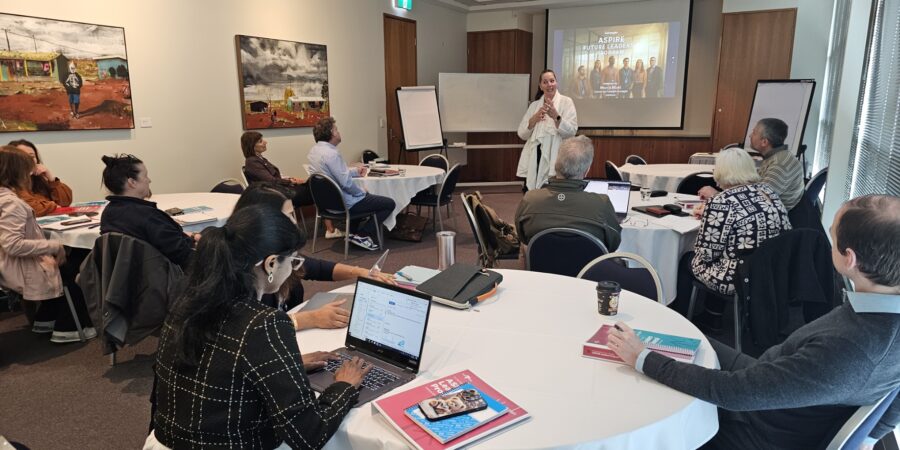
Last month I was in a strategy workshop with a senior leadership team.
No crisis. No headlines. No emergency.
Revenue steady. Pipeline healthy. Technology roadmap ambitious. Culture not perfect, but functional.
On paper, everything looked fine.
Halfway through the day, one of the executives paused and said, almost casually:
“I don’t think we’re asking the right questions anymore.”
The room went quiet.
Not because anyone disagreed.
But because everyone felt it.
That moment has stuck with me.
Because the leaders I work with are not reckless. They are thoughtful, informed, experienced. They read widely. They invest in capability. They care about their people.
But increasingly, they are worrying about the wrong things.
Markets.
Competitors.
Interest rates.
The next wave of technology.
All real. All visible.
But the bigger risks shaping organisations right now are quieter.
And that’s exactly why they matter.
This is not a technology article.
It’s about leadership, strategic decision-making, and the invisible risks shaping organisations in an AI-shaped world.
Decision Opacity: When Leaders Can No Longer Explain Why
We are building systems that move faster than we can comfortably describe.
More data.
More dashboards.
More automation.
More AI assisting, filtering, recommending.
None of that is inherently wrong.
But here is the test I often offer in strategy sessions:
If someone asked you, calmly and directly, “Why was that decision made?” could you explain it in plain language?
Not technically.
Not defensively.
Plainly.
When decision pathways become opaque, even to senior leaders, something shifts.
At first, it feels like progress. Efficiency. Modernisation.
Later, it feels fragile.
Because if you cannot explain a decision, you cannot properly stand behind it.
And if you cannot stand behind it, trust begins to thin.
Through my HUMAND™ framework, I look at work as a shifting mix of Human, Machine, and AI contributions. The point is not replacement. It is deliberate design.
Which decisions must remain human?
Which can be shared responsibly?
Which can be automated without eroding judgement?
If you don’t design that balance consciously, it gets designed for you.
That is a leadership risk.
Assumption Drift: Strategy’s Quiet Weakness
Most business strategies are built on assumptions.
About customers.
About talent.
About regulation.
About how fast behaviour will shift.
Leaders review performance constantly.
Budgets annually.
KPIs quarterly.
Very few revisit the assumptions underneath their strategy.
Not because they are negligent.
Because everything looks fine.
Until it doesn’t.
In my Ripple Effects work, we map how a shift in one domain creates consequences in others. A cost decision affects culture. A digital investment affects trust. A regulatory tweak affects innovation appetite.
Assumptions don’t fail dramatically. They ripple.
By the time misalignment is visible, the drift has already been happening.
That is not disruption.
That is strategic fatigue building quietly.
Over-Optimisation: The Hidden Risk in Modern Business Strategy
Efficiency is seductive.
Lean teams.
Automated workflows.
Real-time reporting.
Cost discipline.
Optimisation works.
Until it doesn’t.
When you optimise everything, you remove slack.
Slack is the thinking time.
The extra human pause.
The capacity to explore alternatives.
Slack is also resilience.
The organisations that look strongest on paper are sometimes the least adaptable when something unexpected hits.
Because there is no room left to absorb it.
In my Inhabitable Futures work, I ask leaders a different question:
Not just “Will this strategy work?”
But “Would we want to live inside the future this strategy creates?”
An over-optimised system may be efficient.
But is it inhabitable?
For leaders?
For teams?
For customers?
That is not a soft question. It is a strategic one.
Trust Lag: When Confidence Erodes Before Data Shows It
Trust rarely collapses overnight.
It thins.
It stretches.
It becomes slightly more transactional.
You can feel it in meetings before it shows up in metrics.
When decision-making becomes opaque, people fill in the blanks themselves.
And humans are very good at filling in blanks with suspicion.
There is also an emotional layer I describe as PTFA — Past Trauma, Future Anxiety.
Teams remember past restructures. Past promises. Past shocks.
They also worry about what might come next.
When leaders accelerate change without clear explanation, that emotional residue amplifies.
The reaction is rarely about the current decision alone.
It is layered.
Ignoring that layer is risky.
The Quiet Automation of Judgement
We often talk about the future of work in terms of jobs.
I prefer to break work down into tasks and decisions.
Work today is a mix of:
Human judgement
Machine stabilisation
AI acceleration
If you do not deliberately design that balance, you slowly erode judgement in places where it still matters.
Over time, the muscle of human discernment weakens.
Then when complexity demands wisdom, not efficiency, the capability is thinner than expected.
That is not a technology failure.
It is a foresight failure.
The Quiet Risks Leaders Should Notice
• Decision opacity
• Assumption drift
• Over-optimisation
• Trust lag
• Automation of judgement
None of these explode suddenly.
They accumulate.
In my Immediate Futures thinking, I focus on the space between today and tomorrow. The risks already forming, not the dramatic ones on the horizon.
The future rarely breaks organisations overnight.
It exposes what they stopped noticing.
Preparation Over Prediction
You can’t predict tomorrow.
But you can prepare for it.
Preparation is not about forecasting shocks.
It is about strengthening decision quality before shocks arrive.
It is about:
Making decision pathways visible.
Revisiting assumptions regularly.
Leaving deliberate slack.
Mapping ripple effects.
Ensuring the future you are building is inhabitable.
That is the work of leadership now.
Not louder leadership.
Clearer leadership.
A Final Reflection
At the end of that strategy workshop, nothing dramatic apparently changed.
No pivot. No new strategy document.
But underneath, everything changed.
We slowed down.
We unpacked assumptions.
We mapped ripple effects.
We clarified where judgement needed to remain human.
Alignment improved.
Decision quality improved.
That is not dramatic work.
It is disciplined work.
Leaders should not be losing sleep over noise.
They should be paying attention to the quiet shifts inside their own systems.
Because the future rarely punishes organisations for being wrong.
It punishes them for not noticing.
If you are reshaping strategy, leadership, or governance in an uncertain environment, that is the conversation I spend most of my time having.
Choose Forward.
—
Morris Misel
Foresight Strategist | Keynote Speaker | Advisor
morrismisel.com