Why the AI Backlash Isn’t About Technology at All
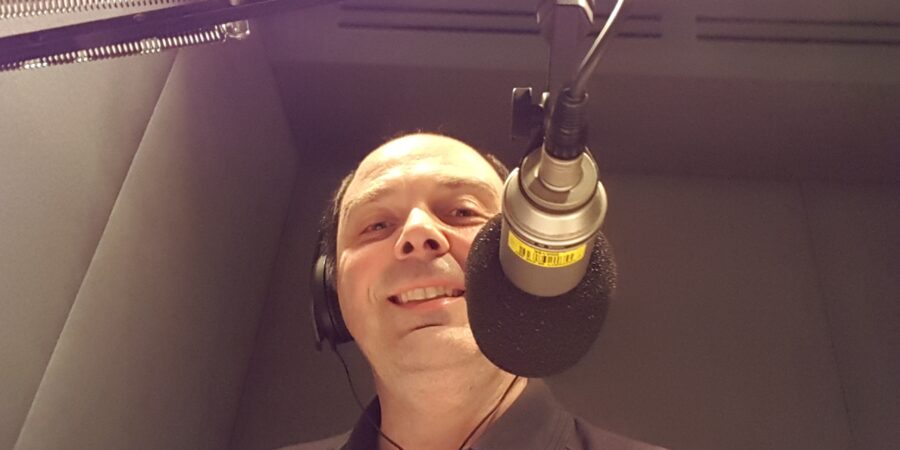
Reflections from a live Radio 3 Hong Kong conversation
Every new technology goes through the same emotional cycle.
First, we fall in love.
Then we get disappointed.
Then we either marry it, or walk away from it, muttering.
Right now, generative AI is firmly in the disappointment phase.
On Radio 3 Hong Kong this week, Phil and I talked about the growing backlash against AI, the rise of what some are calling “analogue lifestyles”, and why people are suddenly tired of hearing about chatbots, tools and synthetic content everywhere they turn.
It wasn’t an anti-AI conversation.
It was a human one.
This isn’t a story about rejecting AI. It’s about recalibrating our relationship with it.
Listen to the full Radio 3 Hong Kong conversation (17 minutes 56 seconds)
People Aren’t Angry at AI. They’re Disappointed by It
What struck me most wasn’t rage.
It was fatigue.
People aren’t storming the barricades. They’re yawning.
We were promised something close to utopia. Decades of science fiction told us that once intelligent machines arrived, life would be smoother, easier, smarter. Instead, what many people experience day to day is something far less magical.
Clunky tools.
Questionable outputs.
Endless content of uncertain origin.
And a constant low-grade suspicion about whether what you’re seeing, reading or hearing was created by a human at all.
That gap between promise and reality matters.
When expectations run far ahead of lived experience, frustration is inevitable.
“AI Slop” Is a Signal, Not a Punchline
The term AI slop keeps popping up online, a phrase increasingly used to describe low-quality, repetitive generative AI content. It’s crude, but it’s revealing.
It describes that flood of synthetic material that feels technically impressive but emotionally empty. The kind of thing that fills feeds but leaves no residue of meaning.
The issue isn’t that AI exists.
It’s that too much of what it produces feels insipid.
When people can’t tell whether a video is real, a voice is human, or a creator even exists, trust erodes quickly. And once trust goes, engagement follows.
This is where the backlash really lives.
Not in ethics papers or court cases, but in everyday micro-decisions like scrolling past, switching off, or quietly disengaging.
The “Analog Lifestyle” Isn’t a Rejection
A recent CNN Business article explored why people are deliberately stepping back from always-on, AI-powered lives and recommitting to more tangible, analog experiences.
You can read it here:
CNN Business article on the shift toward analogue lifestyles
https://www.cnn.com
That sounds dramatic, but I’m not convinced it’s a mass movement.
What it is, however, is a correction.
We’ve been here before.
Every major technology wave triggers the same response. Television. The internet. Social media. Each time, people warned it would rot our brains, end conversation, or destroy society.
What actually happens is more mundane.
We overshoot.
Then we recalibrate.
The current interest in analogue behaviours isn’t about going backwards. It’s about regaining agency. About reminding ourselves that technology is meant to serve human intent, not replace it.
Why Detoxes Miss the Point
One thing I’m wary of is the idea that we need to “detox” from technology.
That framing suggests excess followed by abstinence, then excess again.
It’s like bingeing and dieting with tools that are meant to support daily life.
A healthier model is steadiness.
Use technology where it genuinely helps.
Put it down when it doesn’t.
No drama required.
If we have to escape our tools to feel human again, something has gone wrong in how we’ve designed the relationship.
The Hype Cycle Explains Where We Are
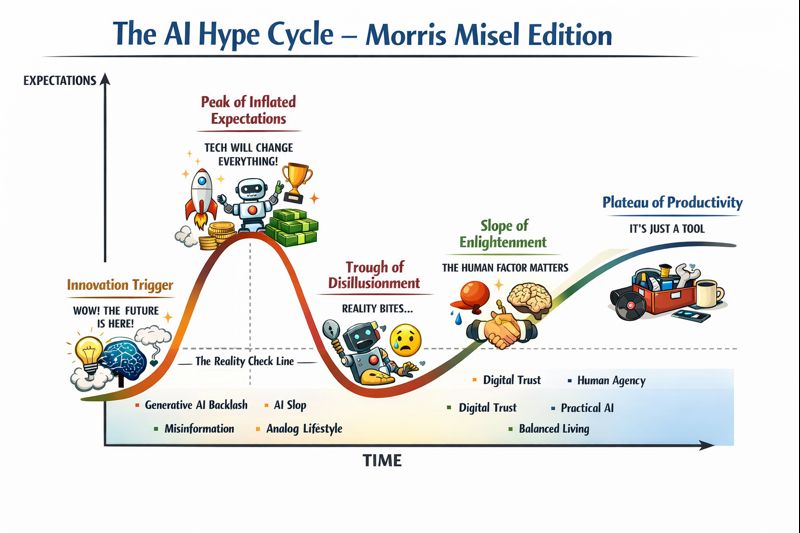
This moment makes far more sense when you look at the classic technology hype cycle, a long-standing model that explains how humans emotionally respond to innovation over time.
A simple explainer can be found here: https://www.gartner.com/en/research/methodologies/gartner-hype-cycle
First comes the innovation trigger.
Then the peak of inflated expectations.
Then the trough of disillusionment.
That trough is where we are now with AI.
What’s different this time is speed.
Radio and television took decades to move through these phases. AI went from obscure to omnipresent in about three years. Straight up like a rocket, and now straight back down into reality.
There hasn’t been time to do the slower, harder work of integration.
That work is still ahead.
What Comes Next Is the Quiet Part
After disillusionment comes something far less exciting, but far more valuable.
Practical use.
This is where technologies stop dominating headlines and start solving specific problems quietly. Virtual reality didn’t disappear. It just moved into medicine, training and logistics, where it actually makes sense.
AI will do the same.
When it leaves everyday conversation and enters practical conversation, that’s when it starts earning its place.
The Real Risk Is Letting AI Decide What Matters
One concern I keep coming back to is curation.
Social media already shifted us from choosing what we consume to being shown what algorithms think is relevant. AI accelerates that shift.
If we allow systems to decide what’s important on our behalf, we risk living inside increasingly narrow feedback loops. Hearing more of what confirms us, and less of what challenges us.
That’s not a technical problem.
It’s a human one.
This Is Not the End of AI
AI isn’t going away. Neither is social media. Neither did television or the internet.
What is ending is the breathless, exaggerated storytelling around them.
That’s healthy.
We don’t need AI to be magical.
We need it to be useful.
And we need to remember that being human was never a bug to be fixed.
It was the point all along.
If this conversation resonated, you’ll find more reflections like this across my blog and weekly media segments, where I unpack what emerging technologies actually mean for people, leaders and organisations. You may also want to read Why 2026 Might Be a Good Enough Year, which continues this thinking: https://www.morrisfuturist.com/why-2026-might-be-a-good-enough-year-morris-misel
Choose Forward.
#MorrisMisel #GenerativeAI #AIBacklash #AnalogLifestyle #HumanCentric #FutureOfWork #FutureOfLeadership #StrategicForesight #CLevel #CEOPerspective #LeadershipStrategy #TechnologyAndSociety #AIandHumans #DecisionMaking #MediaCommentary #Radio3HongKong #ChooseForward