Whats Actually Happening When AI Arrives at Your Organisation
The first-order effect is always visible. You announce the adoption. You deploy the tool. The headlines talk about the efficiency gain. The quarterly numbers improve.
But the ripple effects are what nobody talks about.
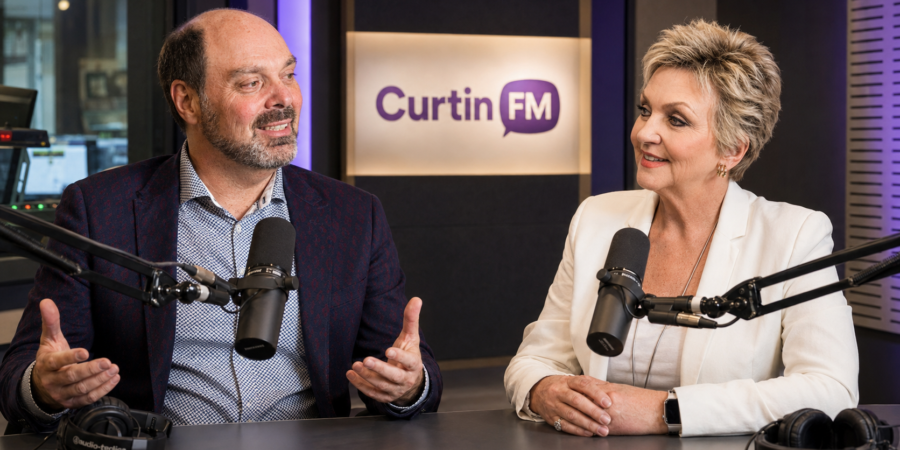
I was on Curtin FM with Jenny Seaton last week talking about this. What happens in organisations when AI arrives isn’t just a technology story. It’s a consequence story. I’ve been inside corporate decision-making for 40 years, sat in boardrooms where choices get made about what to keep and what to let go. The immediate decision looks clean. It’s what happens six months later that gets complicated.
Listen to the Full Segment
📄 Full Segment Transcript, Click to Expand
Morris Misel speaking with Jenny Seaton on Curtin FM 100.1 Perth, 31 July 2026
Jenny Seaton: My next guest is Morris Misel, a foresight strategist and broadcaster who has worked with over 2,000 organisations across 160+ industries. He tracks what major shifts in technology mean for how people work, decide, trust and build the future. Thank you for your time, Morris.
Morris: It’s a pleasure. Happy Friday, everyone.
Jenny: Do you do guest speaking on all of these subjects?
Morris: I do. I spend a lot of time on stage and in boardrooms talking about these topics.
Jenny: What caused your interest in the future?
Morris: It goes back to my origin story. My parents were migrants who came to Australia with nothing but worked their way up. I grew up believing everything was possible. You had to think about what the world might look like and how you could influence it. I was taught from grade one to think about tomorrow in a special way, with opportunity and possibility.
Jenny: Let’s talk about the patterns you see. You mentioned a pattern repeating. What is it?
Morris: I’m talking about technologies I’ve witnessed in my career. Moving from telex to fax machines, both extraordinary changes. Telexes required 24-hour operators. Then it became almost immediate. We moved through mobile phones, the internet, social media. Each has been profound. Things I’ve worked through with my clients and audiences.
Jenny: What about AI? How do we control it? Should the government step in?
Morris: The government can’t step in because they work after the fact. What we need is to understand technology. Technology isn’t anthropomorphic, it’s created by humans for humans. We need guardrails.
Jenny: Does AI run away on its own?
Morris: It can do more than we should allow. I think the best thing we invented was a brick, literally. We should stop it when uncomfortable. That’s why we allow it to overwhelm us.
Morris: What I’ve seen inside corporates is that many use AI as a tool to do what they always wanted but were never brave enough to do. Over COVID, companies bloated themselves. Now they use AI as the story that makes cost reduction feel inevitable. But AI didn’t force the hand, the organisation did.
Jenny: It’s convenient to blame someone else for actions you decided to take.
Morris: I’m certain we’ll hire people again in 6-18 months when companies realise they’ve swung too far. Tasks can be done by AI. But humanity has soul. The wisdom of people can’t be replaced by machines. Companies will wake up realising they’ve lost their soul, and the brand is difficult because it’s run by routine.
This transcript has been edited for clarity. Listen to the audio above for the complete conversation.
The Real Signal Isn’t About Job Loss
When organisations talk about AI, the headlines go to jobs disappearing. That sells. But in the boardrooms, the real conversation is different. The question isn’t usually “Will AI replace people?” It’s “What do we do about the cost structure we’ve built?”
Many organisations face a real problem: they’ve carried more people than their business model can sustain long-term. Some of that happened during crises when you have to hire fast. Some of it’s structural. The cost pressure is real. And AI has arrived at exactly the moment when organisations are looking for a story that makes difficult workforce choices feel like they weren’t choices at all. Like they were imposed by the technology.
That distinction matters. Because it changes what you need to pay attention to.
The Ripple Effect Nobody Talks About
This is where it gets interesting. It’s not about job numbers. It’s about what happens to an organisation when you reduce people but don’t reduce the work.
When you cut the people who know how your business actually works,not the tasks, but the wisdom,you lose something that doesn’t show up on a quarterly earnings call. You lose the person who’s been with the client for 15 years. You lose the one person who understands why you built the system that way. You lose the practiced judgment that catches problems before they’re obvious.
I’ve watched this unfold. A company cuts 30 per cent of headcount because “AI means we have to.” The quarterly numbers improve immediately. The expense ratio gets better. The stock price responds well.
And then, six months later, someone walks into the CEO and says: “We can’t find anyone who knows how that old system works.” Or: “The relationship with that client went cold.” Or: “Nobody here remembers why we built it that way.”
That’s not failure. That’s ripple effect. It’s the second and third-order consequence of a first-order decision. The cost of complexity reduction doesn’t show up immediately. It shows up when you’re trying to navigate complexity you can’t see anymore.
The Pendulum, and Why It Swings
This isn’t the first time we’ve watched organisations overcorrect when new technology arrives. We did it with email automation, with outsourcing, with process standardisation. The pattern is remarkably consistent: a new tool arrives, organisations swing hard in one direction, and by the time the consequences become visible, they’ve already swung too far.
With AI, we’re watching that same pendulum in real time. Organisations are swinging from “this tool is dangerous and we need to control it carefully” to “this tool solves everything, let’s optimise for speed and cost.” The people who pay the price for that swing are the ones in the middle,the people whose judgment used to matter because their experience was irreplaceable.
The human consequences of overcorrection compound. When an organisation cuts 30 per cent of headcount and then realises six months later that they’ve cut into the bone, they don’t usually hire those people back. They hire new people, cheaper, with less context. And the people worth keeping remember. They remember what they’re worth in an organisation that will use a technology story to justify cost cutting.
The Choice That Actually Matters
Every organisation right now is making a choice about what to do with AI. But the choice isn’t about technology. It’s about what kind of organisation you want to become.
Some organisations are asking: “How do we use this to make our people better at the work that only humans should do?” They’re asking what roles need human judgment, what relationships need human presence, what wisdom is irreplaceable. They’re using technology to amplify what humans do best.
Others are asking: “How do we use this to become smaller?” And they’re using AI as the story that makes that choice feel like it was made for them.
Both are legitimate business questions. But the second choice has a cost that compounds. Because the talent worth hiring sees what happened. They see how expendable people became when the numbers didn’t add up. And they won’t come back to an organisation like that.
The organisations that will survive and thrive aren’t the ones that used AI to eliminate people. They’re the ones that used AI to make people better at what only they can do,what only humans can decide, trust, teach, navigate, remember, and lead. I’ve written about this in the HUMAND framework, which maps what work is best done by humans, machines, AI, or some combination. The crucial insight is that this isn’t a technology question. It’s a question of what you’ve deliberately chosen to value and preserve.
What Leaders Are Actually Deciding Right Now
If you’re leading through this shift, here’s what I’d ask you to notice about your own choices.
First is honesty with yourself. If you need to reduce costs, that’s a legitimate business decision. What matters is that you own it. Not “AI means we have to.” But “We’ve decided to.” Your people will respect you more for clarity than they will for a technology story.
Second is real thinking about what work stays human. Not “which tasks can the machine do,” but “which decisions need human judgment?” Complaint handling isn’t one task,it’s seven. A machine can log a complaint, triage it, even draft a response. But the apology that needs to be felt, the relationship repair after failure, the judgment about whether the customer is right,that’s where people still matter. That’s where you keep people.
Third is investment. If AI is going to change your organisation, invest in the people who’ll work alongside it. Make them better at the work that matters. Teach them what they can’t learn from a machine. That’s the organisations people actually want to work in.
The future isn’t humans versus machines. It never was. It’s organisations brave enough to say: “We’re going to stay complex. We’re going to keep the people who understand that complexity. We’re going to use this tool to make them better.” That’s not sentimentality,that’s the sequence I’ve been arguing for since 2019. Human first, brand second, technology third. Not because humans are inherently more important, but because they’re the only layer that can decide what the technology is for.
What This Means for You, Right Now
If you work in an organisation where you’re hearing the AI story as an inevitability, here’s what I’d ask you to notice.
You can’t be replaced by a machine if the organisation values what you actually do. If they’re using the machine story to eliminate you, the machine isn’t the reason. The reason is that they decided to become smaller.
What’s irreplaceable about you isn’t your tasks. Tasks are tasks. What’s irreplaceable is your judgment. Your relationships. Your memory of how things actually work. Your wisdom about what matters.
Make that visible. Be the person who doesn’t just execute work but understands why the work matters. Lean into the parts only humans can do. Let the machines do the rest.
Build yourself into a role a machine can’t fill. Not because you can’t be replaced,anyone can be replaced by someone cheaper or a process simpler. But because replacing you would cost the organisation something real. That’s the only durability that matters anymore.
If you lead people, the question is sharper still. The decisions your organisation makes about what stays human and what gets automated aren’t the machine’s to make. They’re yours. That’s what I’ve written about in Decision Trust Zones. To lead through this shift means not hoping the machine does the right thing, but being clear about what “right” means in your organisation, and holding that line when the pressure comes to just let the algorithm decide.
The Window for Good Choices
Right now, in 2026, organisations still have real options. They can choose to keep people and invest in making them better. They can choose to use AI to amplify wisdom, not replace it.
But this window won’t stay open forever. In five years, the organisations that made the shift with people will have built something worth staying in. The ones that used AI as permission to become smaller will be rebuilding from weakness, from talent that knows what they did.
The decisions you make now, as a leader, as an organisation, as a team, ripple forward. The culture you build, the people you keep, the choices you make visible,those become the organisations you are.
The question isn’t whether AI will change your organisation. It will. The question is whether you’ll navigate that change with the people who know how it works, or whether you’ll use the technology as cover for a choice you were never brave enough to name out loud.
Choose the first path. Invest in people. Use technology to make them better. That’s not sentimentality. That’s strategy. That’s how you build something that lasts.
Choose Forward.
Frequently Asked Questions
What does it actually mean when organisations say AI forced their hand to cut staff?
Usually it means the organisation faces a real cost problem and AI has arrived at a moment when they’re looking for a story that makes difficult choices feel inevitable rather than chosen. The cost pressure might be real. The cost structure might be unsustainable. But AI didn’t force the decision. It just gave them a narrative frame where the choice feels like it wasn’t a choice. That distinction matters because it affects whether the decision actually addresses the real problem, or just moves the cost somewhere else.
Isn’t it true that some jobs will actually become obsolete?
Yes. Telex operators did become obsolete. What’s worth paying attention to is what’s actually irreplaceable about the person who held the job. With telex operators it was the operator role. With most modern knowledge work, it’s the judgment the person brings to deciding what the output should be used for. Tasks can disappear. Wisdom doesn’t become irrelevant just because a machine can handle the task.
How do I protect my job in an AI era?
Build yourself into work that requires judgment the organisation can’t afford to lose. Not “I do the job well”,machines can do jobs well. But “I understand why this job matters, what happens if we get it wrong, what the downstream consequences are.” Be the person who doesn’t just execute the task but understands the context, the stakes, and what should and shouldn’t be automated.
What’s the hardest part of navigating AI adoption for organisations?
Not the technology. It’s deciding who gets to decide what the technology is allowed to do. Most organisations deploy capability without building the governance that tells people what’s authorised and what isn’t. That’s when the checking spirals, the trust breaks down, and the ROI disappears. Fix the governance first, and the technology works better.
Do organisations ever rehire after cutting with AI as the reason?
Yes. In six to eighteen months, when they realise they cut further than they needed to, or that institutional memory matters more than they thought, they start hiring again. The problem is the people worth hiring remember what happened. They saw the organisation decide people weren’t essential. That changes the relationship. Organisations that use AI as permission to cut should prepare for the fact that talent worth keeping will be more cautious about coming back.