{Podcast} The Future of You, Me and Medicine: When Your Body Gets a Health Score
It begins, as most revolutions do, quietly.
A text message. A single red dot.
And a number that tells you how healthy your immune system is, or perhaps, how healthy it thinks you are.
That’s the promise of the new immunome-based health score developed by scientists at Yale, Stanford, and the Chan Zuckerberg Biohub. One blood draw and a million datapoints later, your immune system gets rated, a digital portrait of your biological resilience.
This is the next step in what I’ve long called the return to hyper-personalised medicine, the rebirth of the bespoke pharmacy. A world where treatment isn’t mass-manufactured but custom-compounded to match your individual biology, chemistry, and context.
I’ve spoken about this for decades with the Pharmacy Guild of Australia, the Compounding Pharmacists Association, Griffith University, WEHI, BUPA, HBA and in countless advisory sessions across health, allied health, and health insurance sectors. Each time, the conversation returns to the same idea: that the future of medicine will be built around the individual, not the average. It will be data-informed, human-interpreted, and context-aware.
And that future has already begun.
From Counting Cells to Knowing Ourselves
The immunome your body’s 1.8 trillion-cell operating system records every viral skirmish, every stress response, every environmental insult you’ve ever faced.
For the first time, scientists can now measure that system in action, not just in theory.
Traditional blood tests, like the CBC (complete blood count), give physicians a basic snapshot: red cells, white cells, platelets. But the new immune health metric (IHM) described in MIT Technology Review measures up to a million variables: immune cells, proteins, mRNA, and biomolecules, cross-referenced with machine learning to interpret what’s really happening in your body.
It’s not just counting cells; it’s understanding their conversations.
It’s like upgrading from radio static to surround sound.
The result is a personal immune score a number that could reveal whether your immune system is robust, fatigued, or quietly signalling an underlying disease before symptoms appear.
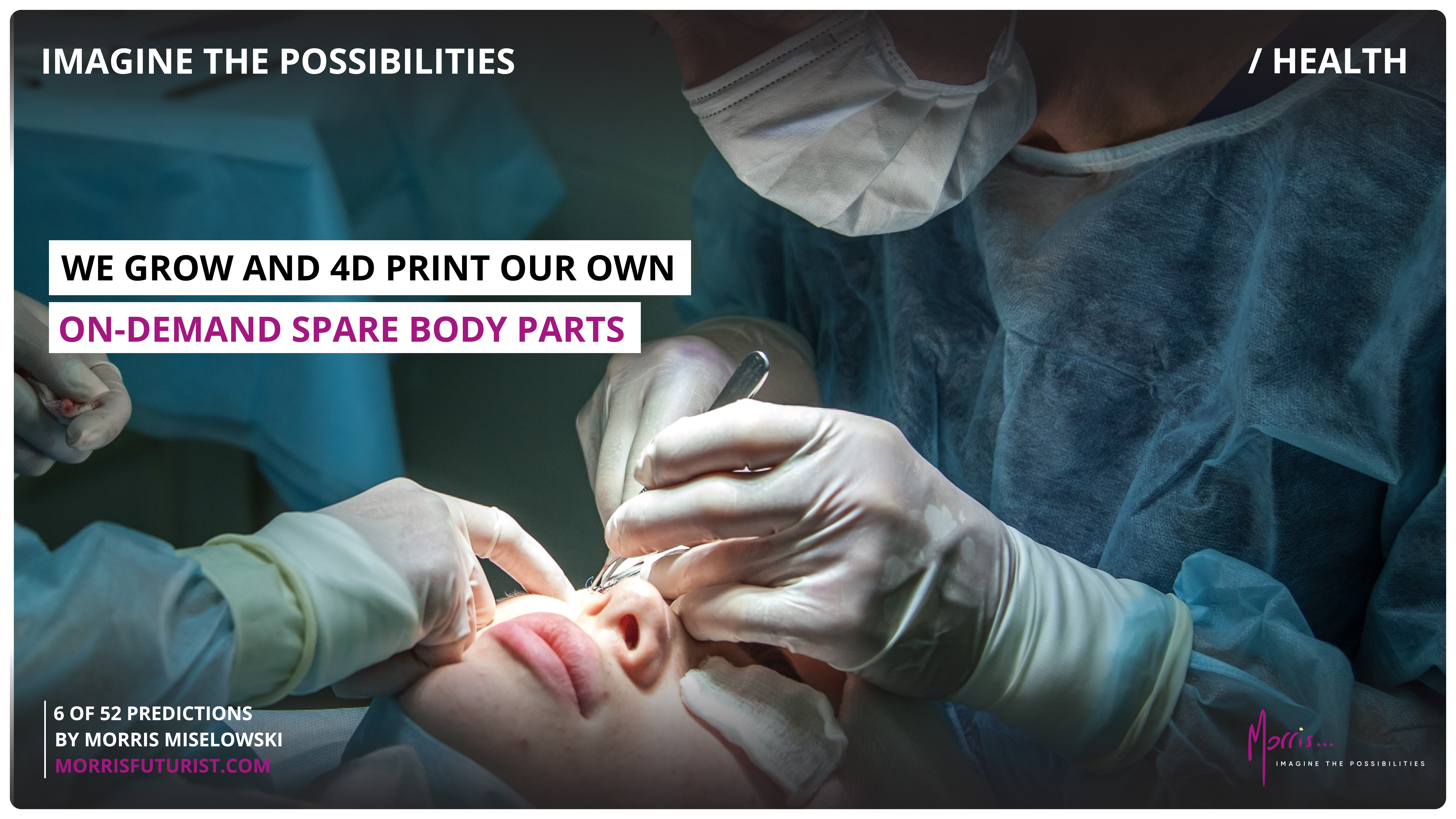
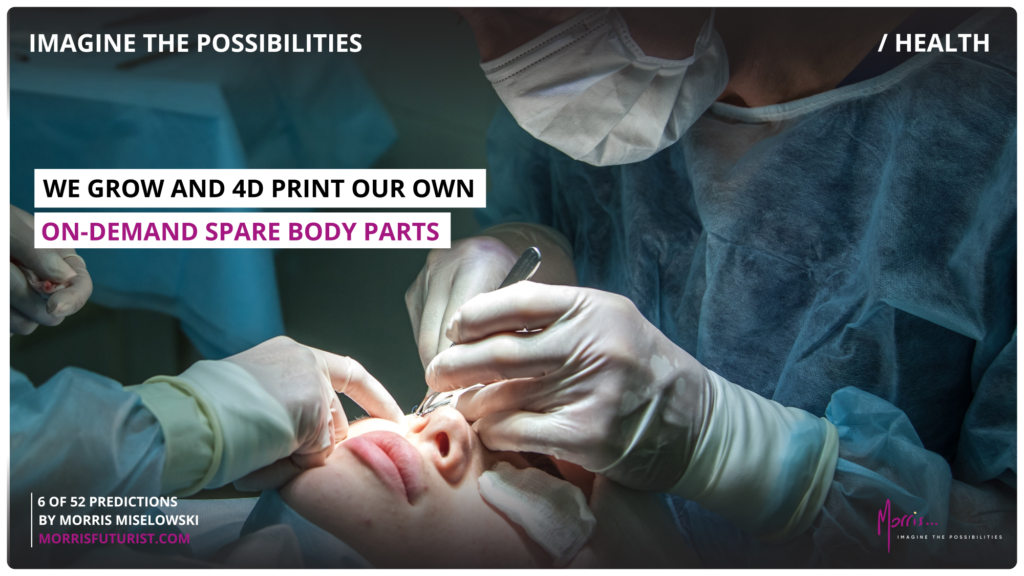
When I created my Imagine the Possibilities series in 2020, I used this image to provoke one simple idea: what happens when healthcare shifts from reactive to predictive?
Immune scoring is that moment.
The Return of the Bespoke Era
Before the 1960s, most medicine was hand-made.
Pharmacists compounded mixtures based on a patient’s needs, history, and local environment. It was time-intensive, but deeply human.
Then came mass manufacturing the pharmaceutical industrial era. Standardised doses for standardised bodies. The system scaled. Lives were saved. But something vital was lost: the individuality of care.
Now, through immunomics, AI-powered diagnostics, and precision data models, we are circling back but with technology as the enabler, not the barrier.
This is the return of the bespoke, powered by bioinformatics, artificial intelligence, and personalised data ecosystems.
But as always, the technology is only half the story.
The bigger question is who decides how these scores are used.
Who Decides What Healthy Means?
If you have an immune score of 0.35 like the journalist who took the test what happens next?
Do you get reassurance, or a raised insurance premium?
Does your employer ask for proof of immune resilience before sending you overseas?
Does your health app nudge you to buy supplements you don’t need?
Welcome to the world of Decision Trust Zones, a framework I use in my Immediate Futures work. It helps leaders identify where humans, machines, and AI should each play their part and where ethical guardrails must hold firm.
Because the moment we label a body as “low immune health,” we’re not just diagnosing. We’re deciding what that means for access, agency, and identity.
From Compounding to Computing
The IHM and its sister metric, IMM-AGE, developed at the Technion-Israel Institute of Technology, both point toward the same horizon: hyper-personalised predictive healthcare.
Every cell becomes a data point. Every immune shift becomes a signal.
Over time, your health record stops being static and starts behaving like a living model.
Think of it as a bio-digital twin a continuous feedback loop between your biology and your behaviour.
In my HUMAND™ framework, I explore how the future of work will divide tasks between Humans, Machines, and AI. The same logic now applies to healthcare:
- Humans provide empathy, interpretation, and ethical oversight.
- Machines handle precision measurement and modelling.
- AI connects the dots, forecasting risk and recommending action.
That triad is not a distant dream. It’s the operating model of tomorrow’s health ecosystem, already forming around us.
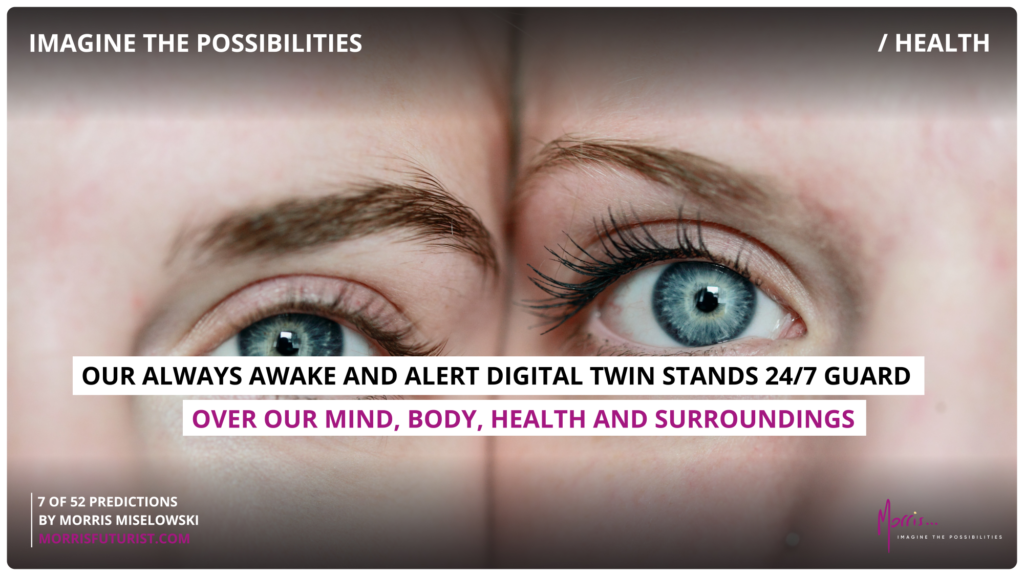
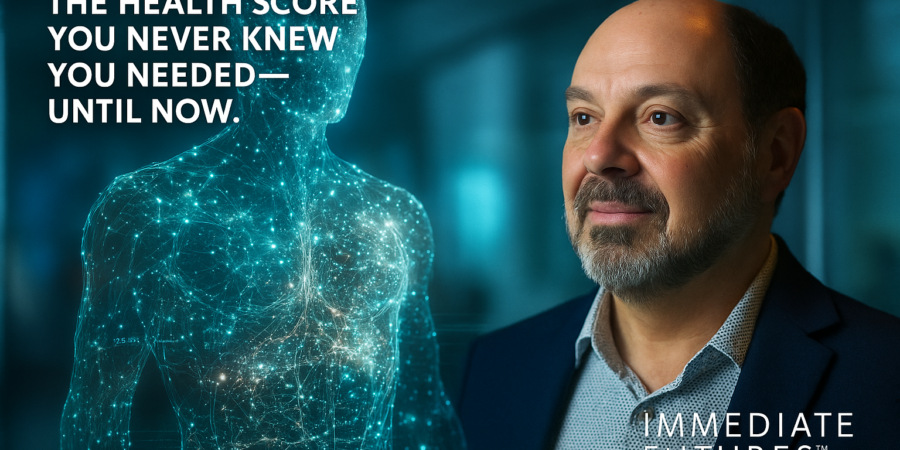
In workshops, I use this image to help leaders visualise the next frontier of personal health data where our digital twin watches over us, learning and adapting in real time.
The immunome score is the data feed that makes this possible.
The Ripple Effects of Knowing Too Much
The Ripple Effects of immune scoring stretch far beyond medicine.
- Insurance: Premiums could become dynamic, fluctuating with your immune score.
- Employment: Immunity metrics might shape job readiness or return-to-work protocols.
- Travel: Health visas could evolve from vaccine records to immune resilience profiles.
- Public Health: Governments might forecast outbreaks by analysing collective immune trends.
- Wellbeing Industry: Wearables and supplement brands will race to “optimise your score.
Each of these ripples creates opportunity and risk.
The danger lies in outsourcing our self-trust to systems that score us.
As I often remind audiences: AI can process knowledge, but only humans can hold wisdom.
PTFA: Past Trauma, Future Anxiety
For many, this level of transparency triggers unease.
What if your score says you’re unwell when you feel fine?
What if your immune “age” is older than your biological age?
That’s PTFA Past Trauma, Future Anxiety our human response to new visibility.
We carry the scars of medical missteps and the fear of what tomorrow’s data might reveal.
It’s a natural reaction. But it’s also a signal that we need systems built on trust and explainability, not surveillance.
We must design for comfort, consent, and context not just accuracy.
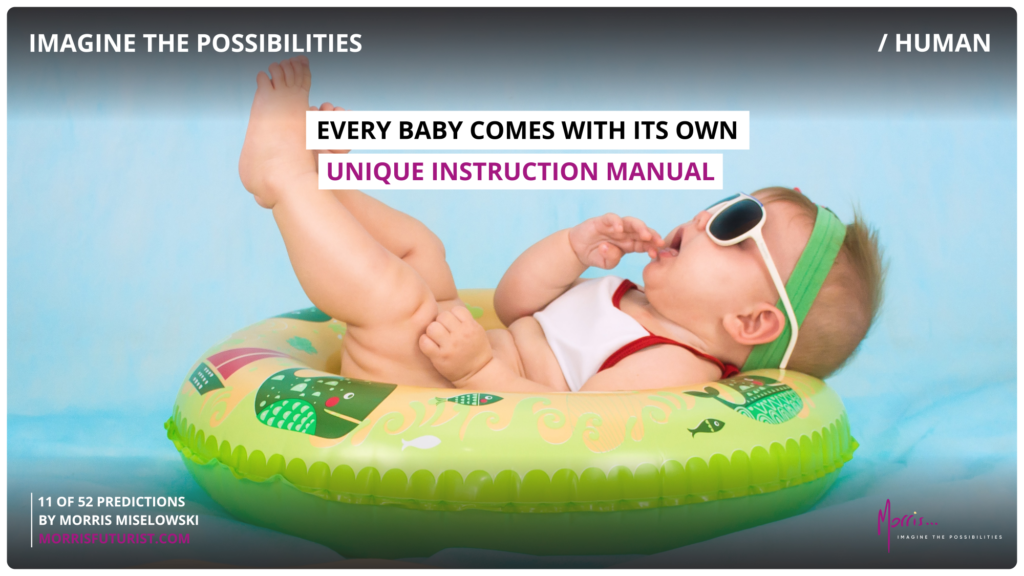
This was never meant to be a metaphor.
Soon, newborns could indeed have digital immune profiles tracking resilience, nutrition, and environmental exposure from birth.
The question isn’t whether we can. It’s whether we should and who decides what “normal” looks like.
Immediate Futures: What Happens Next
Let’s imagine the next 10 years through the Immediate Futures™ lens:
Now: Immunome tests remain in research settings. Early adopters pay for insight.
Next (2–5 years): Clinics integrate immune scoring into annual health checks. Insurers experiment. Tech firms build apps around it.
Beyond (5–10 years): A global immune data commons emerges, a live, anonymised feed of humanity’s immune landscape. It informs public policy, climate response, and precision prevention.
That’s where foresight matters most. Not predicting outcomes, but preparing wisely.
Three Futures We Might Inhabit
- The Clinical Future
Immune scores remain strictly medical. Doctors use them to personalise care. Privacy is preserved. Outcomes improve.
- The Commercial Future
Insurers, employers, and platforms use immune scores for risk profiling. Convenience wins. Privacy fades.
- The Cooperative Future
Citizens own their immune data through health data trusts, choosing when and how it’s shared. Transparency builds collective insight and resilience.
The first is safest. The second is fastest.
The third if we design it well could be the most inhabitable.
Living in the Age of Precision Health
Picture this: you wake up and your digital twin has already checked your immune score, blood pressure, and stress response from overnight sleep data.
Your health dashboard doesn’t just tell you how you feel; it predicts what’s coming. Your GP, pharmacist, and AI-assisted care bot all see the same transparent data stream and your treatment plan adjusts instantly.
This is the age of HUMAND healthcare, where humans, machines, and AI collaborate seamlessly.
- AI synthesises the complexity millions of data points from your immunome, genetics, and lifestyle.
- Machines deliver micro-diagnostics and nanotherapies targeted precisely where needed.
- Humans bring compassion, context, and creative problem-solving.
Hospitals shrink in size but grow in precision. Many interventions happen at home, guided by predictive systems that flag issues early. Chronic conditions become manageable and, in some cases, preventable.
Longevity isn’t just about living longer it’s about staying inhabitably well for longer.
Health shifts from reactive care to continuous maintenance.
Fewer hospital beds. Shorter stays. Faster recoveries.
And a new generation of medical breakthroughs immune editing, tissue regeneration, adaptive vaccines built on the same data foundations that began with a simple immune score.
But this future isn’t just medical. It’s social.
It changes how we fund healthcare, insure against risk, and measure wellness.
It reframes prevention as participation.
In every foresight workshop I run, I ask the same question:
“What’s possible in this vision and what’s doable now?”
Because the horizon isn’t somewhere we go. It’s something we build.
One choice, one decision, one dataset at a time.
For Leaders: What to Do Today
- Audit your data ethics. If your organisation uses biometric or health-adjacent data, define where your Decision Trust Zones begin and end.
- Invest in explainability. If you can’t explain an immune score to a patient, client, or regulator in plain language, you’re not ready to use it.
- Build collaborative health ecosystems. Partner with compounding pharmacists, AI developers, insurers, and public health agencies to co-create guardrails.
- Design for HUMAND balance. Decide which tasks require human wisdom, which can be automated, and which should stay hybrid.
- Educate for foresight. The next generation of leaders will need to interpret bio-data as fluently as they read financial reports.
The Takeaway: Beyond the Numbers
Immune scoring may start as a medical metric, but its ripple effects will reach every part of society.
It forces us to ask bigger questions:
- What does health mean when it’s a live number?
- Who gets to define “normal”?
- How do we design systems that keep people in charge of their own biology?
The technology will move faster than our policies.
The challenge is to ensure our wisdom moves with it.
Choose Forward
The future of you, me, and medicine is not written in code or cells it’s written in choices.
We can choose a world where health scores empower, not divide.
Where transparency builds trust, not fear.
And where every new diagnostic advance reminds us that the goal was never to quantify life, but to understand it more deeply.
Choose Forward.
If your organisation is exploring AI, biotechnology, or workforce transformation in healthcare (or any other industry), invite me to deliver a keynote, run an Immediate Futures briefing or boardroom foresight session.
Let’s design the next phase of health intelligence consciously, ethically, and ambitiously.
Email me, Visit MorrisMisel.com or connect via LinkedIn to start the conversation.
Podcast
For more insights and possibilities listen to my segment on Hong Kong Radio 3 where host Phil Whelan and I chat our way though all things future of immunome-based health score (9 minutes 12 seconds)
About Morris Misel
Morris Misel is a futurist, foresight strategist, and commentator heard by millions each year in the media and on stage.
He helps leaders anticipate disruption, design inhabitable futures, and navigate the ripple effects of human, machine, and AI collaboration through frameworks such as HUMAND™, PTFA™, Ripple Effects™, and Immediate Futures™.
#FutureOfHealth #PrecisionMedicine #Foresight #AIInHealthcare #Immunomics #HUMAND #RippleEffects #ImmediateFutures #ChooseForward
Frequently Asked Questions
Q: What does a personal health score signal about the future of medicine?
That the model of healthcare is shifting from episodic intervention (you feel unwell, you see a doctor, you receive treatment) toward continuous monitoring and predictive management. The data required for a meaningful health score (continuous biometric monitoring, genomic baseline, environmental exposure, lifestyle factors) is becoming technically available through wearable devices and affordable testing. The question is not whether this capability will exist; it is who will own the data, how it will be governed, and whether the benefits will be distributed equitably or concentrated among those who can afford premium health monitoring.
Q: What are the second-order implications of widespread biological data collection?
The insurance and employment implications are significant: if health status is continuously monitored and scored, the incentive for insurers and employers to access that data is strong, and the regulatory frameworks to prevent discrimination based on biological data are still developing. The relationship between patients and healthcare providers changes when the provider has access to continuous biological data rather than a snapshot at the point of consultation. And the psychological implications of living with a continuous health score (the anxiety it may produce, the behaviour changes it may drive, both beneficial and harmful) are not yet well understood.
Q: What does the future of medicine mean for healthcare organisations and policy?
The shift from episodic to continuous care requires fundamentally different infrastructure, workforce skills, and economic models. Healthcare systems designed around acute intervention are not well designed for the proactive, data-driven, relationship-intensive model that personalised medicine requires. The transition is significant and involves not just technology adoption but the redesign of care pathways, professional roles, and funding models. Organisations and governments that are planning for this transition now (developing the data governance frameworks, the clinical workflow redesigns, and the workforce capability) will be better positioned than those waiting for the technology to arrive before beginning the planning.
Q: Can Morris Misel speak on healthcare futures, personalised medicine, and the foresight of biological data for our healthcare leadership, government, or association audience?
Yes. Healthcare futures are core keynote topics for healthcare leadership, government, and association audiences. Book at morrismisel.com.