Where are the jobs in WA’s wheatbelt going to come from?
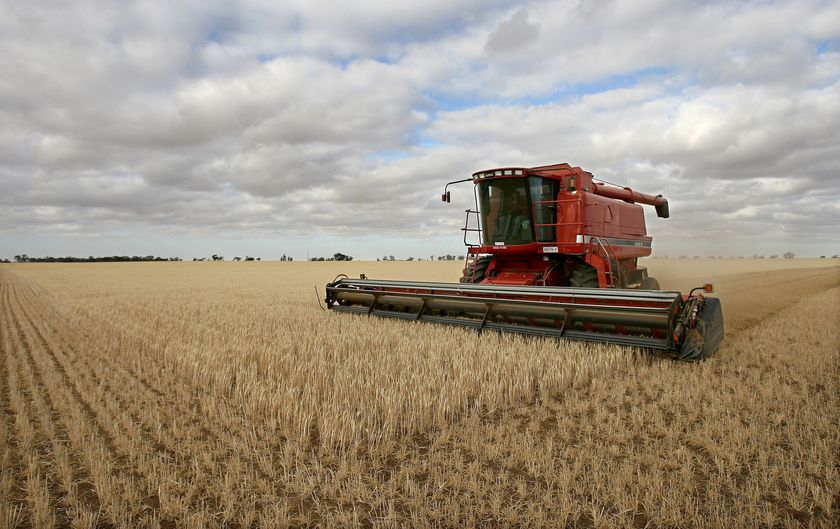 So much negativity about jobs in manufacturing and other industry’s at the moment, that those that have been doing it tough for a while are even more confused and despondent about where their future jobs may be, if at all.
This stark reality prompted Anthony Tilly of RadioWest 1098 to want to chat about Future Careers and where those on Western Australia’s wheat-belt may be able to look and what to tell their kids.
Without downplaying the hardships many sectors are undergoing and will undergo, we are in the throws of an industrial revolution, changing products, industries and jobs on a mass scale. Nothing good can nor should be said about the unemployment, angst and issues this causes, nor does the reality that we have done this before in previous generations make it any easier, but as always there are jobs and employment over the horizon.
Australia is working from a position of 94% employment, and without politics attached in the last 2 years we have put on just over 2 million jobs (ABS), put on 8 jobs for every 1 lost in manufacturing and put on 5 service jobs for every 1 lost and have a health related industry that employs 1.4 million people and growing (IBIS World).
The digital world has also opened up a transparent, always on and geographically agnostic marketplace and this is part of the solution for the wheat-belt and other geographically remote areas. Websites like Etsy, allows anyone to sell art and craft to anywhere in the world; EBay a broader range of products; AirTasker to make local people aware of your desire to undertake 1 off jobs for them and tons of others.
These are not mass solutions, but they do speak to a changing employment world, one in which the individual is more likely to become entrepreneurs and intrapreneurs, changing jobs and careers as the need to upskill, be promoted, earn more and seek new challenges, where 6 careers and 14 jobs in one employment lifetime are the norm, as is working into our 70’s and 80’s.
The road ahead is different from the one we leave behind. Many of the known employment landmarks are no longer visible, but there will be new ones ahead.
Some jobs and careers will continue the same as they are now, some will change dramatically, some will fall away and other will rise, but we will work in the future, we will have careers and jobs, what will change and has always changed is what they are, the way we do them and where they are are.
Take a listen to the interview now and let me know what careers and jobs you believe are future proof.
Frequently Asked Questions
Q: What are the structural employment challenges unique to WA’s wheatbelt region?
The wheatbelt faces a combination of structural pressures that compound each other: agricultural mechanisation has been reducing the labour required per unit of agricultural output for decades; the commodity cycle dependency means employment prospects track global commodity prices rather than local capability; population loss from employment contraction reduces the consumer base for local service businesses, creating a self-reinforcing spiral; and the geographic reality, dispersed small communities with limited connectivity, makes the digital economy transition slower and more complex than in regional centres with better infrastructure.
Q: What signals in 2014 pointed toward realistic employment diversification pathways for agricultural regions?
The realistic diversification signals for agricultural regions like WA’s wheatbelt included: precision agriculture and digital farm management creating demand for technology-capable farm operators and agronomists rather than eliminating agricultural employment entirely; regional tourism demonstrating consistent growth where genuine landscape and heritage assets were presented effectively; remote work enabling knowledge-work employment in regional locations for the first time at scale; renewable energy projects creating construction and maintenance employment in regions with strong wind and solar resources; and food processing and value-adding creating manufacturing employment adjacent to existing agricultural production.
Q: How does the PTFA™ framework explain community responses to structural employment change in regional areas?
The PTFA™ (Past Trauma, Future Anxiety) framework explains why communities experiencing structural employment change often struggle to engage constructively with transition opportunities: the Past Trauma of previous economic disruptions (mine closures, farm consolidation, service withdrawal) creates institutional memory of failed transitions that makes communities sceptical of new proposals; Future Anxiety about further loss creates risk aversion that can prevent the investment and change necessary for genuine diversification. Communities that successfully navigate structural transition typically have leaders who acknowledge both the trauma and the anxiety honestly, rather than projecting false optimism.
Q: How can I book Morris Misel for a regional development, community futures, or economic transition keynote?
Contact the booking team at morrismisel.com/event-organisers.
So much negativity about jobs in manufacturing and other industry’s at the moment, that those that have been doing it tough for a while are even more confused and despondent about where their future jobs may be, if at all. This stark reality prompted Anthony Tilly of RadioWest 10.
The shift around Where are the jobs in WA’s wheatbelt going to come from is not purely structural. It changes what capabilities organisations value, how people find meaning in their roles, and what conditions make good work possible. Leaders who understand this early retain the talent they need and build cultures that attract it.
The most important question is not whether Where are the jobs in WA’s wheatbelt going to come from will matter, but how quickly it will matter in your specific context. Leaders benefit most from mapping the ripple effects early — not just the direct impact but the second and third-order consequences that arrive later and hit harder. That is the practical work of foresight.
