Farming 2025 style / ABC Regional Drive Perth
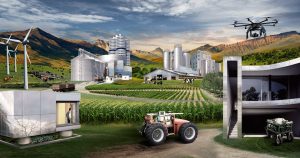 I have to start off by admitting that when I first began speaking and consulting to the Agriculture / Horticulture / Live Stock industries 15+ years ago about the Future of Horticulture and Farming, they were a very reluctant and skeptical audience who were used to traditional long-held labour intensive methods of farming and thought that even a mobile phone on the farm was ridiculous.
I spent many strategy sessions, workshops and keynotes over the ensuing years going on about technology, robotics, analytics, AI, changes in the workforce, self driving equipment and a change in the way city slickers would think about their food, its provenance and its growers.
I advocated hard for branding fruit, veg and live produce; ensuring farmers story made it into the marketing message and encouraging farmers to connect and listen to the consumer to find out what they really wanted, how, where and when.
It took a few years but slowly the message began to make sense.
Consumers indeed began to care more about the provenance of their food, became increasingly interested in its journey and in the farmer and what went into growing it.
Growers began to look more to technology to supplement human activities and we now have a totally different agricultural / horticultural ecosystem and a culture that once again celebrates fresh produce and values the work of the grower.
The Ag industry has become my shining example of seismic industry shift based on an open mind-set and a meeting of humans and technology can achieve to come up with:
- drones to see their property in ways they’ve never done before and to watch over and muster livestock.
- driverless tractors and harvesters running independently 24 hour per day
- satellites to gain real-time information about vines, land and livestock
- remotely monitoring their farms, whilst they are away
- using swarm robots to plant, till, weed, irrigate and pick
- precision / smart farming led by artificial intelligence and acted on by robots
- remote farming, allowing farmers for the first time to live off the farm and still produce
and this is just the tip of Ag tech.
Ahead we’re seeing the rise of vertical farms, a return to smaller near city farms, and households that are increasingly growing their own as well as concerted efforts targeting waste (consumer and grower), increasing farm productivity and bio engineering.
But the most encouraging change of all, is that we’re seeing a return of smiling humans on farms, undertaking very different roles, using very different cutting edge technologies, but it is now becoming a career of choice rather than a default job or job of last resort.
These are just some of the future farming angles Barry Nichols of ABC WA Regional Drive and I chatted about in this weeks segment, so have a listen, share it round and let me know your thoughts on the Future of Farming (9 mins 12 secs)
Frequently Asked Questions
Q: How is technology changing farming right now?
Precision agriculture is the most immediate shift, sensors, drones, and AI-driven analytics that allow farmers to apply inputs exactly where and when they are needed, reducing waste and increasing yield. This is not future technology; it is already deployed on farms across Australia and globally.
Q: What will farming look like in 2030?
More automated, more data-driven, and, in the right contexts, more productive. Robotic harvesting, autonomous vehicles, and AI-managed irrigation are the Immediate Future™. The structural question is what this means for farm labour, rural employment, and the economics of small-scale farming.
Q: What are the biggest risks in agricultural futures?
Climate disruption to established growing regions, water scarcity, and the consolidation of farming into fewer, larger operations as technology raises the capital requirements for competitive production. These are not abstract risks. They are already reshaping the sector.
Q: Can Morris Misel speak about agricultural futures, rural communities, and food security?
Yes. For keynotes on farming, agribusiness, and regional futures, visit morrismisel.com/event-organisers.
I have to start off by admitting that when I first began speaking and consulting to the Agriculture / Horticulture / Live Stock industries 15+ years ago about the Future of Horticulture and Farming, they were a very reluctant and skeptical audience who were used to traditional lo.
When signals like Farming 2025 style / ABC Regional Drive Perth emerge, organisations that engage early have the advantage of choosing their response rather than reacting to events. That gap between those who prepared and those who did not is where competitive positioning is actually made or lost.
The most important question is not whether Farming 2025 style / ABC Regional Drive Perth will matter, but how quickly it will matter in your specific context. Leaders benefit most from mapping the ripple effects early — not just the direct impact but the second and third-order consequences that arrive later and hit harder. That is the practical work of foresight.
Where this went: The agricultural uses I described in 2017 arrived first and arrived quietest, because nobody objects to a drone over a paddock. The objections were always going to come from somewhere else. I picked the thread up again in August 2026 in Nobody Argued About the Shark Drones.
