The trendy piece of tech that’s dwarfing Apple / The New Daily
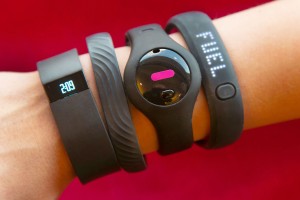 Report claims the tech giant is getting thrashed in an emerging area it tried to claim.
Apple has lost the battle of the wrist to Fitbit, which is now arguably synonymous with the word ‘wearable’.
New data from an international research group confirmed this week the company’s dominance. In the final quarter of 2015, Fitbits outsold Apple Watches two-to-one.
Fitbit shipped 8.1 million devices between October and December last year, giving it nearly 30 per cent market share, compared to 4.1 million Apple Watches, International Data Corporation (IDC) reported on Wednesday. Close behind was Chinese brand Xiaomi (9.7 per cent) followed by Samsung (4.9 per cent) and Garmin (3.5 per cent).
Sure to irritate Apple further, the free Fitbit app was the most downloaded from the Apple app store on Christmas and Boxing Day in Australia, the USA and Canada, according to research firm App Annie. Clearly, many gift recipients were excited to try out the devices after unwrapping.
Fitbits are wireless, portable devices that track the user’s food, water, sleep and exercise. They range in price from A$82 for a Fitbit that clips to clothing to about A$400 for the most expensive watch.
The Apple Watch is an expensive niche product, whereas Fitbits appeal to the masses, an expert says.
A tech futurist told The New Daily that the company has captured the dominant market position, not just through savvy marketing that has made them “almost synonymous with the industry”, but also by giving consumers what they want – simplicity and affordability.
“The Fitbit is an off-the-shelf product. You don’t need to know or have or do anything. You just have to buy it and shove it on your hand. It doesn’t necessarily have to connect to a laptop or anything elaborate if you don’t want to, although it can of course,” futurist Morris Miselowski said.
In contrast, the Apple Watch is “really an entry product” for early adopters, not the mainstream market, he claimed.
“Apple doesn’t fit in that broader market place. It still only plays to its ecosystem with a limited range of possibility – and it’s expensive.”
Apple Australia responded to The New Daily‘s request for comment by pointing to CEO Tim Cook’s remarks on quarterly earnings from January.
“We expanded distribution of Apple Watch to almost 12,000 locations in 48 countries during the quarter. As we expected, we set a new quarterly record for Apple Watch sales, with especially strong sales in the month of December,” Mr Cook said.
Why are we buying them?
Compared to Fitbits, the Apple Watch does far more. It tracks health data like its main competitor, but can also send texts, make calls, run apps, give directions and perform internet srches when connected to an iPhone.
It is also far more expensive. The most costly Fitbit, the Surge watch, starts at A$400, whereas the cheapest Apple Watch starts at A$499.
Fitbits are specifically marketed as health and fitness devices. They are able to track calorie intake, water intake, steps per day and sleep patterns.
As confirmed by Wednesday’s IDC report, consumers have clearly indicated their preference, although an expert said the average buyer may not be entirely sure why they are buying these wearables.
“I’m not sure consumers know why they want them, to be truthful,” tech futurist Mr Miselowski said.
“It’s a new technology we never knew we wanted or needed. It just wasn’t anything that was in our mindset. All of a sudden we’ve become aware that for a couple of hundred bucks we can do something unusual that we’ve never been able to do before, so we have our early adopters jumping in.
“I think they’re seeing that everybody else has them, and that they’re inquisitive.”
Will the novelty wear off?
Research firm Endeavour Partners estimated in 2014 that about a third of trackers get abandoned after six months.
You may lose interest in this generation of wearables, but what’s to come will ‘change the market forever’. Photo: Getty
Mr Miselowski predicted a similar “disillusionment phase” this year after the hype of Christmas, but was convinced the devices would stand the test of time.
“My concern is that we will drop off into a disillusionment phase this year – that people who have bought these devices, worn them for a couple of months, counted their steps or done whatever and thought, ‘Is that all there is to it?’” Mr Miselowski said.
“Three or four months down the track, they may look at it a little bit less, get a little bit disillusioned with it, but I’m fairly sure that will take care of itself when we start to see more purposeful uses for it.”
Fitbit will continue to dominate the market, at least in the short term, Mr Miselowski predicted – and that wearables would eventually make other forms of technology obsolete.
“In many ways, they’ll do away with our mobile phone as we know it now.”
click here for original article written by Jackson Stiles, The New Daily, Life Editor
Frequently Asked Questions
Q: What has wearable technology actually delivered in the decade since the 2016 fitness tracker boom?
Wearable technology delivery since 2016 has been uneven but significant in health monitoring: the fitness tracker category has matured into health monitoring, with heart rate, sleep quality, blood oxygen, ECG capability, and continuous glucose monitoring now available in consumer-grade devices; the Apple Watch has emerged as the dominant premium smartwatch platform and demonstrated genuine health impact through fall detection, atrial fibrillation detection, and emergency SOS features that have measurably saved lives; and the medical-grade wearable category, devices used for clinical monitoring outside hospital settings, has expanded significantly, with remote patient monitoring programs in cardiac care, diabetes management, and post-surgical recovery using wearable devices as a core tool. The sports and fitness tracking use cases that drove early adoption have been overshadowed by the health monitoring applications that represent the long-term value proposition.
Q: What does the wearable health data revolution mean for the future of healthcare delivery?
The wearable health data revolution carries significant implications for healthcare: the longitudinal, continuous health data that wearables generate (baseline heart rate variability, sleep architecture, activity patterns, skin temperature variation) creates the possibility of early anomaly detection that point-in-time clinical measurements miss; the challenge is integrating this data into clinical workflows in ways that create actionable insight rather than alert fatigue; the data ownership and privacy questions (who owns health data generated by a consumer device, what happens to it when the company is acquired or fails, how it can be used for insurance underwriting) are unresolved in most jurisdictions; and the equity dimension of wearable health monitoring (where premium device users have access to capabilities that lower-income populations do not) creates a health outcome disparity that public health systems need to address actively. Wearables are a genuine health infrastructure innovation; the governance questions are proportionate to the stakes.
Q: What is the Immediate Futures™ signal for wearable health technology in 2026?
The wearable health technology immediate futures in 2026 include: continuous glucose monitoring without finger sticks has arrived for diabetes management and is extending to metabolic health monitoring for non-diabetics; AI analysis of wearable health data is producing personalised health insights that go beyond activity summaries to genuine health risk signals; and the integration of wearable data with electronic health records is advancing in health systems that have invested in the integration infrastructure, creating the longitudinal patient picture that clinicians have always wanted but lacked the data to construct. The near-term development with the largest potential impact is non-invasive blood pressure monitoring, which multiple manufacturers are advancing and which would transform hypertension monitoring if the accuracy challenges can be solved.
Q: How can I book Morris Misel for a health technology, wearables, or digital health keynote?
Contact the team at morrismisel.com/event-organisers.
Report claims the tech giant is getting thrashed in an emerging area it tried to claim. Apple has lost the battle of the wrist to Fitbit, which is now arguably synonymous with the word ‘wearable’. New data from an international research groupconfirmed this week thecompany’s domin.
The window between a signal arriving and it demanding a response is shortening. The trendy piece of tech that’s dwarfing Apple / The is already shaping strategy conversations in forward-looking organisations. Treating it as a future concern rather than a present one builds a preparedness gap that will have to be closed under pressure.
The most important question is not whether The trendy piece of tech that’s dwarfing Apple / The will matter, but how quickly it will matter in your specific context. Leaders benefit most from mapping the ripple effects early — not just the direct impact but the second and third-order consequences that arrive later and hit harder. That is the practical work of foresight.
