The Future of Australia’s Culture / ABC Local Nightlife, ABC Far North
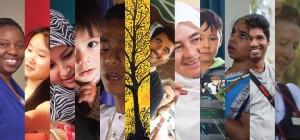 Society’s rules and etiquette’s have been framed by millions of years of physically regionalized human interactions.
These unique geographical places imparted their distinctive values, language, morays and norms to those that lived within its boundaries and taught us what was considered locally right from wrong.
These native rules were passed down orally from one generation to the next, reinforced over time by the education system and culture at large and then enshrined and enforced by local laws.
Our overriding universal culture has historically been dictated by the dominant power of our time – The Roman Empire (circa 100 AD), Song Dynasty China circa 1200 AD, Mughal Empire India circa 1700, and British Empire circa 1870.
Since the 1950’s our dominant culture has been America-centric and with the increase reach of broadcast media in this time, the world has been fed a steady diet of American culture leaving many in both developed and developing nations to measure themselves against American success standards.
With the growth in internet usage, currently 3.4 billion users worldwide or 40% of world population, rising to 5.5 billion by 2020, this single dominant geographic dominance is dwindling and being replaced by a growing diversity of people, languages, cultures, morays, expectations and views blending together from 196 countries, 2,500 languages and endless combinations of cultures all competing for relevancy and longevity.
In a global digital world geographic boundaries and limitations don’t exist, localised norms don’t exist, and culture, language, morays, laws, etiquette, expectations, values and time zones all collide in a new uncharted and ever evolving totally connected borderless fluid digital world.
In this new and evolving digital world we have irrevocably changed what it means to be human, to work, to learn, to love, to play and to belong, leaving us to ponder in the near future whose cultural values will we follow? Will these values be binding on all our behaviours and actions, or is culture instead becoming an issue of circumstance and not place.
These are huge future issues impacting on all humanity and were the starting point for another of my on air chats with ABC Local’s Tony Delroy and ABC Far North’s Phil Staley
All of these innovations and changes are ahead, each in their own way will alter our values, expectations and increasingly evolve what it means to be human.
To work through these and incorporate them into our future lives as meaningful and purposeful; to teach us how, where and when to use these technologies and how to share them evenly and inclusively, are all part of an evolving culture and it is imperative in a world where “new” and “different” are ordinary and mundane that we look to culture as our first unofficial guide to what is acceptable and what is not.
Listeners then took us in all directions with Jill wanting to talk about the impact Virtual Reality may have on Dentistry; John extending the chat into human longevity, genomics and wellness; Russell wanting to explore the impact driverless cars may have by the year 2050 and Bill rounding up the callers with his comments on the notion of digital divide and nano technology.
Have a listen to these podcasts and then add your thoughts on the future digital multiculturalism.
ABC Local – Nightlife with Tony Delroy – 2nd March 2016 (45 minutes 57 seconds) – complete with talkback callers
ABC Far North- Phil Staley – 1st March 2016 (13 minutes 49 seconds)
Frequently Asked Questions
Q: What signals are most significant for understanding how Australian culture is changing?
Australian culture’s most significant change signals include: the demographic transformation of Australia’s major cities into genuinely multicultural societies, Melbourne and Sydney are among the most ethnically diverse cities in the world, and the cultural production that emerges from this diversity is increasingly defining what ‘Australian culture’ means; the digital mediation of cultural experience, where Australians are increasingly consuming global cultural content through streaming platforms rather than locally produced content, creating both a challenge for Australian cultural industries and an opportunity for Australian creators who can reach global audiences; the Indigenous cultural renaissance, where First Nations art, storytelling, language, and ceremony have achieved a prominence and commercial significance that represents a genuine shift in Australian cultural self-understanding; and the pressures on cultural institutions (theatres, galleries, cinemas, publishers) that have been structurally transformed by digital disruption and further stressed by the COVID-19 period.
Q: What does Australia’s cultural diversity signal reveal about the relationship between immigration and cultural vitality?
Australia’s cultural diversity relationship to cultural vitality is documented rather than speculative: the most innovative Australian food, fashion, music, and visual art of the past three decades has emerged disproportionately from communities whose origins are outside the Anglo-Celtic heritage that dominated Australian cultural production for most of the twentieth century; the Vietnamese-Australian, Lebanese-Australian, Chinese-Australian, South Asian-Australian, and African-Australian communities have each contributed distinctly to Australian cultural production in ways that enrich the culture beyond what a more homogeneous society would produce; and the cultural pluralism that immigration has created is both a source of creative richness and a context for genuine social negotiation about values, practices, and what ‘Australian’ means in a diverse society. The multicultural project is not complete and not without tension, but it has produced a richer culture than the alternative.
Q: What does the future of Australian cultural policy need to address to ensure cultural vitality?
Australian cultural policy’s most urgent priorities include: the digital distribution infrastructure that determines which Australian content Australians see, streaming platform content quotas, Australian content requirements, and public broadcasting investment all shape whether Australian stories are told and found; the economic viability of professional cultural careers, the collapse of middle-income cultural employment (the working musician, the working actor, the working journalist) due to platform economics has concentrated cultural production in those who can afford to work at reduced rates, which has equity and diversity implications; and the relationship between cultural policy and First Nations self-determination, where the most important cultural policy decisions are those that create conditions for Indigenous communities to control their own cultural production and expression rather than those that manage Indigenous culture for non-Indigenous audiences.
Q: How can I book Morris Misel for an Australian culture, national identity, or social futures keynote?
Contact the booking team at morrismisel.com/event-organisers.
Society’s rules and etiquette’s have been framed by millions of years of physically regionalized human interactions. These unique geographical places imparted their distinctive values, language, morays and norms to those that lived within its boundaries and taught us what was con.
The window between a signal arriving and it demanding a response is shortening. The Future of Australia’s Culture / ABC Local is already shaping strategy conversations in forward-looking organisations. Treating it as a future concern rather than a present one builds a preparedness gap that will have to be closed under pressure.
The most important question is not whether The Future of Australia’s Culture / ABC Local will matter, but how quickly it will matter in your specific context. Leaders benefit most from mapping the ripple effects early — not just the direct impact but the second and third-order consequences that arrive later and hit harder. That is the practical work of foresight.
