Viva La Digital Cultural Revolution / Hong Kong Radio 3
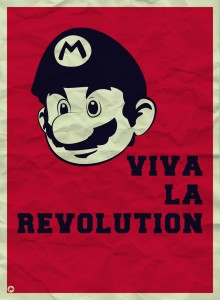 1st March is designated as World Future Day and what better day for Hong Kong Radio 3’s Phil Whelan – @PhilRTHK – and I to look back at what we thought the Future might be from a 1980’s perspective, with the rise of the Personal Computer and the beginnings of the internet; through to the 90’s with global digital brands like Yahoo, AOL and Nokia and into today’s next big things of driverless cars and virtual reality.
Underpinning all of this is my notion that we are at the beginning of a cultural digital revolution which for the first time ever in humanity is not being defined by geographical borders and people, but rather by a shapeless digital world that’s connecting up 3.5 billion digital inhabitants across 180 different countries, speaking in excess of 2,500 languages, following 4,200 religions or not, all haphazardly coming together for anything from brief moments of interaction to ongoing conversations of necessity.
In this evolving digital world whose culture dominates? Which language is used more often? Whose values are upheld? and if we are moving from a world of 3.5 billion digital inhabitants today to a world of 5.5 billion digital inhabitants in 2020, how might this revolution evolve and what impact might it have on Future life, work, love, family, education and being human?
A fascinating topic, have a listen now (12 minutes 57 seconds) and then add your thoughts to this growing issue.
Frequently Asked Questions
Q: What has the digital cultural revolution actually delivered in the decade since 2016?
The digital cultural revolution has delivered: the democratisation of content creation and distribution at a scale that has fundamentally changed the economics of cultural production, a musician with a laptop and a SoundCloud account, a filmmaker with a smartphone and a YouTube channel, a writer with a Substack newsletter can now reach a global audience without the institutional gatekeepers (record labels, studios, publishers) that previously controlled distribution; the creator economy has become a genuine employment category, with millions of people generating meaningful income through direct audience relationships; and the cultural diversity of what gets made has increased, with voices and perspectives that were systematically excluded from institutional cultural production now finding audiences. The challenge is that the democratisation of creation coexists with the extreme concentration of distribution power in a small number of platforms, which creates new dependencies even as it eliminates old ones.
Q: What does the digital cultural revolution reveal about the relationship between accessibility and quality in creative production?
The accessibility-quality relationship in digital culture is more complex than either critics (democratisation produces mediocrity) or advocates (the cream rises regardless) acknowledge: the removal of barriers to entry has produced both genuine quality breakthroughs (creators who would never have been discovered by institutional gatekeepers who are genuinely exceptional) and a vast ocean of content that competes for attention without delivering value; the discovery problem, how audiences find quality in a world of infinite supply, has been partially solved by platform algorithms that are optimised for engagement rather than quality, creating systematic biases toward content that provokes rather than illuminates; and the economics of digital culture (where attention metrics rather than critical assessment determine visibility) have created incentive structures that reward certain types of content over others in ways that shape what gets made regardless of creator intent.
Q: What is the most important Immediate Futures™ signal about AI’s impact on digital cultural production?
The AI signal for digital cultural production is the most consequential development in the sector since the streaming revolution: generative AI tools (image generation, music generation, video generation, text generation) have dramatically reduced the marginal cost of content creation, which is simultaneously a creative liberation (more people can make more things) and a competitive threat (the value of human creative labour is under structural pressure); the authenticity dimension of AI-generated content, whether audiences value knowing that a human made something, is being tested in real time across creative categories; and the copyright and compensation questions for the training data that AI models were built on are unresolved and consequential for the livelihoods of the creative professionals whose work was used without compensation. The digital cultural revolution’s next chapter will be shaped by how these questions are resolved.
Q: How can I book Morris Misel for a digital culture, creative economy, or platform society keynote?
Contact the team at morrismisel.com/event-organisers.
1st March is designated as World Future Day and what better day for Hong Kong Radio 3’s Phil Whelan – @PhilRTHK – and I to look back at what we thought the Future might be from a 1980’s perspective, with the rise of the Personal Computer and the beginnings of the internet; throug.
When signals like Viva La Digital Cultural Revolution / Hong Kong Radio 3 emerge, organisations that engage early have the advantage of choosing their response rather than reacting to events. That gap between those who prepared and those who did not is where competitive positioning is actually made or lost.
The most important question is not whether Viva La Digital Cultural Revolution / Hong Kong Radio 3 will matter, but how quickly it will matter in your specific context. Leaders benefit most from mapping the ripple effects early — not just the direct impact but the second and third-order consequences that arrive later and hit harder. That is the practical work of foresight.
