Who’s watching the drones & HK’s top IT awards / Hong Kong radio 3
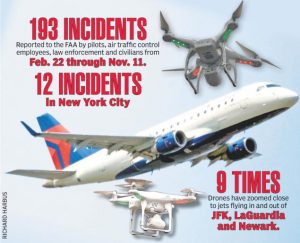 A near miss between a drone and a London bound British Airways passenger jet was the start of this weeks chat with HK3’s Phil Whelan looking at drones and how we might keep them away from planes, trains and automobiles and whatever else they shouldn’t be near.
The sky’s are full of non commercial recreational drones and in theory there are guidelines around where they can be flown including flying below 400 metres, keeping your drones where you can see them, not flying within 5 miles of an airplane, not flying near people or stadiums and in America your drone should be registered.
These are all useful guidelines but for the amateur drone pilot these rules and knowing how far away planes may be are not top of mind and for the malicious and thrill-seeker they only add to the sport of putting drones where they shouldn’t be.
In commercial terms there is a new industry and range of products emerging that block drones from flying in specified areas and will see more of these electronic no-fly zones established over the next few years, but for now it seems that we are stuck with ever increasing numbers of drones buzzing around us.
Our chat soon turned to the recent HKICTA awards and a look at the 2016 Best Smart Hong Kong awards recipients.
1st prize went to Well Being Digital for its’ dynamic real time heart rate measurement technology – ActivHearts, which allows you to use your earphones and wrist watch to obtain an accurate heart rate in real-time.
Second prize went to Viewider, which finds the best price and deals on a range of merchandise and the Pokeguide App won gold in the public service section for an app that lets you know which MTR train compartment is the best for you to get into.
All in all a mixed bag of worthy winners, but Phils’ dilemma is where’s the invention, where’s the new?
As always a great chat, have a listen now (15 minutes 26 seconds) and then share what you think Hong Kong inventors should be working on.
Frequently Asked Questions
Q: Who is watching the drones?
That’s the right question. Drone technology has outpaced regulation in most countries. The Ripple Effect™ is a surveillance gap (and filling it requires policy, not just technology.
Q: What does drone proliferation mean for privacy?
It means privacy is no longer just about your data) it’s about your airspace and your physical presence. Organisations and governments need updated frameworks for what counts as acceptable observation.
Q: How is Hong Kong positioned in the global technology landscape?
Hong Kong has consistently punched above its weight in financial technology and digital infrastructure. Its position reflects the value of being a trusted intermediary between East and West.
Q: Can Morris Misel speak about technology regulation and the future of surveillance?
Yes. For keynotes on digital governance, privacy futures, and responsible technology, visit morrismisel.com/event-organisers.
A near miss between a drone and a London bound British Airways passenger jet was the start of this weeks chat with HK3’s Phil Whelan looking at drones and how we might keep them away from planes, trains and automobiles and whatever else they shouldn’t be near. The sky’s are full.
When signals like Who’s watching the drones & HK’s top IT awards / Hong emerge, organisations that engage early have the advantage of choosing their response rather than reacting to events. That gap between those who prepared and those who did not is where competitive positioning is actually made or lost.
The most important question is not whether Who’s watching the drones & HK’s top IT awards / Hong will matter, but how quickly it will matter in your specific context. Leaders benefit most from mapping the ripple effects early — not just the direct impact but the second and third-order consequences that arrive later and hit harder. That is the practical work of foresight.
Where this went: I thought in 2016 this was a question about regulators. It turned out to be a question about all of us, and we answered it in 2026 without noticing. I picked the thread up again in August 2026 in Nobody Argued About the Shark Drones.
