Swearing Bots & #AI gone mad / Hong Kong Radio 3
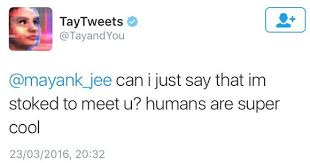 Microsoft was recently forced to wash Tay, its Twitter bot’s, mouth out with soap for the foul and abusive language it was using online. In its defence it was just doing what it was programmed to do, use its vast database of information; listen to, learn from and engage with its community in a purposeful and relevant way and as soon as the community smelt a bot and not a human behind the keyboard some of them set about getting it into trouble and soon had it making racist, foul and inappropriate comments in reply to what the community was telling an asking it.
This was as good a place as any for radio HK3’s Phil Whelan and I to start our regular chat, this week looking at the Artificial Intelligence and its possible uses and abuses.
The others story that caught our attention this week was Baidu, the Chinese search engine giant, commenting that if requested to it could use its database of 1.35 billion Chinese citizens and its 657 million Chinese map subscribers to predict imminent crowd gathering, possible intent and behavior.
Artificial Intelligence is a machine’s ability to quickly find, assemble and try to make sense out of vast amounts of data and as we get better at getting it to “think” we are going to have to get better at teaching it how to it effectively, within the parameters of culture sensitivities and also set human rules around when, where, how this synthetic brain can be used.
As always a provocative conversation (16 minutes 52 seconds), take a listen now and add your human thoughts to the rise of AI.
Frequently Asked Questions
Q: Why do AI systems sometimes behave badly?
Because they learn from human data, and humans are messy. Swearing bots and biased algorithms are Ripple Effects™ of training on unfiltered human behaviour without adequate design guardrails.
Q: Is AI going mad a real risk for organisations?
Not in the dramatic sense, but AI systems can produce outputs that embarrass, mislead, or harm if deployed without oversight. The question isn’t whether AI will fail, it’s whether your organisation has a recovery plan.
Q: What does the HUMAND™ framework say about AI decision-making?
HUMAND™ asks: which decisions carry enough consequence that a human must remain in the loop? For anything touching reputation, safety, or trust, the answer is almost always: keep humans there.
Q: How can I book Morris Misel to speak about AI risks and responsible technology?
Contact via morrismisel.com/event-organisers. Morris speaks on AI governance, responsible technology, and the human factors that determine whether AI helps or harms.
Microsoft was recently forced to wash Tay, its Twitter bot’s, mouth out with soap for the foul and abusive language it was using online. In its defence it was just doing what it was programmed to do, use its vast database of information; listen to, learn from and engage with its.
The impact of Swearing Bots & #AI gone mad / Hong Kong Radio 3 goes beyond process efficiency. It reshapes roles, redistributes decision-making authority, and changes the human skills that matter most. Leaders who understand these second and third-order consequences early have a real advantage over those waiting for the technology to stabilise before engaging.
The most important question is not whether Swearing Bots & #AI gone mad / Hong Kong Radio 3 will matter, but how quickly it will matter in your specific context. Leaders benefit most from mapping the ripple effects early — not just the direct impact but the second and third-order consequences that arrive later and hit harder. That is the practical work of foresight.
