#Bunnings going smaller to get bigger / The New Daily
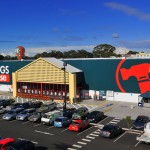 We’re all familiar with the sight of a giant green Bunnings warehouse – a sausage sizzle out the front and a car park teeming with would-be tradies.
But following the demise of its major competitor, Woolworths-owned Masters, Australia’s largest hardware operator is increasing its dominance by rolling out a growing number of smaller format stores.
The store, expected to cost $8 million and span 3000 square metres, is due to open mid-year at the Toombul Shopping Centre in Brisbane, sparking speculation that Bunnings is making a concerted foray into the shopping centre market.
Many shoppers may be unfamiliar with the number of smaller format Bunnings stores already in existence – there are 69 across Australia and New Zealand. But a Bunnings spokesperson said as the rollout continues “the smaller stores are part of our DNA”.
However, the demise of the Masters chain is undeniably opening up new opportunities for hardware giant Bunnings, which turned over $9.5 billion in the 2015 financial year.
According to an IBISWorld report released in March, Bunnings took 38.4 per cent of total revenue in hardware and building supplies. And statistics released by the National Retail Association predict that Australians’ passion for property will be a key factor behind strong growth in hardware, building and garden supplies sales.
Bunnings will open a downsized site in Toombul Shopping Centre in Brisbane.
Its figures suggest sales will increase 6.9 per cent this financial year – up from the long-term average rise of 4.7 per cent.
Scott Wiseman, CEO of national industry body Hardware Australia, said the word is that Bunnings are expanding into smaller format stores, mostly in more regional areas.
“It’s quite an interesting model. They’re sort of shifting focus or shifting tactic to try to capture what the independent hardware retailers have got, in terms of that personal service, that expertise or knowledge.”
He said while many independent retailers remain, it is difficult for them to compete with the mammoth marketing budgets of players such as Bunnings. However, he said more of the smaller players are changing tack and offering price matching to try to compete.
“The reality is there’s not much of a price difference between the big boys and the little guys,” Mr Wiseman said.
Hardware consultant Geoff Dart of DGC Advisory said it would make sense for Bunnings to increase its focus on smaller stores.
Other stores like David Jones and Myer are also looking to establish smaller sites.
“If you look around, Kmart, Target and Big W don’t sell anything that’s reasonable. They’ve got token tools, but there’s no paint or wallpaper or anything,” he said.
Mr Dart said products such as paint, hinges, picture hooks or lightweight tools would be obvious areas of demand for smaller stores, where people are prepared to pay for convenience.
Business futurist Morris Miselowski said many retailers around the globe are mixing it up when it comes to size.
“Many large box retailers across the planet are experimenting or moving to a small box size. It’s not instead of – it’s generally as well as,” he said.
He cited the example of Woolworths’ ‘Metro’ format stores.
Under the ‘small box’ model, a retailer would generally take 20 to 25 per cent of its top-selling products, and place them in a convenient, smaller-sized store, he said.
Meanwhile, in February, Bunnings completed its buy-out of Homebase, the second-largest home improvement and garden business operating in the UK and Ireland and concerned British hardware group Kingfisher has sent “spies” to Bunnings stores to see what sort of competition it is likely to face when the Aussie brand hits the UK.
Frequently Asked Questions
Q: What does Bunnings’ small format strategy reveal about how large-format retailers adapt to urban market shifts?
Bunnings’ move into smaller urban formats represents a broader retail pattern: the warehouse retail model (large format, out-of-town locations, deep range, low prices) was built for the car-dependent suburban household with storage space and vehicle capacity to manage large purchases; as urban apartment living has grown and as younger consumers without cars or storage space have become a significant customer segment, the warehouse model reaches a segment ceiling; the small format response (smaller store, curated range, urban locations accessible by public transport and foot) is an attempt to capture the urban segment without cannibalising the warehouse format’s economics; and the execution challenge is significant, the cost structure of urban retail (rent, labour, smaller transaction sizes) is fundamentally different from warehouse retail, requiring different merchandise strategy, service levels, and technology investment to be viable. Bunnings’ small format experiment is a test of whether a cost-leadership retailer can operate profitably in a premium location cost structure.
Q: What does the Bunnings small format signal reveal about how retail is adapting to the apartment living megatrend?
The apartment living adaptation signal for retail is significant: the household that lives in a 70sqm apartment in Fitzroy or Surry Hills has fundamentally different storage capacity, purchase occasion patterns, and transport options from the household in a four-bedroom house in the outer suburbs; the ‘just in time’ purchasing pattern of urban residents (smaller quantities, more frequent, convenience-weighted) is better served by formats different from the large quarterly stock-up that warehouse retail assumes; and the tool hire and tradesperson service dimensions of home improvement retail are more relevant to apartment residents (who cannot own an electric jackhammer but may need one for a bathroom renovation) than the product sales that drive warehouse format revenue. The retailers that thrive in the urban apartment economy are those that understand the economics of the household they are serving rather than forcing the household to conform to the retail model.
Q: What are the Ripple Effects™ of large retailers moving into smaller formats on urban retail precincts?
The large retailer small format Ripple Effects™ on urban precincts include: the anchor effect, a destination retailer in a smaller format can drive foot traffic to a precinct and improve viability for smaller retailers nearby; but the competition effect, a well-capitalised large retailer with strong buying power operating in a smaller format directly competes with the independent hardware, garden, and homewares retailers that have served urban precincts; and the rent effect, large retailer appetite for urban locations increases commercial rents across precincts, making viability harder for the smaller retailers that cannot absorb the same rent increases. The net precinct effect depends on the balance of anchor attraction and competitive displacement, which varies significantly by location and format. Urban planning and leasing decisions that consider the ecosystem rather than individual tenants produce better precinct outcomes.
Q: How can I book Morris Misel for a retail strategy, urban commerce, or consumer behaviour keynote?
Contact the team at morrismisel.com/event-organisers.
We’re all familiar with the sight of a giant green Bunnings warehouse a sausage sizzle out the front and a car park teeming with would-be tradies. But following the demise of its major competitor, Woolworths-owned Masters, Australia’s largest hardware operator is increasing its d.
When signals like #Bunnings going smaller to get bigger / The New Daily emerge, organisations that engage early have the advantage of choosing their response rather than reacting to events. That gap between those who prepared and those who did not is where competitive positioning is actually made or lost.
The most important question is not whether #Bunnings going smaller to get bigger / The New Daily will matter, but how quickly it will matter in your specific context. Leaders benefit most from mapping the ripple effects early — not just the direct impact but the second and third-order consequences that arrive later and hit harder. That is the practical work of foresight.
