Are Start-Ups an answer to ending world poverty? / Hong Kong Radio 3
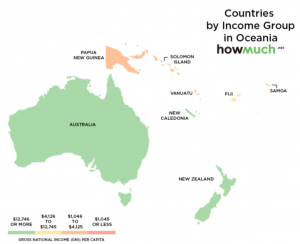 1% of the worlds population owns and has more than the remaining 99%, is only 1 of the many findings in a recently released report exposing the growing face of world poverty.
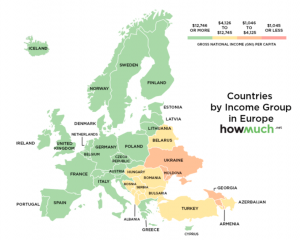
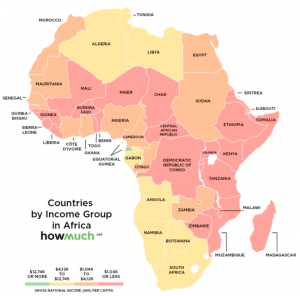
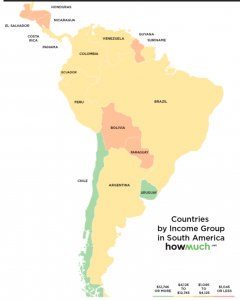
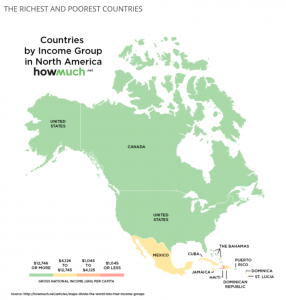
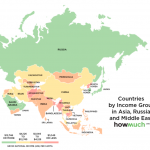
HK3’s Phil Whelan and I used our weekly on-air chat to work through the why’s and what might be’s of some of the regions and countries exploring their current standing and hypothesising on the likelihood of it changing and the catalysts that may bring it about.
My end of the argument starts and ends with people, but it relies heavily on technology being an enabler allowing people across the planet to access to a digital world and marketplace and is based on 48% of the world’s population currently having access to the internet rising to 80% by 2020.
This digital world has already begun to alter what it means to be human, to have, to consume and to be aware of and has moved possibility beyond geography to allow those not in close proximity with each other to interact and engage.
This growing transparency and contentedness also brings it with the obligation to shine a light on poverty poor, to bring the need for equity to the attention of those on behalf of those that can not yet speak for themselves.
In this same space small business, entrepreneurs, solopreneuers, brilliant ideas, remote workers, underutilised assets are all connected to marketplaces, thinking, resources and each other, and although this will not in itself stop poverty it will help to remove the physical geographic borders and the lack of access to goods, services, advice and information that has historically hindered growth.
This led Phil to ask whether one of the ways to even-up global wealth distribution may be for us all to adopt a start-up mindset that allows us to take the best of who we are, the best of where we are, question all the old paradigms and assumptions and seek out new ways to twist and bend the physical and digital worlds together to better serve our future needs.
I’m fairly sure this on-air chat hasn’t solved world poverty, but I am confident that the more of these discussions we all have; the more we continue to speak for those that can’t yet; the more we demand an end to poverty and insist on equity and access for all, the sooner we can change the colour on the poverty maps above from blood red to neon green.
A fascinating chat, listen now (14 minutes 50 seconds), share it around and add your voice to this challenge.
Frequently Asked Questions
Q: What does the evidence say about start-up approaches to poverty and development challenges?
The evidence on start-up approaches to poverty and development is sobering without being dismissive: the genuine successes exist, M-PESA’s transformation of financial access in Kenya, BRAC’s model for combining microfinance and social services at scale, and various agricultural information technology deployments that have measurably improved farmer income in specific contexts, but they share features that the broader ‘tech for good’ ecosystem often lacks: deep contextual understanding of the communities they serve, genuine partnership with existing institutions rather than disruption of them, patient capital that accepts the timeline required for systemic change, and willingness to make the service work for the poorest rather than optimising for scale metrics; the failure modes of the ‘solving poverty with apps’ approach are well-documented: technology solutions designed by outsiders for communities they do not understand, solutions that require infrastructure (electricity, internet, smartphone) that the target population lacks, and solutions that address symptoms rather than causes of poverty.
Q: What does the ‘start-up as development solution’ framing reveal about how development thinking has been colonised by innovation culture?
The colonisation of development thinking by innovation culture has produced several patterns worth examining: the preference for technology-led solutions over institutional and policy solutions, despite the evidence that the most successful poverty reduction has been driven primarily by policy (labour market formalisation, public health investment, land rights, education expansion) rather than technology; the focus on individual entrepreneurship rather than collective organisation, despite the evidence that the most durable development gains have come from community-level institutions (cooperatives, unions, local government); and the preference for measurable, attributable outcomes over the complex, long-term, multi-causal change that genuine poverty reduction requires. The start-up framing brings genuine assets (speed, experimentation, commercial sustainability thinking) to development, but requires pairing with institutional depth, policy commitment, and genuine community partnership to deliver at the scale the poverty challenge requires.
Q: What are the Ripple Effects™ of the social entrepreneurship movement on development practice?
The Ripple Effects™ analysis of social entrepreneurship’s development impact includes second and third-order consequences: the first-order effect is the solutions created and the people served directly; the second-order effect includes the demonstration that commercial models can achieve development goals, which has attracted private capital to spaces previously served only by aid; and the third-order effect includes the institutionalisation of impact measurement as a field, which has improved the evidence base for development practice more broadly, and the talent pipeline from business schools into development organisations that has introduced management capability that some organisations lacked. The negative second and third-order effects include: the aid dependency on external capital (even impact investment) that substitutes for domestic revenue mobilisation and institutional development; the legitimation of market-based approaches in contexts where the market failure is the cause of the problem; and the diversion of the most talented young people in developing countries into start-up culture rather than public service.
Q: How can I book Morris Misel for a development futures, social entrepreneurship, or global inequality keynote?
Contact the booking team at morrismisel.com/event-organisers.
1% of the worlds population owns and has more than the remaining 99%, is only 1 of the many findings in a recently released report exposing the growing face of world poverty. HK3’s Phil Whelan and I used our weekly on-air chat to work through the why’s and what might be’s of some.
When signals like Are Start-Ups an answer to ending world poverty emerge, organisations that engage early have the advantage of choosing their response rather than reacting to events. That gap between those who prepared and those who did not is where competitive positioning is actually made or lost.
The most important question is not whether Are Start-Ups an answer to ending world poverty will matter, but how quickly it will matter in your specific context. Leaders benefit most from mapping the ripple effects early — not just the direct impact but the second and third-order consequences that arrive later and hit harder. That is the practical work of foresight.
