Everything old is futuristic again
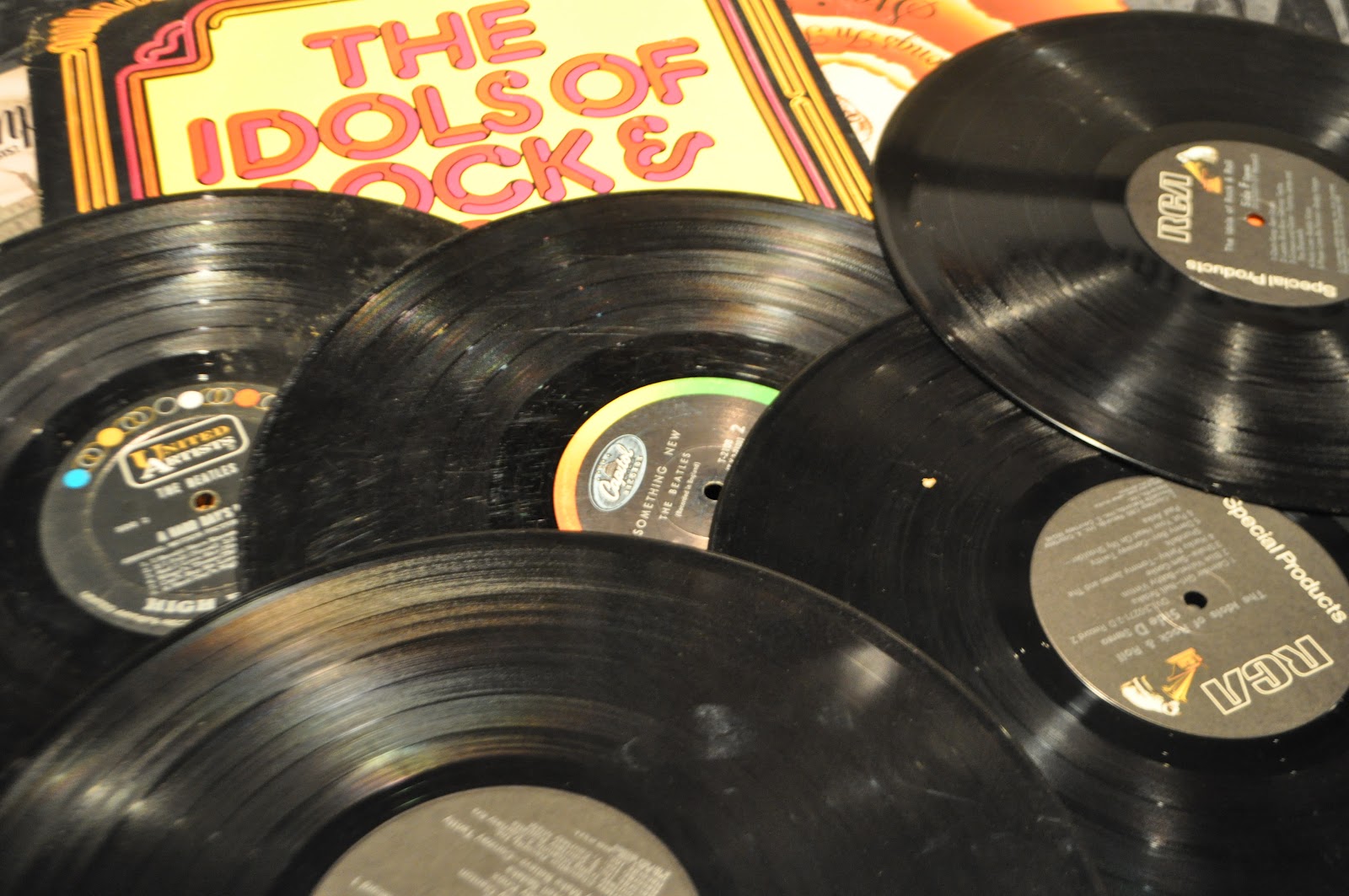 Vinyl record sales are up 70% this year and this prompted Belinda King of Radio ABC Tasmania and I to take a nostalgic look at the future to explore what other past trends are making a comeback.
Nostalgia and authenticity are two of my 13 trends for 2013 and they usually are a response to tougher economic times as we harken back to the romantic periods in our life and try and herald their return by surrounding ourselves with modern twists on their physical manifestations.
Current clothing trends fit into this with much of today’s fashion styling being influenced by 1920’s Gatsby era and the 1950’s / 1960’s. Vintage clothes stores are on the rise. Modern twists on the good old hamburgers, milkshakes and fries as well as “honest” cooking and cooking at home are all rising big in the world of food and restaurants.
These trends will be with us for the next year or so and behind it is a softening of technology envy, for most of us we’re over the gadget being the most important thing, as evidenced by the recent more sedate hysteria around the iPhone 5C and 5S launch, and instead we are looking for “hyperpersonalised” experiences these devices can offer us.
Have a listen to this segment and let me know what nostalgic period you would like to bring back and why.
[audio src="/wp-content/uploads/2013/10/future-of-vinyl-records-2-oct-2013.mp3"]]]>
Vinyl record sales are up 70% this year and this prompted Belinda King of Radio ABC Tasmania and I to take a nostalgic look at the future to explore what other past trends are making a comeback.
Nostalgia and authenticity are two of my 13 trends for 2013 and they usually are a response to tougher economic times as we harken back to the romantic periods in our life and try and herald their return by surrounding ourselves with modern twists on their physical manifestations.
Current clothing trends fit into this with much of today’s fashion styling being influenced by 1920’s Gatsby era and the 1950’s / 1960’s. Vintage clothes stores are on the rise. Modern twists on the good old hamburgers, milkshakes and fries as well as “honest” cooking and cooking at home are all rising big in the world of food and restaurants.
These trends will be with us for the next year or so and behind it is a softening of technology envy, for most of us we’re over the gadget being the most important thing, as evidenced by the recent more sedate hysteria around the iPhone 5C and 5S launch, and instead we are looking for “hyperpersonalised” experiences these devices can offer us.
Have a listen to this segment and let me know what nostalgic period you would like to bring back and why.
[audio src="/wp-content/uploads/2013/10/future-of-vinyl-records-2-oct-2013.mp3"]]]>
Frequently Asked Questions
Q: Why do so many future-facing ideas turn out to be rediscoveries rather than genuine novelties?
Many ideas that appear futuristic are rediscoveries of concepts that were ahead of their enabling conditions when first proposed. Universal basic income was discussed in the 16th century. Telemedicine was proposed in the 1920s. Remote work was anticipated in the 1980s when computing first made it technically possible. The ideas were not wrong. They were premature. Tracking which old ideas are becoming newly feasible due to changed enabling conditions is one of the most reliable foresight tools available.
Q: How can looking at historical patterns help organisations anticipate what comes next?
Historical pattern analysis reveals: the pace at which similar transitions have moved in the past (providing calibration for timing estimates); the second-order consequences that previous transitions produced (useful for anticipating the ripple effects of current transitions); the resistance patterns and incumbent responses that have characterised previous disruption cycles (useful for anticipating where current resistance is likely to come from); and the human adaptations that have reliably followed major change (useful for understanding what populations will need and want as transitions unfold).
Q: What does ‘futuristic’ actually mean if the future is largely built from existing elements?
Genuine futures work is less about imagining entirely new things and more about identifying which existing elements are about to be combined in new ways, at new scales, or in new contexts. The most practically useful foresight is not science fiction speculation but rigorous analysis of which signals are converging, which enabling conditions are changing, and which combinations of existing capabilities will create genuinely new possibilities. This is more demanding than speculation but also more actionable.
Q: How can I book Morris Misel for a foresight, strategy, or innovation keynote?
Contact the booking team at morrismisel.com/event-organisers.
Vinyl record sales are up 70% this year and this prompted Belinda King of Radio ABC Tasmania and I to take a nostalgic look at the future to explore what other past trends are making a comeback. Nostalgia and authenticity are two of my 13 trends for 2013 and they usually are a re.
When signals like Everything old is futuristic again emerge, organisations that engage early have the advantage of choosing their response rather than reacting to events. That gap between those who prepared and those who did not is where competitive positioning is actually made or lost.
The most important question is not whether Everything old is futuristic again will matter, but how quickly it will matter in your specific context. Leaders benefit most from mapping the ripple effects early — not just the direct impact but the second and third-order consequences that arrive later and hit harder. That is the practical work of foresight.
