Year 12 – a parents sanity guide
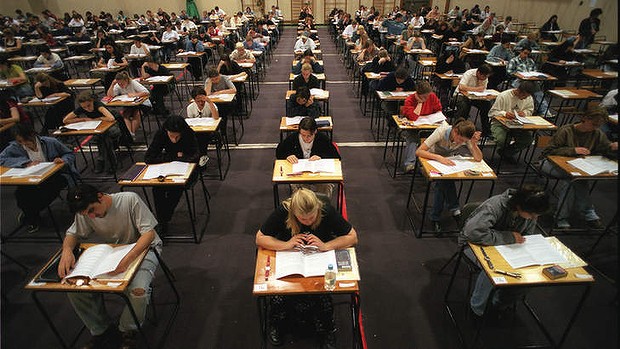 As a baby boomer (or rather a Gen Z stuck in a Baby Boomer’s body), I bought into society’s linear dream of finishing high school, finding a vocation, getting a job or going on to higher education.
The employer I started with would see me through most, if not all, of my working life, promote and reward me and after 40 years organise my retirement party and golden watch before handing me over to the Government for a pension and a good time.
Today’s young adults aren’t offered this cultural work dream and are instead mostly on their own as they work their way through 6 careers and 14 jobs in a 60 year + career, in a life span of 100 years +.
Tomorrow’s workers will work locally, remotely and globally.They will exert themselves both physically and digitally. They will work as employers, employees, partners, collaborators, entrepreneurs, intrapreneurs and socialpreneurs.
Their work hours and workload will be task and project driven and they will be responsible for their own career path, up-skilling, promotions, rewards and retirement.
With this new landscape of employment David Dowsett of ABC Wide Bay and I set out in this week’s segment to look at how parents can help their Year 12 students survive and thrive end of year exams and beyond and navigate themselves into future employment.
We discussed some of the career paths of tomorrow including health, aged care, robotics, gaming and other horizon industries, as well how students study today and how important on-line is to their study, well being and world view.
As parents it’s imperative we don’t hold onto the old education and employment dreams but instead we base our advice, assistance and well intentioned, but often not well received views on taking the best from what we had and know and blend that with what will our young adults will need if they are going to exceed their own beliefs and dreams.
and for all fellow Year 12 parents take heart, there are only 58 days left till exams are over (for me anyway), but who’s counting!?!
Take a listen now:
[audio src="/wp-content/uploads/2013/09/future-of-year-12-parents-guide-23-sept-13.mp3"]
]]>
As a baby boomer (or rather a Gen Z stuck in a Baby Boomer’s body), I bought into society’s linear dream of finishing high school, finding a vocation, getting a job or going on to higher education.
The employer I started with would see me through most, if not all, of my working life, promote and reward me and after 40 years organise my retirement party and golden watch before handing me over to the Government for a pension and a good time.
Today’s young adults aren’t offered this cultural work dream and are instead mostly on their own as they work their way through 6 careers and 14 jobs in a 60 year + career, in a life span of 100 years +.
Tomorrow’s workers will work locally, remotely and globally.They will exert themselves both physically and digitally. They will work as employers, employees, partners, collaborators, entrepreneurs, intrapreneurs and socialpreneurs.
Their work hours and workload will be task and project driven and they will be responsible for their own career path, up-skilling, promotions, rewards and retirement.
With this new landscape of employment David Dowsett of ABC Wide Bay and I set out in this week’s segment to look at how parents can help their Year 12 students survive and thrive end of year exams and beyond and navigate themselves into future employment.
We discussed some of the career paths of tomorrow including health, aged care, robotics, gaming and other horizon industries, as well how students study today and how important on-line is to their study, well being and world view.
As parents it’s imperative we don’t hold onto the old education and employment dreams but instead we base our advice, assistance and well intentioned, but often not well received views on taking the best from what we had and know and blend that with what will our young adults will need if they are going to exceed their own beliefs and dreams.
and for all fellow Year 12 parents take heart, there are only 58 days left till exams are over (for me anyway), but who’s counting!?!
Take a listen now:
[audio src="/wp-content/uploads/2013/09/future-of-year-12-parents-guide-23-sept-13.mp3"]
]]>
Frequently Asked Questions
Q: Why is Year 12 so stressful for Australian students and families and is that stress productive?
Year 12 stress in Australia is structurally produced by a high-stakes single-point assessment system (the ATAR) that compresses years of capability development into a score that determines tertiary access. The stress is partially productive, sustained effort toward a meaningful goal builds genuine capability, but is significantly compounded by the system’s failure to account for diverse forms of intelligence, family circumstance variation, and the reality that ATAR scores are a poor predictor of adult professional success in most fields.
Q: What does the Year 12 experience actually prepare young people for and what does it not prepare them for?
Year 12 prepares young people well for: sustained effort under pressure, time management, absorbing and synthesising large volumes of information, and performing under formal assessment conditions. It prepares them less well for: collaborative problem-solving, ambiguity tolerance, creative synthesis, the kind of continuous learning that career success increasingly requires, and the self-directed motivation that work in non-hierarchical environments demands. These gaps are not accidental. They reflect what the system was designed to select for, not what the 21st century economy actually requires.
Q: How can parents support their Year 12 student without adding to the pressure?
The most useful parental support is: normalising imperfection (most adults cannot remember their ATAR and it has not determined their outcomes); maintaining perspective (Year 12 is one step, not a destination); supporting recovery and rest as legitimate parts of the preparation cycle rather than signs of slacking; and being genuinely interested in what the young person is learning and thinking, not just how they are performing. The parent who remains curious and calm when their child is stressed is providing something the educational system does not.
Q: How can I book Morris Misel for an education, youth futures, or leadership keynote?
Contact the booking team at morrismisel.com/education-training or morrismisel.com/event-organisers.
As a baby boomer (or rather a Gen Z stuck in a Baby Boomer’s body), I bought into society’s linear dream of finishing high school, finding a vocation, getting a job or going on to higher education. The employer I started with would see me through most, if not all, of my working l.
When signals like Year 12 a parents sanity guide emerge, organisations that engage early have the advantage of choosing their response rather than reacting to events. That gap between those who prepared and those who did not is where competitive positioning is actually made or lost.
The most important question is not whether Year 12 a parents sanity guide will matter, but how quickly it will matter in your specific context. Leaders benefit most from mapping the ripple effects early — not just the direct impact but the second and third-order consequences that arrive later and hit harder. That is the practical work of foresight.
