Twenty Years of the Internet: What One Person’s Vision Changed | Morris Misel
 The online virtual world most of us take for granted is only 20 years old.
In the very short space of two decades we have eagerly and voraciously moved our lives and businesses into it and become dependent on it.
Look around you and see people everywhere staring longingly at their mobile screens, checking status, checking in and checking up.
Each seems intent on their interaction, to the point where it appears to the innocent passer-by as if they are greedily sucking air from their virtual breathing apparatus.
This new online and PC world required a pioneer, a visionary.
Someone to stare far into tomorrow and beyond and see what can be done. Someone to bravely say “what if” and then see about getting it done.
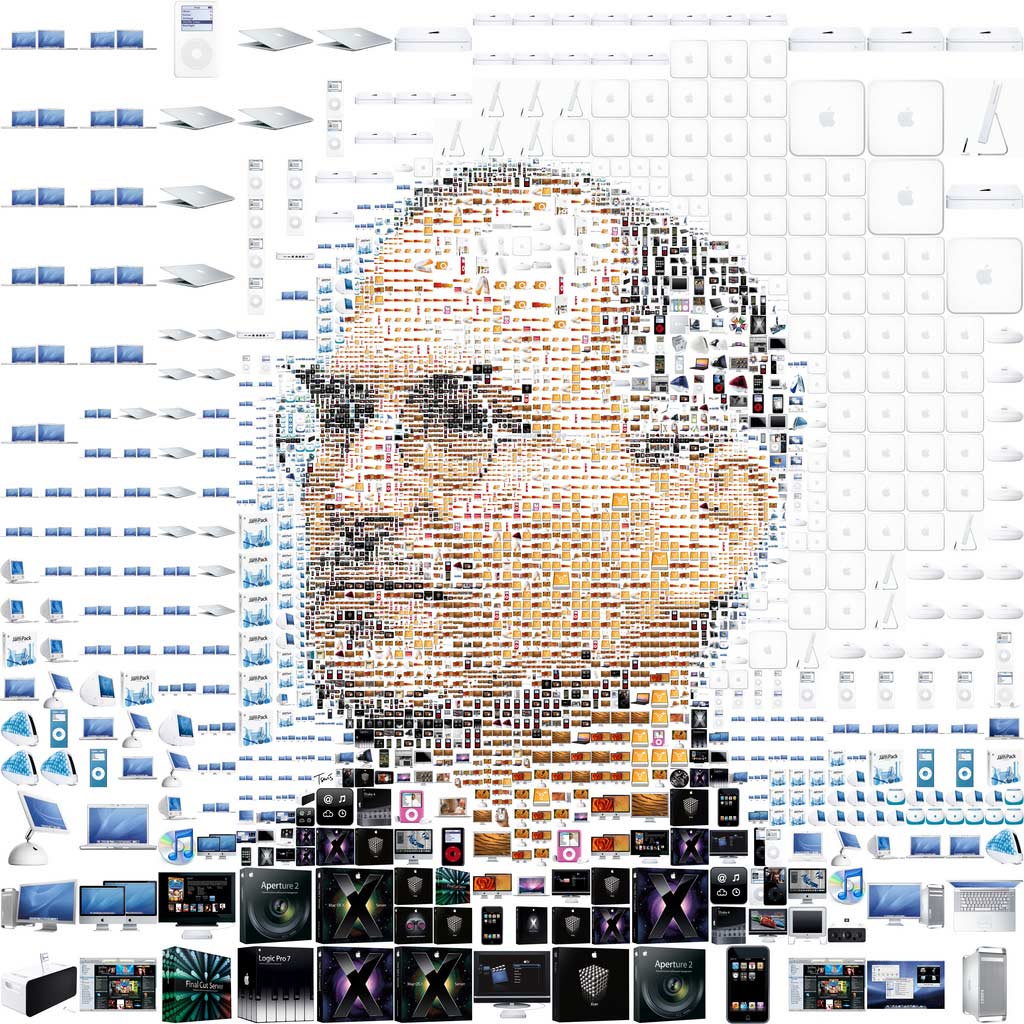
In our generation that forward looker was Steve Jobs, pioneering products, brands and people.
He started Apple Computers at a time when the PC was unknown and unwanted. He built software platforms far in advance of their marketplace needs. He innovated digital films when he purchased and breathed new life in to Pixar films. He returned to Apple after his forced departure, to take an ailing almost irrelevant company to corporate world dominance, with a suite of new horizon products that include iTunes, iPhone and iPads.
Steve Job’s gift seems to be his unwavering consumer focused vision of technology and what they could become as he uncannily built category definers that would be purposeful, useful and intuitive.
He thought nothing of relentlessly driving his handpicked tribe to seemingly reach far into the future and drag back to today unseen of and unheard of technology.
His ability to make the world see the future is also clear as he regularly ignited the passion of the everyday consumer, geek and non tech ahead alike, to stand for hours outside one of his global retail stores to be the first to buy and use one of his latest who would have known I needed gadgets.
From a corporate viewpoint he rebuilt Apple over the last decade and a half to tack into the wind. To seek and desire difference in order to find market opportunity. To work for Apple requires checking in the obvious at the door and joining the Don Quixote search for virtual and technological windmills.
This and where to from here for Apple was the on air discussion between myself and Jason Jordan of Perth radio’s 6PR in this weeks FutureTech segment as we paid tribute to the life and times of a gone to soon true innovator.
Listen now:
and listen live each Sunday at 4.40 p.m. (WST)
Frequently Asked Questions
Q: Who invented the internet and what was their vision for it?
Tim Berners-Lee invented the World Wide Web as an open, decentralised system for sharing information. His original vision was explicitly non-commercial, designed to democratise knowledge access. The tension between that founding vision and the commercial realities of the web remains unresolved.
Q: What has the internet changed about how we live and work?
The internet has restructured commerce, communication, education, governance, and social connection in ways that were almost entirely unforeseeable at the point of invention. Morris Misel has spent 30+ years tracking how organisations respond to those structural shifts, for better and for worse.
Q: What are the next 20 years of the internet likely to bring?
The next phase involves the convergence of AI, physical computing, and ubiquitous connectivity into environments where the line between digital and physical is no longer meaningful. The questions are not primarily technical; they are about governance, trust, and what kind of world we are choosing to build.
Q: How can I book Morris Misel for a technology futures keynote?
Reach the booking team at morrismisel.com/event-organisers.
The online virtual world most of us take for granted is only 20 years old. In the very short space of two decades we have eagerly and voraciously moved our lives and businesses into it and become dependent on it. Look around you and see people everywhere staring longingly at thei.
The window between a signal arriving and it demanding a response is shortening. Twenty Years of the Internet is already shaping strategy conversations in forward-looking organisations. Treating it as a future concern rather than a present one builds a preparedness gap that will have to be closed under pressure.
The most important question is not whether Twenty Years of the Internet will matter, but how quickly it will matter in your specific context. Leaders benefit most from mapping the ripple effects early — not just the direct impact but the second and third-order consequences that arrive later and hit harder. That is the practical work of foresight.
