Resell the food you’re not going to eat & Dr. App / ABC Far North & Austereo West
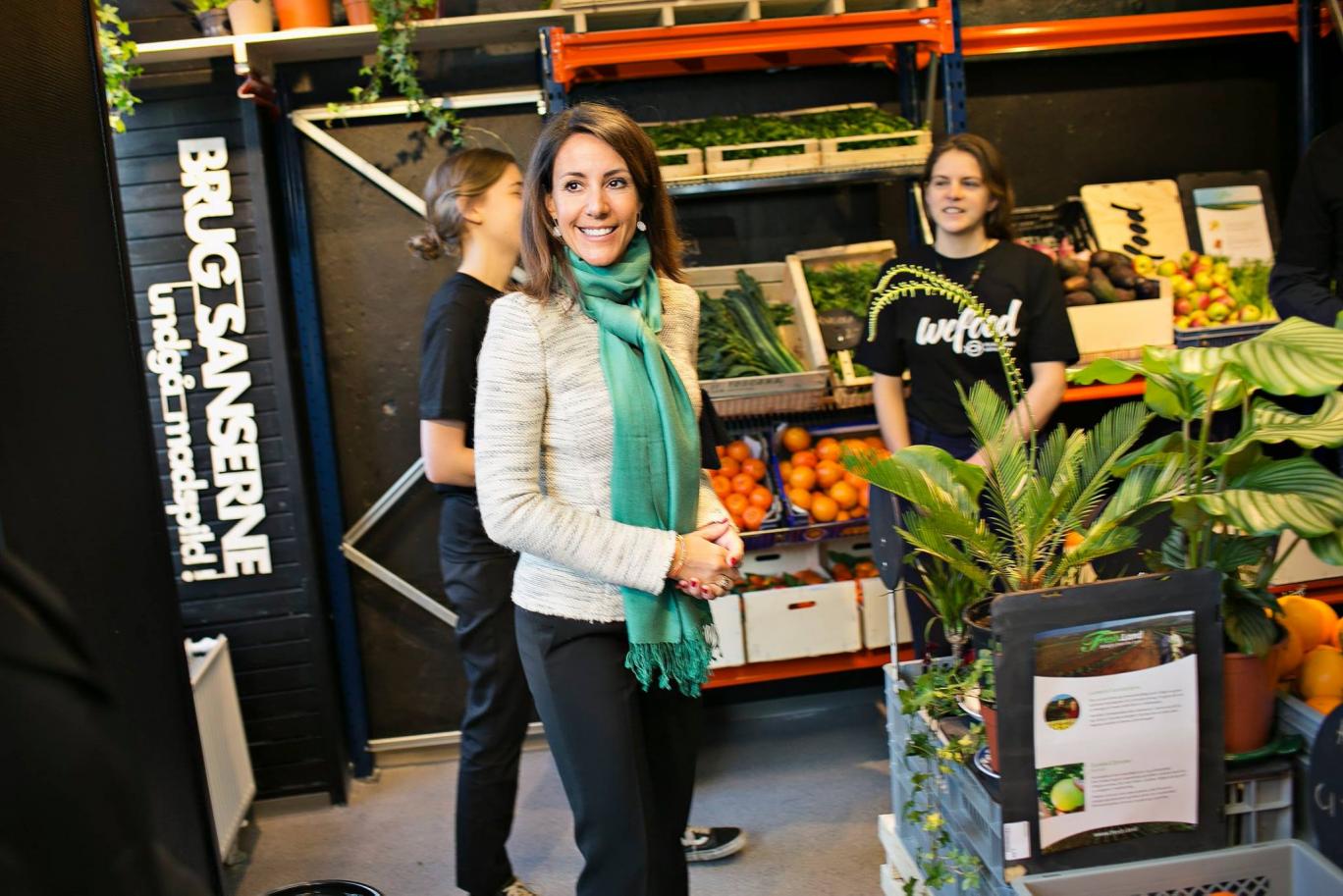 Our supermarkets and wholesalers throw out food that is still edible, as use by dates reach their expiry and fruit becomes blemished, but in Sweden WeFood has opened a new supermarket that collects these foods and sells them at a 30-50% discount.
Volunteers collect produce from traditional supermarkets, importers, butchers, bakers and growers and sell them to both low-income shoppers and to anyone who is concerned about food waste.
A great solution to a food shortage problem that is rarely about food availability, but rather about a lack of sharing and access.
In these weeks on air segments, I also chatted with Austereo’s Anthony Tilli and ABC Far North’s Kier Shorey about the Dr Google app that lets you complain to you mobile phone about your ailments and symptoms, and just like a digital mother / Doctor it will tell you what’s wrong with you and what to do about it.
This will definetly be a must have for all Cyebrchondriacs, those that are constantly Googling to find out what’s wrong with them, but before you write if off, the innards of this app is the same Artificial Intelligence “secret sauce” being used in by Doctors in Hospitals around the world for the exact same thing.
Have a listen now for these stories, Facebook Live‘s launch and why it might be important to the Future of Communication and Oculus Rift’s latest gizmo Social Trivia, that lets’ you put on a Virtual Reality headset and meet your mates inside the screen.
Austereo – Anthony Tilli – 4 minutes 51 seconds
ABC Far North – Kier Shorey – 11 minutes 53 seconds
Frequently Asked Questions
Q: What have food waste reduction platforms actually delivered since their emergence in 2015-2016?
Food waste platform delivery since 2015-2016 includes genuine progress in specific niches: Too Good To Go (surplus food from restaurants and cafes at reduced prices) has scaled to millions of users across Europe and Australia and has demonstrably diverted millions of meals from waste; OLIO (neighbourhood food sharing) has built genuine community adoption in specific urban environments; and enterprise-level food waste solutions (AI-powered demand forecasting for supermarkets and food service, dynamic pricing of near-expiry product) have delivered measurable waste reduction in commercial deployments. What has proven harder: the food resale model (peer-to-peer resale of food between households) faces regulatory, safety, and trust challenges that have limited commercial-scale deployment; and the cultural change required for widespread consumer adoption of ‘imperfect’ or near-expiry food has been slower than technology optimists predicted, though it is moving in the right direction. Food waste remains one of the most tractable yet under-prioritised sustainability challenges.
Q: What does the ‘Dr App’ signal from 2016 tell us about where digital health actually arrived?
The ‘Dr App’ signal (consumer health applications enabling symptom checking, medication management, health monitoring, and access to medical advice) has evolved into a substantial and regulated sector since 2016: telehealth platforms (which were emerging in 2016) were massively accelerated by the COVID-19 pandemic and have become standard in Australian healthcare delivery, with Medicare-funded telehealth consultations now a permanent feature of the system; AI-powered symptom checking has improved significantly in accuracy and is now a standard entry point for many health system pathways; medication management apps are widely used for chronic disease management; and the integration of wearable health data with digital health platforms is creating longitudinal health monitoring that was not possible in 2016. The governance questions (about data privacy, clinical liability for AI-assisted diagnosis, and equity of access to digital health tools) are active and unresolved.
Q: What does the intersection of food waste technology and digital health reveal about how platform solutions perform against systemic problems?
Platform solutions to systemic problems (food waste, health access inequality) reveal a consistent pattern: platforms can significantly improve outcomes for engaged users within the existing system while leaving the structural conditions that produce the problem largely unchanged; food waste platforms reduce waste for consumers and businesses that adopt them while the agricultural, retail, and consumer system dynamics that produce massive food waste continue; digital health apps improve access and engagement for health-literate, digitally capable users while structural health inequities (geographic access, socioeconomic barriers, health literacy gaps) persist or worsen; and the solution that platforms enable, market-mediated individual behaviour change, is most effective for problems that are primarily individual behaviour problems, and less effective for problems that are primarily structural or institutional. Food waste and health access are both. Platforms help at the margins; systemic change requires policy.
Q: How can I book Morris Misel for a sustainability technology, digital health, or platform economics keynote?
Contact the booking team at morrismisel.com/event-organisers.
Our supermarkets and wholesalers throw out food that is still edible, as use by dates reach their expiry and fruit becomes blemished, but in Sweden WeFood has opened a new supermarket that collects these foods and sells them at a 30-50% discount. Volunteers collect produce from t.
When signals like Resell the food you’re not going to eat & Dr. App / emerge, organisations that engage early have the advantage of choosing their response rather than reacting to events. That gap between those who prepared and those who did not is where competitive positioning is actually made or lost.
The most important question is not whether Resell the food you’re not going to eat & Dr. App / will matter, but how quickly it will matter in your specific context. Leaders benefit most from mapping the ripple effects early — not just the direct impact but the second and third-order consequences that arrive later and hit harder. That is the practical work of foresight.
