In the future who will you trust? / ABC Far North
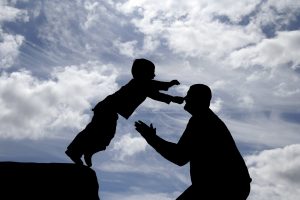 Trust is a basic human emotion that helps us discern, make sense of and prioritise our world and those around us.
Since our existence we have taken our trust cues from our tribe, our elders, our families and our friends, all others outside of this default circle have had to earn, gain and maintain trust knowing it was fragile and once broken was difficult, if not impossible, to earn back.
Trust was hard enough when we could look each other in the eye, but now that we’ve on-boarded our lives into a digital world, where our cyber reach goes beyond our physical network and where we are constantly called on to meet virtual strangers and assess their reputation, opportunities and offerings all with any historical or clan reference or network to base it on.
The sharing economy, that allows us to barter with strangers for goods, services and tasks is a prime example of where the need for trust is imperative, but where our old trust formulas and methods don’t quite work and neither do the new artificial user rating systems.
In this week’s on-air chat with ABC Far North’s Phil Staley and I explore the notion of the sharing economy, what it is and raft of examples of what we can ” share” as well as the trust economy, and how digital reputation is built and maintained and why reputation is the ultimate personal currency of the near future and beyond.
Listen now (11 mins 20 secs)…
Frequently Asked Questions
Q: Why is trust eroding?
Because the institutions that built trust in the 20th century (media, government, corporations, professions) made promises that were predicated on information asymmetry. When people had limited ability to verify claims or compare experiences, institutional authority held. Digital connectivity collapsed that asymmetry. Verification is now immediate and social.
Q: What is a Trust Cliff™?
A Trust Cliff™ is the moment when accumulated dissatisfaction with an institution or organisation reaches a tipping point and trust collapses non-linearly. Unlike gradual erosion, Trust Cliffs™ are sudden, highly visible, and very difficult to recover from. The warning signs are usually present long before the cliff, but they are often dismissed as manageable discontent.
Q: How can organisations build trust that is durable?
By earning it through consistent action rather than claiming it through communication. Trust is built in specifics, what you do when it is inconvenient, whether you are honest when honesty is costly, whether your values are visible in your decisions and not just your marketing.
Q: Can Morris Misel speak about trust, institutional authority, and leadership credibility?
Yes. For keynotes on trust, leadership, and organisational reputation, visit morrismisel.com/event-organisers.
Trust is a basic human emotion that helps us discern, make sense of and prioritise our world and those around us. Since our existence we have taken our trust cues from our tribe, our elders, our families and our friends, all others outside of this default circle have had to earn.
For boards and executive teams, In the future who will you trust raises practical questions about where authority sits, how trust is maintained under pressure, and which decisions genuinely require human judgment. Organisations that surface these questions before a crisis are far better prepared than those that discover them in one.
The most important question is not whether In the future who will you trust will matter, but how quickly it will matter in your specific context. Leaders benefit most from mapping the ripple effects early — not just the direct impact but the second and third-order consequences that arrive later and hit harder. That is the practical work of foresight.
