FB Live and too much homework / Hong Kong Radio 3
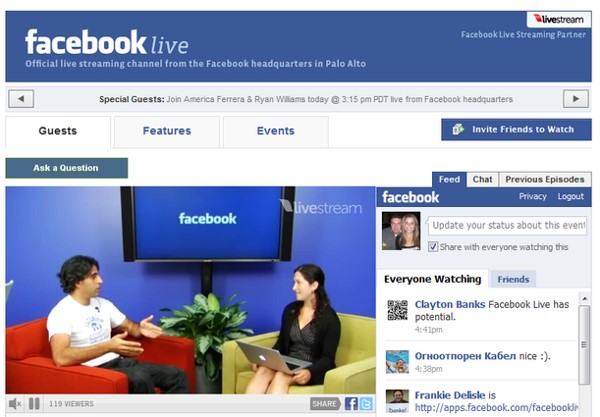 A picture paints a thousand words, a video a million and perhaps that explains why Mark Zuckerberg is so adamant to make Facebook Live the must have in live streaming and also why its News Feed was recently tweaked to bring these live broadcasts to the top of content displayed.
Facebook has been trialing this service for a couple of months allowing celebs to connect directly with their fans and in this short time they’ve had 246,000 live streams and 5.67 billion views and to kick-start what will hopefully be lots of interesting content Facebook is approaching influencers, celebs, TMZ and the American NFL offering 6 figure payments to those that can command an audience and keep them watching.
This new service takes on competitors Vine and Periscope and comes just as Meerkat, the originator of this relatively new genre, concedes defeat and reworks its audience and seems to fit in with the rising trend that we will experience information instead of reading it. This would also put Facebook’s acquisition of Oculus Rift, the Virtual Reality headset, into perspective as a tool that will allow us to feel and 360 degree see what our community is doing, seeing and saying.
Radio HK3’s Phil Whelan is looking hard at this new tech as broadcasters around him begin trialing live broadcasting from their studio’s.
We also took a look at a recent HK report that showed that 50% of parents thought their children would do something on-line to embarrass the family and 17% of Hong Kong parents know their children have experienced on-line bullying. Phil thought this had something to do with how much homework children in Hong Kong are required to do, which puts them online at all hours and leaves them open to online concerns.
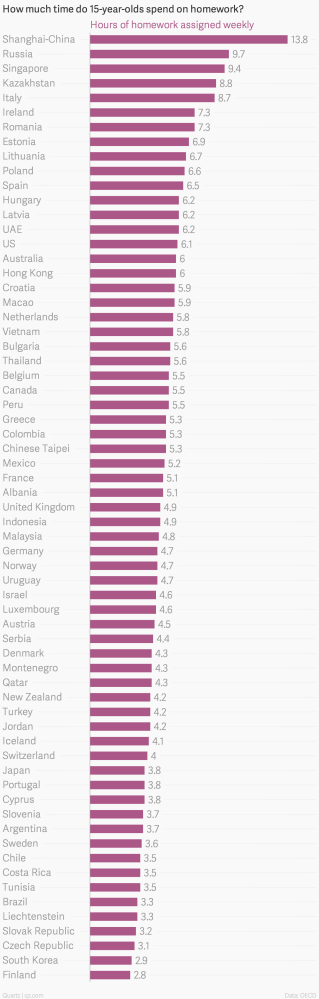 I checked the OECD’s average number of hours kids do homework around the world and found the Hong Kong and Australian Year 9 students do an average of 6 hours per week, with Shanghai China coming in at the top with 13.8 hours per week. This started an avalanche of caller comments, all adamant that their child does 6 hours per night, not per week, and citing recent local newspaper coverage of teenagers committing suicide reportedly driven by excess homework.
We also marked the recent sad passing of Ray Tomlinson email’s inventor and the person that bought the @ symbol out of an obscure bookkeeping life turning it into one of the most used characters on any keyboard.
As always a great chat, so have a listen now (17 minutes 21 seconds) and let me know if you have anything to add.
Frequently Asked Questions
Q: What did Facebook Live’s launch reveal about the real-time culture that was emerging in 2016?
Facebook Live’s launch in 2016 confirmed a real-time culture signal that had been building since Twitter’s breaking news dominance: audiences were developing an appetite for unmediated, unedited, live experience that professional content production could not satisfy; the authenticity value of live (the knowledge that what you are seeing is happening now, that it has not been edited or curated) was commercially significant enough for Facebook to make it a core product feature; and the dark side of live video (the broadcasting of violent incidents, accidents, and harmful content in real time before platform moderation could respond) emerged almost immediately and has remained an unresolved challenge for live video platforms. Facebook Live confirmed that the social media evolution was toward less mediation and more immediacy, with all the value and risk that entails.
Q: What does the ‘too much homework’ debate reveal about the values conflicts embedded in education policy?
The homework debate is a recurring education policy controversy that reveals: the disagreement about homework is not primarily about evidence (the research on homework effectiveness is more mixed than either homework advocates or opponents acknowledge) but about values, what education is for, what childhood should be, how family time should be structured, and whose time and labour the school system has the right to claim; the class dimension of homework (students with educated parents who can provide support, quiet study spaces, and supplementary resources benefit more from homework than those without these advantages) means that homework practices that appear educationally neutral systematically advantage already-advantaged students; and the workload question (both for students and the teachers marking the work) has practical dimensions that are separate from the philosophical ones. The ‘too much homework’ debate is a proxy for a larger argument about what public education is trying to achieve and for whom.
Q: What does the intersection of real-time social media and education debates reveal about how digital culture is changing learning and attention?
The intersection of real-time social content and education represents one of the most consequential and underexamined tensions in contemporary childhood: the attention patterns trained by constant real-time content consumption (short, vivid, immediately rewarding) are structurally in tension with the attention patterns required for deep learning (sustained, effortful, delayed reward); the evidence that social media use patterns affect academic performance is accumulating, though the causality is complex, is social media reducing study time directly, or is it training attention patterns that make sustained study more difficult, or is it providing the social connection and emotional regulation that students need but schools don’t provide, making academic performance better for some users?; and the educational response (phone-free schools, homework reduction, literacy focus) reflects genuine concern but also the institutional system’s preference for behaviour regulation over structural examination.
Q: How can I book Morris Misel for an education futures, digital culture, or parenting and technology keynote?
Contact the booking team at morrismisel.com/event-organisers.
A picture paints a thousand words, a video a million and perhaps that explains why Mark Zuckerberg is so adamant to make Facebook Live the must have in live streaming and also why its News Feed was recently tweaked to bring these live broadcasts to the top of content displayed. F.
The shift around FB Live and too much homework / Hong Kong Radio 3 is not purely structural. It changes what capabilities organisations value, how people find meaning in their roles, and what conditions make good work possible. Leaders who understand this early retain the talent they need and build cultures that attract it.
The most important question is not whether FB Live and too much homework / Hong Kong Radio 3 will matter, but how quickly it will matter in your specific context. Leaders benefit most from mapping the ripple effects early — not just the direct impact but the second and third-order consequences that arrive later and hit harder. That is the practical work of foresight.
