Tomorrow’s supermarkets today / ABC Overnights
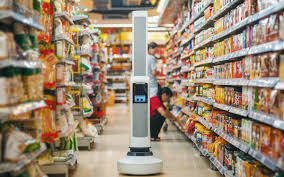 Aldi is Australia’s largest ski wear retailer. Australia’s grocery market is worth $102 billion. Australian now grocery shop twice a week buying fewer and fresher items against the large single shop of only a decade ago, are all fascinating snapshots of Australia’s supermarket scene today and predictors of where next for this sector and a great place to start a chat with ABC radio’s Overnights host Michael Pavlich.
Coles and Woolthworths are still the big two, but the lesson here is that size and history no longer necessarily determine future viability with hard-discounter Aldi already taking 11% market share away from them both in the last decade, and Lidl an Aldi-esque hard-discounter (owned by the 4th largest retailer on the planet – the Schwarcz group / Aldi is the 7th largest global retailer / Walmart is 1st) set to enter Australia next year, the future supermarket battle will be fought with a keen eye on check out price.
The future of supermarkets will be one of reduced inventory, greater emphasis on local and fresh and moving away from the Las Vegas casino style of keep in there for as long as possible to expedite and excite the shopping process by grouping like-purchased goods together – which would mean all the things we need to make a great pasta in one easy to find section rather than scattered across a maze of fresh, frozen, canned and general aisles.
We looked at online supermarkets to discover they only equate for 3% of all grocery shopping and explored new concepts like Woolworths drive through supermarket where you can purchase on-line and then drive up to the store at your convenience to have the produce put into you cars boot and then keep driving.
It seemed this was the direction of the segment, but as they say the people have spoken and when we went to callers Larry started an avalanche of subsequent callers all decrying that automated check outs have done away with the after school and part-time jobs.
Nothing could turn back the tide and in the next 20 minutes callers Faye, Molly, Richard, Brian, Malcolm, Lyme, Martin, Peter and Val all wanted to know where tomorrow’s first rung and part-time jobs might come from.
For me the take away here is that these independent and profit-making businesses, who so often are demonized for underpaying and overworking a fragile workforce are also seen as the salvation for future employment.
The bigger question here is how will we give tomorrow’s youth their career start and where will tomorrow’s after school and part-time jobs come from and look like when most of these jobs were made up of routine tasks that are now slowly being handed over to mechanisation.
As always a great discussion on all things future supermarket and a fascinating insight into what the listeners see ahead and see as the real issue.
Have a listen now (47 minutes 17 secs) and then add your voice to the debate on the future of supermarkets and jobs.
[soundcloud url=”https://api.soundcloud.com/tracks/236547936″ params=”auto_play=false&hide_related=false&show_comments=true&show_user=true&show_reposts=false&visual=true” width=”100%” height=”450″ iframe=”true” /]
Frequently Asked Questions
Q: What are the most significant technology changes transforming supermarket retail?
The technology signals transforming supermarket retail include: checkout-free stores (where sensors, computer vision, and AI track what customers take and charge automatically on exit) have been commercially deployed by Amazon Go and similar concepts, though the rollout has been slower and more expensive than projected; self-checkout has become standard in most major supermarkets, with the associated shrinkage (theft) challenge driving a push toward RFID-enabled checkout and computer vision loss prevention; personalised pricing and promotion (where individual customers receive different prices or offers based on their purchase history and profile) is technically feasible and limited primarily by regulatory scrutiny and consumer acceptance; and the grocery delivery market (online order, home delivery, or click-and-collect) has become a structural part of the grocery market following COVID-19 acceleration, representing 10-15% of grocery spending in most developed markets.
Q: What does the supermarket evolution reveal about the tension between efficiency and the shopping experience?
The supermarket efficiency-versus-experience tension is one of the most instructive examples of what automation does and doesn’t deliver: the most efficient grocery experience for a known list is online ordering with home delivery (zero time in store, no queuing, accurate substitution management; but a significant proportion of grocery shopping is discovery, browsing, and opportunistic purchase) the product that wasn’t on the list but looked good, the sample that led to a new favourite, the produce quality assessment that can only be done in person; and the social dimension of the supermarket (particularly for older, isolated, or less mobile people) is a genuine community function that an efficient delivery system cannot replicate. The supermarkets that navigate this well are those that invest in the experience dimensions (fresh food theatre, quality produce presentation, knowledgeable staff in speciality departments) while deploying technology for the efficiency functions.
Q: What are the most important supply chain and food system signals visible in the supermarket trajectory?
The supermarket as a lens on food system signals reveals: the concentration of grocery retail into a small number of very large players (Coles, Woolworths, and Aldi in Australia) creates supply chain dependencies and market power dynamics that are under increasing regulatory scrutiny, the 2024 ACCC supermarket inquiry is the most recent Australian expression of this; the fresh food supply chain, from farmer to shelf, is under pressure from input cost inflation, labour shortages, and climate variability that is beginning to appear in both price and availability; and the food waste reduction pressure (supermarkets are significant contributors to food waste through cosmetic grading standards and over-ordering) is driving technology investment in demand forecasting, dynamic pricing of near-expiry product, and supply chain visibility. The supermarket of 2030 will look meaningfully different from today’s, the question is whether the changes improve the food system or simply concentrate the economics further.
Q: How can I book Morris Misel for a retail futures, food system, or consumer behaviour keynote?
Contact the team at morrismisel.com/event-organisers.
Aldi is Australia’s largest ski wear retailer. Australia’s grocery market is worth $102 billion. Australian now grocery shop twice a week buying fewer and fresher items against the large single shop of only a decade ago, are all fascinating snapshots of Australia’s supermarket sc.
When signals like Tomorrow’s supermarkets today / ABC Overnights emerge, organisations that engage early have the advantage of choosing their response rather than reacting to events. That gap between those who prepared and those who did not is where competitive positioning is actually made or lost.
The most important question is not whether Tomorrow’s supermarkets today / ABC Overnights will matter, but how quickly it will matter in your specific context. Leaders benefit most from mapping the ripple effects early — not just the direct impact but the second and third-order consequences that arrive later and hit harder. That is the practical work of foresight.
