You’re not short of information.
You’re short of preparation.
Think about what arrived on your desk this week. Reports you skimmed. Briefings you half-attended. Articles saved to read later that you haven’t read. You consumed more information this week than most leaders managed in an entire career a generation ago.
And still you’re carrying questions you haven’t had time to think through properly.
Most of what reaches you is designed to inform. None of it is designed to prepare. The newsletters, the expert commentary, the industry briefings — they add to what you know. They don’t change what you’re ready for. And the gap between those two things is where the cost lives.
The decision that seemed right at the time but was built on a world that had since moved. The technology shift that arrived on the agenda six months after the preparation window had closed. The question in the boardroom that someone else had clearly been sitting with for longer than you had. The money spent responding to something that could have been anticipated. The time lost catching up to a conversation you should have been leading.
That’s not a knowledge failure. That’s a preparation failure. And most leaders know exactly what that gap feels like — they just don’t have a practice for closing it.
That practice is what the Signal Room is built for.
If you’re serious about understanding
what’s actually arriving — this was built for you.
The Signal Room is not a news digest. It’s not motivational content. It’s not another thing to skim and file. It’s built for people who want to think more clearly about what’s arriving — whether you lead a large organisation, run your own practice, advise boards and leaders, or simply take the future seriously and want a thinking partner who does too.
- Leaders and senior decision-makers who need to think strategically about what’s arriving, not just manage what’s already here
- Small business owners and solo practitioners navigating change without a research team behind them
- Consultants, advisors, and independent professionals whose credibility depends on staying ahead of the conversation
- Board members and advisors who want to bring sharper foresight into the rooms where they sit
- Government, association, and sector leaders navigating policy and structural change without adequate preparation time
- Strategy professionals building a practice that keeps them genuinely useful in a world that keeps moving
- Anyone who takes the future seriously and wants to think about it with someone who does too
I keep the group deliberately small. That’s how the 48-hour response works. That’s how the monthly Q&A stays genuinely useful. That’s why founding membership closes at 25 spots.
A method built over 30+ years.
Nobody else has this sequence.
Most of the world right now is drowning in information but starving for wisdom. More data arrives each week. More commentary. More noise. And yet the decisions leaders are carrying haven’t gotten easier. They’ve gotten heavier. That gap between information and wisdom is not a content problem. It’s a method problem.
The Signal Room is grounded in a proprietary method for how to think through what’s arriving, make sense of it for your organisation, and decide what to do before the window closes. Five frameworks, in a specific sequence. Each builds on what the one before it revealed.
The step most strategy frameworks skip entirely. PTFA comes before HUMAND. You cannot correctly allocate who does the work until you understand what the human system is actually prepared to do. Past experience shapes what feels permissible. Future anxiety shapes what feels safe. Skip this diagnostic and even the right decisions won’t land. This is the distinctive move in the Misel Method. No other foresight or strategy framework has this sequence.
Every Signal Briefing, Deep Briefing, provocation card, and Q&A session is structured through this method. You don’t need to study it to benefit from it. But understanding it changes what you notice, and what you do next.
25 founding spots · $49/month for life · Everything from day one.
If this is already making sense, you don’t need to keep reading.
Everything I’ve built.
Yours from day one.
Founding members get access to the full Signal Room the moment they subscribe. Not drip-fed over months. Not locked behind tiers. Everything, from the start. Each element is designed to work together, not in isolation.
Mid-Week Signal Check-In Email
Why it works: Preparation isn’t a once-a-week event. A second signal pulse mid-week keeps the practice continuous without adding workload.
A shorter, sharper mid-week note from me: one signal I’m watching, one question to carry into your week, one observation from what members are raising in Q&A. Not a second newsletter. A continuation of the conversation. Something you can read in three minutes that shifts how you see the next 48 hours.
The Signal Briefing
Why it works: You get the signal, the meaning, and the questions to sit with, before the issue lands on your agenda.
Each week, a focused briefing on what’s moving, drawn from across industries, geographies and disciplines. Not a summary of everything. The signals I’d bring into a room where decisions need to be made. What it is, what it likely means, the Ripple Effects already forming, and the Immediate Futures questions worth working through right now. Written in full. No filler.
The Deep Briefing
Why it works: The briefing you didn’t know you needed before you need it is more valuable than the one you asked for after the fact.
Once a month, one theme, properly unpacked. Not a broader version of the weekly Signal Briefing but a different kind of depth: the Ripple Effects across industries, the questions people and organisations are not yet asking but should be, and where this is heading in the next 12 to 36 months.
Innovation Video Briefings
Why it works: Some signals land differently when you hear them explained. Video gets into the nuance that a written briefing can’t always reach.
Short-form video briefings from me — typically five to ten minutes. A visual take on a signal that’s moving, a pattern worth tracking, or an observation building in ways that don’t compress into text. Not produced content. A thinking partner sitting down with you and working through what I’m actually watching. Each one is archived and available on demand to all members. Build your own library as they accumulate.
The 7-Step Innovation Video Program
Why it works: Methodology matters more than inspiration. This is the process that turns ideas into decisions you can actually act on.
23 sessions, more than 9 hours of working methodology. The complete program I’ve run for corporate clients, associations and boards across Australia and internationally. Not a highlight reel. The full process: from finding inspiration in unexpected places through all seven steps to the 90-day strategy that turns ideas into decisions. Whether you lead a team, run your own practice, or advise others — this is the methodology behind the thinking.
Imagine the Possibilities — 52 Provocations
Why it works: Thinking through possible futures in advance builds the capacity to respond to them without panic when they arrive.
One provocation card per week for a year. Each is a carefully designed future scenario spanning education, health, work, technology, society and more. With every card: what does this mean for your industry, your work, your decisions today? And the Combine Challenge: pull two cards together and work out what happens when those two futures collide. The Ripple Effects compound in ways no single-future scenario reveals.
Group Q&A Session
Why it works: The questions you’re carrying about your industry and your decisions deserve more than a webinar. This is working conversation.
Bring your questions about the signals, your industry, or a decision you’re navigating. I’ll work through them with the group. Live, not recorded. The kind of thinking that happens when the right people are in the same space, working through the same uncertainty together. Whether you’re leading a large organisation or working on your own — these sessions are built around the questions members actually bring.
The Signal Room WhatsApp Group
Why it works: The people who are thinking about these signals are as valuable as the signals themselves. This is where that conversation happens.
A private WhatsApp group for Signal Room members. Signals, questions, observations from the group between weekly briefings. I’m in there. So are the other members. The cross-sector perspective you don’t get anywhere else in your week. Kept deliberately small so the conversation stays substantive, not performative.
Priority Access, Member Rates and Industry Intelligence
Why it works: When you want to take this thinking deeper into your work, you shouldn’t have to start from scratch or compete for availability.
Signal Room members get priority access and exclusive member rates on workshops, advisory sessions and keynote programs. Members also get preferred access to sector-specific Signal Reports — deep industry intelligence documents drawn from 30+ years of engagement across more than 160 industries. If you want a Foresight Research Package tailored to your sector, your board, your strategy cycle, or your own practice, member pricing applies. These are the deliverables that would ordinarily require a formal consulting engagement to commission. Email me directly to discuss what that looks like for you.
Who Decides 2025 Research Report
Why it works: Real data from real organisations making real decisions about AI. Not commentary. Not prediction. Research.
My full research report into how organisations across sectors are navigating AI decision-making right now. Who is deciding what. Where humans remain essential. Where the gaps are forming. Twelve months of primary research, included in full with every founding membership at no additional cost. This is the kind of intelligence that ordinarily costs significantly more to access.
The Misel Method Framework Toolkit
Why it works: The frameworks are only useful if you know how to use them. This gives you the working versions, not just the names.
The practical application guides for each of the five frameworks: Immediate Futures, Ripple Effects, PTFA, HUMAND, and Inhabitable Futures. Not a summary. Working documents: the diagnostic questions, the application templates, the facilitation prompts, and the examples drawn from real engagements across real industries. These are the tools I use when I’m in the room. Founding members receive them as part of the membership, for use in their own thinking, planning, and strategy sessions.
Direct access to a foresight strategist. Within 48 hours. Anytime.
Not a ticketing system. Not a community forum. Not an automated response. When something arrives on your desk that doesn’t fit neatly into your existing frameworks, you email morris@morrisfuturist.com and I respond personally within 48 hours.
This is what I do at the advisory level, for organisations who spend considerably more. It’s in this membership because I believe access to this kind of thinking shouldn’t require a six-figure engagement to begin. With 25 founding members, I can sustain it properly. That’s why the group stays small.
Direct. Personal.
No intermediary.
A real Signal Briefing.
This is what lands in your inbox each week.
The Signal Briefings you receive aren’t think-pieces or news summaries. They’re a specific kind of preparation: one signal, traced through its human consequences, its Ripple Effects, and the Immediate Futures questions your organisation should be sitting with right now. Here is an example of what that looks like in practice.
Across organisations that have implemented AI tools into their decision-making processes, a consistent pattern is emerging. The people in the room are increasingly deferring to AI-generated summaries, forecasts, and recommendations without the skills or appetite to interrogate them. Not because they trust AI more than they used to. Because they no longer know how to disagree with it credibly. Internal challenge is quietly disappearing from the rooms where the most consequential decisions get made.
Most leadership teams are reading this as efficiency: fewer objections, faster decisions, cleaner meetings. What is actually happening is something different. The capacity for constructive dissent, the skill of asking “what are we not seeing” in a room that has produced an answer, is declining in direct proportion to AI adoption. And almost nobody is naming it.
Decisions arrive faster, with less friction. This is what everyone is measuring and celebrating. It is the least strategically significant layer.
The people whose role is to challenge assumptions, risk teams, strategists, internal review functions, begin to lose confidence in their own judgment relative to the AI. They start editing themselves before they speak.
Organisations lose the structural capacity for intelligent dissent. When the AI generates a recommendation that is directionally wrong, there is no human mechanism left in the room equipped to say so and be believed.
Leaders who have championed AI adoption for efficiency are not in a position to be seen undermining their own position by raising concerns about dependence. The past trauma of being “the one who slowed things down” shapes what feels safe to say in that room. The future anxiety compounds it: if I accept the AI recommendation and it fails, responsibility is shared with the system. If I challenge it and I’m wrong, that failure sits with me alone. Silence becomes rational. That is the PTFA pattern, and it closes off the organisation’s ability to self-correct before problems compound.
The humans in these decision rooms are being asked to validate rather than deliberate. HUMAND asks a specific question: in your last three major decisions, where exactly did a human judgment override, redirect, or materially change what the AI-generated analysis suggested? For most leadership teams, the honest answer reveals something important about where the human is in the actual decision architecture. Not the stated architecture. The real one.
- Who in your organisation has the standing, the skill, and the safety to tell the leadership team that an AI recommendation is wrong?
- In your last three major decisions, where exactly did human judgment override or materially redirect what the AI-generated analysis suggested?
- If your AI-assisted decision processes were removed tomorrow, how long would it take your team to rebuild the deliberation capacity they’ve been quietly letting atrophy?
This is a Signal Briefing. Every week, one signal traced through its human consequences, its Ripple Effects, and the questions your organisation should be sitting with before this arrives on your agenda as a crisis rather than a preparation opportunity. This is what lands in your inbox each week as a Signal Room member.
If you’ve just read that briefing and recognised a conversation your organisation needs to be having — that’s the practice. Every week. On whatever signal is actually moving.
One card arrives each week.
You won’t look at your industry the same way.
Each card is a carefully designed future scenario set in the world of 2040-ish: specific, detailed, and built to provoke the kind of thinking that changes how you see your present decisions. But the real depth comes from the Combine Challenge: take two cards from different domains and work out what happens when those two futures collide. The Ripple Effects compound in ways no single-future scenario reveals.
46 more provocations across health, food, mobility, human rights, finance and the environment. One arrives each week for a year.
The 7-Step Innovation Video Series
23 sessions, more than 9 hours of working methodology. This is the complete program I’ve run for corporate clients, associations and boards across Australia and internationally. Not a highlight reel. The full process, from how to find inspiration in unexpected places to the 90-day strategy that turns ideas into decisions your organisation can act on. Included in full with every Signal Room membership, from day one.
- Imagine a different world
- Welcome to Innovation
- Innovation becomes ordinary
- 4 questions equals 20% more
- Finding inspiration: history, science fiction & other industries
- Finding inspiration: technology & provocation cards
- Look ahead to 2030
- The distributed, hyperpersonalised future
- The autonomous age is here
- 8 things you need to innovate
- The 4-layer product onion
- 3 flavours of innovation
- Looking back, looking forward
- Step 1: You can’t do it all, so choose
- Step 2: Don’t brainstorm, get drunk
- Step 3: What’s happening now
- Step 4: Listen before you act
- Step 5: Is it worth doing
- Step 6: The one-minute test
- Step 7: Your 90-day strategy
2,800+ sessions delivered · Heard by millions · 30+ years
From people who have worked with Morris.
He was fantastic to work with — professional, insightful, and engaging. The audience loved his futuristic insights and captivating speaking style, leaving everyone buzzing about the possibilities ahead. Morris delivered exactly what we hoped for: a fun, forward-thinking, and practical vision of the future.
We have made such monumental changes in such a short amount of time, and it is absolutely because we saw, and now see, our business through your eyes. It is the most profitable time we have ever spent and we look forward to working with you ongoing — what a return on our investment!
As a speaker, Morris is really thought provoking, highlighting future trends and how they relate to business in real time. As a business consultant he has been a breath of fresh air. With a no-nonsense approach married to a broad range of practical knowledge and a deep understanding of people, he has enabled enlightened decision-making through minimal interventions.
Honestly the most engaging presenter I’ve seen in 9 years of insurance. Well done!
I have heard a lot of speakers over the last seven years and you would have to be the number one on future trends and excellent in motivation.
MASSIVELY thought-provoking. Everyone loved your presentation!
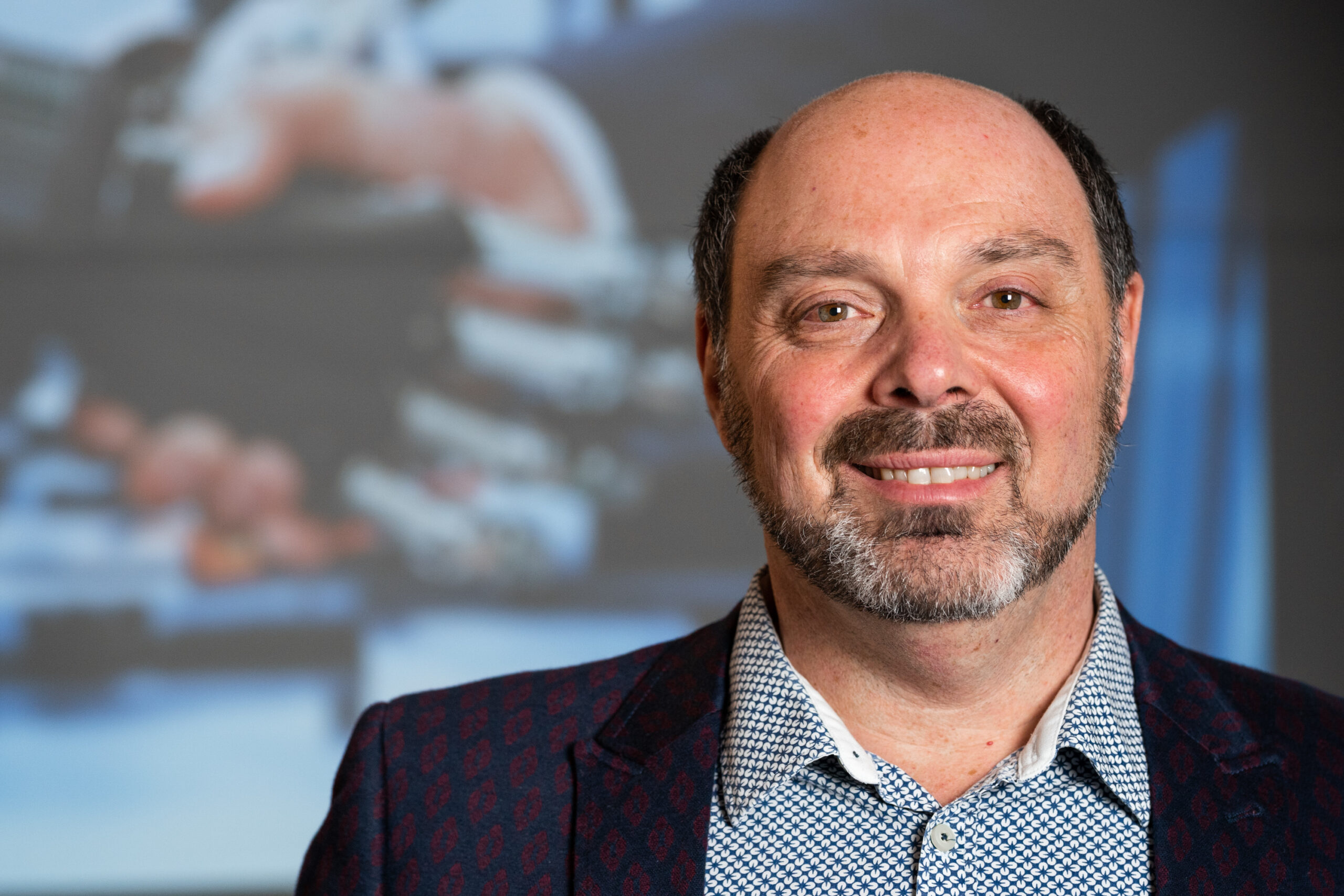
30+ years of reading what’s moving before it arrives.
I’m Morris Misel, a foresight strategist and keynote speaker. For more than 30 years I’ve worked with leaders, organisations, associations, boards and media across Australia and internationally, preparing them for uncertainty, interpreting what’s shifting, and equipping them to make better strategic choices.
My work takes me across 160 industries. The sectors vary. The fundamental challenge is consistent in every one: how do you make sound decisions when you can’t yet see clearly what’s coming? The answer is not better prediction. It’s better preparation. Preflecting, as I call it: thinking through what might be before it arrives, so you can act from readiness rather than reaction.
The frameworks I’ve built across that time — HUMAND, Ripple Effects, Immediate Futures, Inhabitable Futures, PTFA — are the tools of that practice. They’ve been tested in boardrooms, on stages, in strategy workshops, and in the kinds of rooms where the decisions that matter most actually get made. The Signal Room is the online version of what I do in those rooms. A small, intentional group. Weekly preparation. Direct access when something comes up that can’t wait.
I’m also a regular foresight commentator on RTHK Radio 3 in Hong Kong. The weekly briefings you receive as a member are the written version of the thinking I bring to those conversations every week.
Top 25: AI Ethics
Top 25: Future of Work
Thinkers360: 12 future-critical domains
2,800+ sessions delivered
160 industries
Heard by millions
30+ years
Morris Misel
morrisfuturist.com

What looks different after you join.
The Signal Room isn’t a course with a completion date. It’s a practice with a compound effect. Here’s what members typically find changes over time.
You have a preparation frame
The first Signal Briefing reframes how you read the week’s information. You have the signal, the Ripple Effects, and the questions, before you need them.
Your questions get sharper
The monthly Q&A and the 52 provocations start changing the questions you bring into your own meetings. Better questions produce different decisions.
You’re ahead of the conversation
The things arriving on other people’s agendas as surprises are things you’ve been preflecting on for months. That gap is preparation. And preparation is a choice.
Founding members stay at $49 for as long as they remain subscribed.
- Weekly Signal Briefing (signal, Ripple Effects, Immediate Futures questions)
- Twice-weekly signal check-in email
- Members-only Signal Room WhatsApp group
- 52 Provocations from the Future, one per week for a year
- Full access to the 7-Step Innovation Video Program (23 sessions, 9+ hours)
- Monthly Deep Briefing
- Monthly Group Q&A with Morris
- 48-hour written response, direct access, anytime
- Priority access and member rates on workshops, advisory, keynotes and Signal Reports
- Who Decides 2025 Research Report (full member access, no extra cost)
- The Misel Method Framework Toolkit (five working framework documents)
- Early access to the Misel Intelligence foresight second brain (founding members only)
Join the Signal Room – $49/month
Cancel anytime through your member portal. No lock-in. Questions before you join? Email morris@morrisfuturist.com
Not sure yet? Ask me directly.
If you’re wondering whether the Signal Room is right for you, your team, or your organisation, email me. I’ll respond personally. If you’d like to talk about a workshop, advisory session, or keynote, that conversation starts the same way.
Before you join
What happens the moment I subscribe?
You’ll receive a welcome email with immediate access to the full 7-Step Innovation Video Program, the Who Decides 2025 Research Report, and the Misel Method Framework Toolkit. Your weekly Signal Briefing begins from the first week, and your first Provocation Card arrives the following week. You’ll receive an invitation to the members-only WhatsApp group. The monthly Q&A sessions are scheduled in advance so you can hold the dates. And you’ll have my direct email from day one.
What exactly do I receive each week?
Every week: one Signal Briefing and one Provocation Card from the 52-card set. Mid-week: a shorter signal check-in email. Once a month: a Deep Briefing and a Group Q&A session with me directly. Ongoing: the members-only WhatsApp group, the full 7-step video program, the Framework Toolkit, and written access to me within 48 hours anytime something comes up that can’t wait.
How does the 48-hour response actually work?
You email morris@morrisfuturist.com with your question. I read it and respond personally within 48 business hours. Not an assistant, not a template, not a community post. Direct correspondence. This is how I operate at the advisory level and it’s available to every Signal Room member precisely because the group stays small.
I already read a lot of newsletters. How is this different?
The Signal Briefing isn’t a newsletter. It’s a preparation practice. The difference is in what it asks of you: not just to read and absorb information, but to sit with three specific Immediate Futures questions and apply them to the decisions you’re actually carrying this week. Most newsletters give you more to know. The Signal Briefing gives you something specific to do with what you know.
I’m time-poor. Will I actually use this?
The weekly Signal Briefing takes 8-12 minutes to read. The mid-week check-in is 2-3 minutes. The WhatsApp group moves at your pace — no obligation to respond to everything. The monthly Q&A is 60-90 minutes, scheduled in advance. The video program is self-paced. If you can protect 15 minutes a week for preparation, the Signal Room will work for you. The question isn’t whether you have time. It’s whether you can afford not to have the practice.
What is the Misel Intelligence second brain you mentioned?
It’s a searchable intelligence layer I’ve been developing that draws on 30 years of my published work — blog posts, keynote transcripts, LinkedIn articles, newsletters, client research. You put in a question about a signal, a decision you’re navigating, or your industry, and get a response grounded in three decades of applied foresight thinking. It’s not ready for release yet, but founding members will be first to access it when it is. This is one of the reasons founding membership is genuinely different from joining later.
Who are the other founding members?
The founding group is deliberately kept small and I don’t publish a member directory. What I can say is that the group is drawn from senior leaders, strategists, board members, and practitioners across a range of industries and sectors. The monthly Q&A is where that cross-sector thinking becomes visible. The group is one of the things that makes each session genuinely different from a solo reading practice.
Why are founding spots limited to 25?
Because I want to know the people I’m working with. The 48-hour response and the monthly Q&A only work well when the group is small enough for genuine conversation. 25 is the number that lets me do this properly. After that, the membership can grow but the founding conditions and the founding price close permanently.
Can I bring this to my team or organisation?
The Signal Room is currently designed for individual members. If you’re interested in bringing this thinking to your team, a strategy day, or an event, email me directly. Signal Room members get priority access and preferred rates for those conversations.
How do I cancel if I need to?
Cancel anytime through the Stripe customer portal — the link is in every billing receipt. No forms, no notice period, no questions. Your access continues until the end of the billing period you’ve already paid for. If you cancel and rejoin later, you’ll rejoin at the current rate, since founding member pricing only holds while you remain continuously subscribed.
Is there a trial or refund period?
There’s no trial, but there’s also no lock-in. Given what’s included from day one, most members find the first month more than justifies the decision. Cancel anytime with one click if it’s not the right fit.
Membership Terms Summary
- Monthly subscription billed via Stripe. Cancel anytime through your Stripe member portal. No notice period required.
- Founding member rate ($49/month) is guaranteed for as long as you remain continuously subscribed. Cancellation forfeits the founding rate.
- Video program access is for personal, non-commercial use. Content may not be shared, reproduced or redistributed.
- Provocation cards, briefings and Q&A recordings are for member use only and are not for resale or redistribution.
- 48-hour response applies to written email questions sent to morris@morrisfuturist.com on business days. Complex or lengthy queries may take slightly longer.
- WhatsApp group participation is at member discretion. The group is moderated and maintained for substantive professional discussion.
- Member rates on workshops, advisory, keynotes and Signal Reports are subject to availability. Email to enquire.
- The Signal Room reserves the right to adjust membership benefits with reasonable notice to members.
The decisions you’re carrying right now
deserve better preparation than noise.
25 founding spots at $49/month. Everything, from day one. Direct access when you need it.
Founding membership closes at 25 members. After that, $79/month.
